Wall Hooks For Multiple Frames Without Paint Damage
Finding the best wall hooks for hanging multiple frames without damaging paint means balancing weight, wall type and the arrangement you want to create. A single lightweight print is easy to mount, but a gallery wall introduces several fixing points, uneven loads and the temptation to keep adjusting the layout.
For Australian homes, the answer also depends on whether you are working with plasterboard in a newer apartment, solid brick in an older terrace or a rental where every mark matters. Adhesive picture hangers can be excellent for light artwork, while mechanical hooks or a picture rail offer greater security for heavier frames.
The safest approach is to plan the composition on the floor first, then choose a fixing system that suits the combined weight. Good hardware should disappear visually, release cleanly when possible and keep each frame level through everyday movement, cleaning and changes in humidity.
Match The Hook To The Wall
Adhesive hanging strips and removable picture hooks are useful for small prints, posters and slim frames. They spread the load across the wall surface and avoid drilling, making them popular in rental properties across Sydney, Melbourne and Brisbane. Choose products with a published weight rating, and treat that rating as a maximum rather than a target.
Plasterboard, often called gyprock in Australia, needs a different approach when frames are substantial. Hollow-wall anchors, self-drilling plasterboard fixings and picture hooks with angled pins can provide a more dependable hold. Solid brick and masonry usually require a drill and suitable wall plug, so check the substrate before buying a packet of hooks.
Choose Removable Adhesive Hardware Carefully
Removable adhesive hooks work best on clean, smooth, fully cured paint. Dust, grease, textured finishes and recently painted walls can weaken the bond. Wipe the surface according to the manufacturer’s instructions, allow it to dry, and press the adhesive firmly for the recommended time before hanging anything.
For a group of frames, use paired strips or two fixing points where the frame design allows it. Never assume that one hook rated for two kilograms will safely support two frames weighing one kilogram each. The combined pull, movement and uneven distribution can exceed the adhesive’s practical capacity, especially in a warm Queensland room or a coastal home exposed to damp air.
Calculate The Total Load
Weigh each framed artwork, including its glass, backing board and hanging wire. Add the weights together, then consider whether the heaviest pieces will sit at the centre, above a sofa or in a position where people could brush against them. A gallery wall over a console can tolerate less movement than one in a quiet hallway.
Small frames under about one kilogram each are generally suited to removable strips or light-duty picture hooks, provided the wall is appropriate. Medium and larger frames need stronger fixings, ideally anchored into a stud or supported by a masonry plug. Avoid hanging valuable originals on adhesive hardware unless the manufacturer, frame construction and wall condition all support that choice.
Build A Secure Gallery Wall Layout
Lay the frames on butcher’s paper or flattened cardboard and trace around them. Mark the hanging points, cut out the shapes and use low-tack tape to position the templates on the wall. This simple step prevents a row of holes or adhesive patches appearing when the spacing feels wrong.
For a calm, gallery-style result, keep the gaps consistent rather than forcing every frame into a perfect grid. A helpful guide to best art placement can help you judge eye level, furniture relationships and the visual centre of the arrangement. In an Australian apartment, leave enough clearance from split-system air conditioners, ceiling fans and doors that swing into the display.
Use Picture Rails For Flexible Displays
A picture rail is one of the most adaptable options for anyone who changes artwork regularly. The rail itself may require a small number of well-positioned fixings, but frames can then hang from cords, wires or adjustable hooks without creating a new mark for every change. It is particularly practical in a Melbourne rental or an older inner-city home with high ceilings.
Paint the rail to match the wall for a quiet look, or use timber as a deliberate architectural detail. Slim rails suit minimalist interiors, while a deeper profile can support layered frames. Keep the hanging cords taut and use small bumpers behind each frame so the artwork stays stable when doors close or the wall receives minor vibration.
Protect Paint During Installation
Do not hang adhesive hooks on damp, flaking or freshly painted surfaces. Many paint manufacturers recommend waiting around two to four weeks after painting, but the exact curing time varies with the product, ventilation and weather. A wall may feel dry while the paint beneath remains vulnerable to lifting.
When removing a strip, pull it slowly in the direction specified by the manufacturer rather than pulling it straight towards you. Hold the wall down with your other hand and stop if the paint begins to lift. For nailed hooks, remove the fixing carefully and fill tiny holes with a compatible patching compound before touching up with leftover paint.
Style Frames Without Overloading The Wall
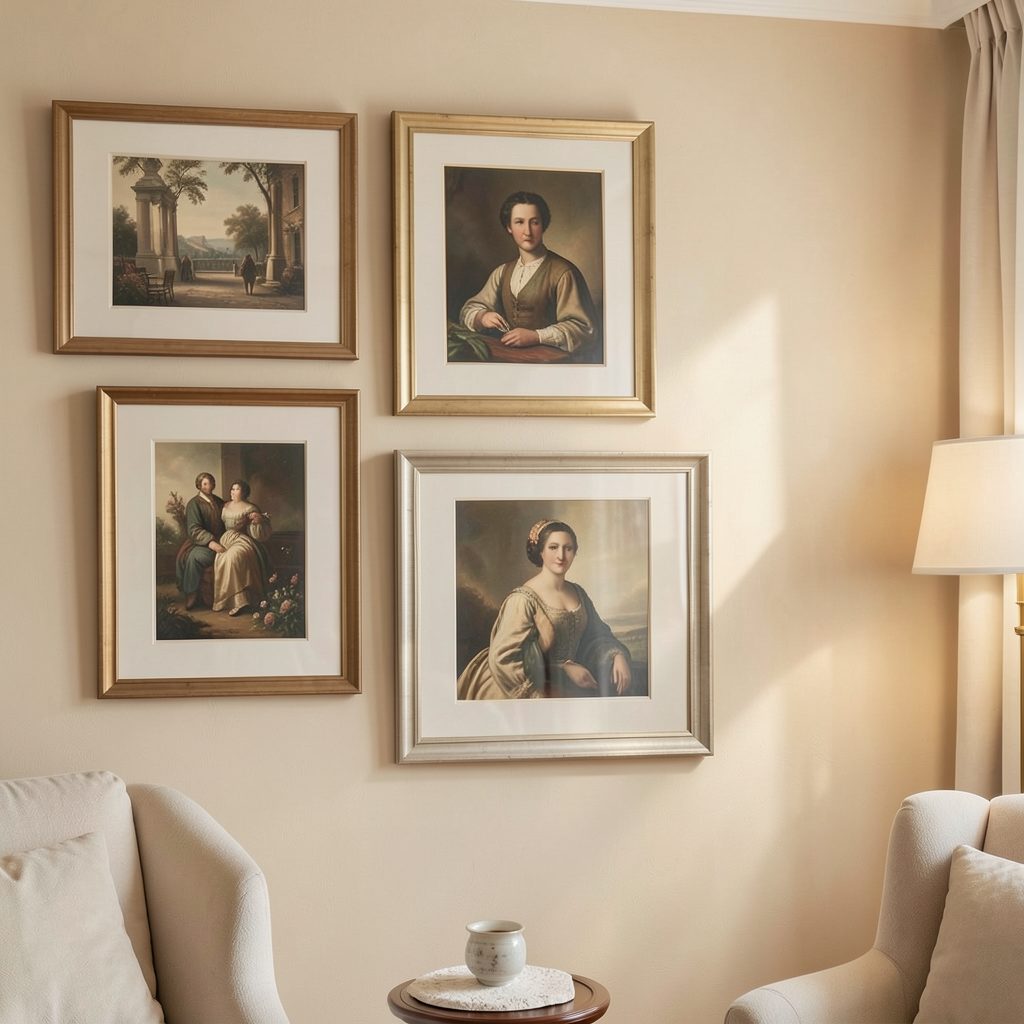
Mixing frame sizes creates a collected appearance, but keep one visual rule consistent: a shared timber tone, matching mount colour or repeated black edge can make varied artwork feel intentional. This works well for travel photographs, children’s drawings and affordable art prints bought from local markets or independent galleries.
In a compact flat, fewer larger pieces often look more polished than a crowded wall of small frames. The ideas in decorating a studio are especially useful when floor space is limited and every wall must serve a purpose. Keep artwork away from bathroom steam, direct afternoon sun and kitchen grease, which can affect both paper and adhesive performance.
Make The Display Rental Friendly
Australian rental agreements vary, so check whether your landlord or agent permits nails, screws or picture rails. Some leases are relaxed about small pinholes, while others expect walls to be returned in excellent condition. Keep the original hardware packaging and photograph the wall before installation if you want a clear record of what was used.
For a low-risk display, combine removable adhesive hangers for lightweight frames with a freestanding shelf or picture ledge for heavier pieces. A narrow ledge lets you layer artwork without adding several fixings, and it can be restyled as your collection changes. For a pared-back arrangement, styling a minimalist approach keeps the number of pieces and mounting points under control.
Measure the frames, identify the wall surface and test one hook before committing to the full arrangement. Choose reliable hardware, leave room around each piece and install the display slowly so your artwork stays secure while the paint remains ready for the next chapter of your home.