Choosing Frames That Shield Art on Paper from Sun, Humidity, and Time
Works on paper—whether delicate watercolours, charcoal sketches, or limited-edition prints—respond to their environment in ways that oil paintings simply do not. The cellulose fibres in paper break down when exposed to ultraviolet light, humidity shifts, and airborne pollutants, causing colours to drift, edges to fox, and surfaces to become brittle. A well-chosen frame acts as the first and most effective line of defence, quietly doing the work of preservation while still letting the artwork shine.
In Australia, the stakes are higher than in many other parts of the world. The continent sits beneath a thinner section of the ozone layer during summer, and the UV index in cities like Sydney, Brisbane, and Perth regularly climbs above 11. Add in the salt-laden coastal air, the tropical humidity of the north, and the dry heat of an Adelaide summer, and the case for thoughtful framing becomes even more compelling. Finding the best places to source artwork is part of that journey, from weekend stalls at Paddy's Markets to established dealer rooms in Melbourne's inner suburbs. Choosing the right frame is part aesthetic decision, part long-term care plan.
UV-Blocking Glazing Options
Ordinary float glass blocks roughly 40 percent of UV radiation, which is not nearly enough for a work destined to hang on a sunlit wall. Conservation-grade glazing—available as both glass and acrylic—filters out 99 percent of UV rays and is the standard recommended by bodies such as the Australian Radiation Protection and Nuclear Safety Agency for protecting heritage objects. Glass tends to feel more substantial and resists scratching, making it ideal for smaller framed studies hung in hallways or studies.
Acrylic, sometimes marketed under brand names like Plexiglas or Perspex, weighs roughly half as much as glass and is far less likely to shatter, which is helpful for larger works or for households with children. The trade-off is that acrylic scratches more easily and can build up static, which may pull loose charcoal or pastel from a fragile surface. For Australian homes where air conditioning creates temperature swings, the lighter weight of acrylic also places less stress on the frame joinery over time.
Acid-Free Mounting Materials
The card or board sitting behind your artwork matters as much as the glazing in front of it. Standard mountboard is made from wood pulp that retains lignin and other acids, and over years those acids migrate into the paper, leaving brown burn marks along the edges that no amount of sunlight could explain. Conservation-grade boards made from cotton rag or alpha cellulose are pH-neutral and will not interact chemically with the artwork.
For works you intend to keep for decades, it is worth asking the framer specifically for rag mat boards and acid-free foam core. Japanese tissue paper, activated with wheat starch paste, is the traditional method for hinging works to a backing board and remains the choice of paper conservators across Australia's state galleries. Avoid generic tapes and self-adhesive corners in the craft drawer, since their adhesives often discolour within a few years and become impossible to remove without damage.
Frame Material and Construction
Timber frames made from Australian hardwoods such as Tasmanian oak, blackwood, or jarrah offer excellent stability and a sense of weight that suits the clean lines of contemporary interiors. These timbers resist warping better than many imported softwoods, particularly when sourced from sustainably managed local suppliers. Solid timber is especially worth considering for any work larger than A3, where the frame is doing real structural work.
Composite materials such as MDF can be tempting because of price, but they contain formaldehyde-based resins and absorb moisture readily—an unfortunate combination for homes in Brisbane, Darwin, or coastal Hobart during a wet winter. Metal frames, often aluminium with a powder-coated finish, provide a slimmer profile and behave predictably in fluctuating humidity, though they can feel cold against warmer interior palettes. Wherever the frame is made, look for sealed rear edges and corner joins that are tight enough to discourage the tiny spiders and silverfish that are common houseguests across Australian homes.
Backing Boards and Sealing the Frame
Once the artwork, mat, and glazing are in place, the back of the frame is where the real protection happens. A sheet of acid-free foam core or corrugated archival board should sit directly behind the work, sealed in with frame tape or a framer's points covered by acid-free tape. This barrier keeps out dust, pollen, and bushfire ash, the last of which is a recurring concern for homes on the urban fringe of Melbourne and Sydney during a difficult fire season.
Adding a few small holes or a breathable backing sheet allows the frame to equalise with the room's humidity rather than trapping moisture against the paper. Completely airtight seals are generally reserved for transport; in everyday display, a frame needs to breathe just enough to avoid condensation forming between the glass and the artwork during a cool change.
Spacing, Mats, and Float Mounting
A well-chosen mat does more than shape how the artwork looks visually. It keeps the artwork from sitting directly against the glazing, where condensation or static could cause damage over time. A border of at least five centimetres on all sides is standard for works under glass, with a slightly wider bottom border to compensate for the eye's natural tendency to perceive the lower edge as smaller.
Float mounting—where the artwork is held in place with small corner mounts so the entire sheet, including deckled or torn edges, is visible—offers a beautiful way to display handmade papers and watercolours but requires extra care. The work must be raised away from the backing board with spacers so air circulates around the paper, preventing the mould growth that can plague unconditioned spaces during a Queensland wet season.
Climate and Placement Within the Home
Even the best frame cannot fully compensate for a poorly chosen wall. Works on paper should never hang on external walls that receive afternoon sun, and they should sit well away from open windows, heaters, and kitchen rangehoods. Bedrooms, internal hallways, and living rooms that do not face west tend to provide the most stable conditions.
For homes in tropical Darwin or Cairns, a dehumidifier running during the wet season is a wise companion to any framed collection. In contrast, homes in Adelaide or inland Victoria may need to monitor dryness, since extreme dehydration of paper leads to cockling and distortion. Rotating works every six to twelve months also helps, both for the art and for the viewer, and is a habit quietly embraced by curators at the National Gallery of Australia and the Art Gallery of New South Wales. Guidance on where and how to display artwork with intention can make the difference between a wall of cluttered frames and one that genuinely feels considered.
Building a Considered Display
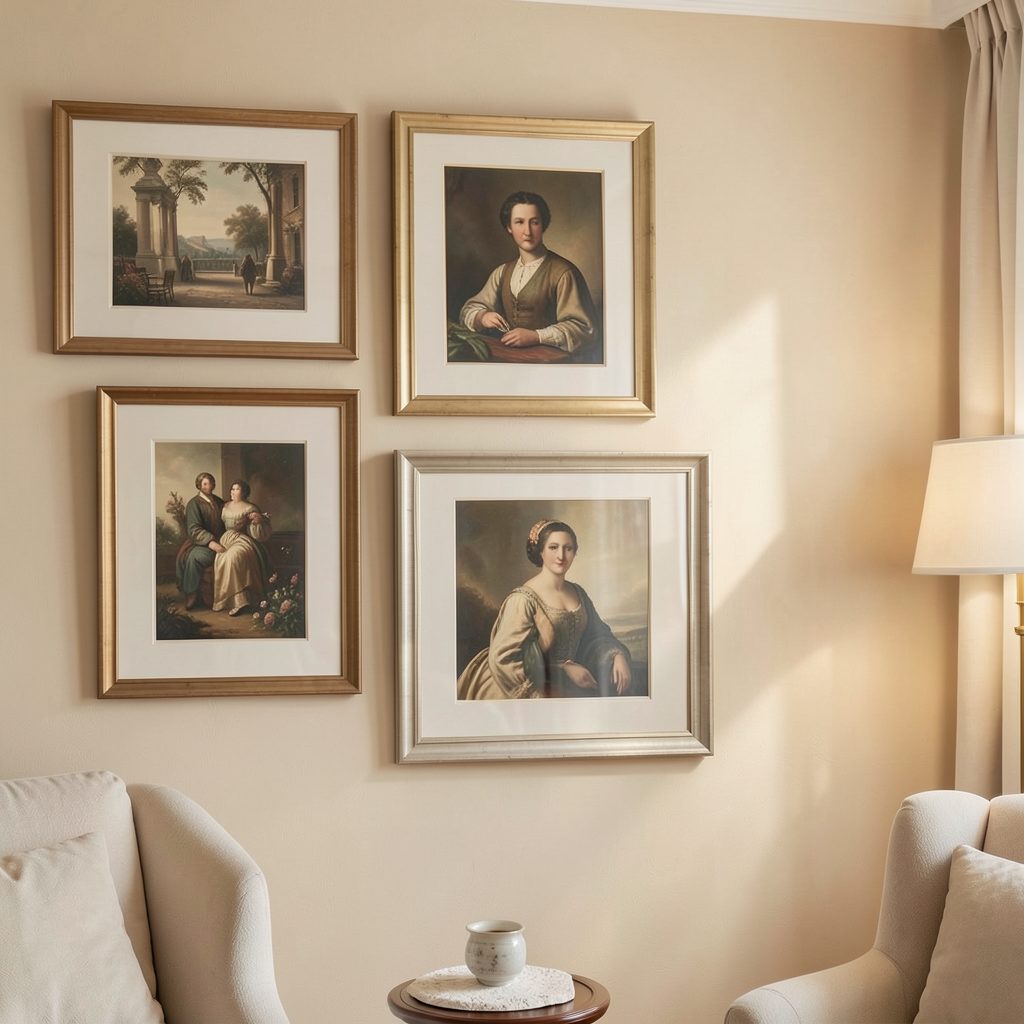
Once each piece is properly framed and protected, the next step is arranging them so they breathe as a group. Hanging heights, spacing between frames, and the relationship between pieces all shape how the eye moves across a wall. For a fresh perspective on curated gallery walls, the Focus LDN journal offers a step-by-step approach that pairs neatly with the framing guidance above, whether you are working with a single long hallway in a Sydney terrace or a narrow nook in a Brisbane apartment.
Subscribe to the Focus LDN journal for weekly notes on framing, styling, and the homes that get it right.