The best places to buy second-hand frames
A well-chosen frame can make an inexpensive print feel considered, give a family photograph more presence, or bring a gallery wall together. Buying pre-owned also adds character that is difficult to reproduce with identical new frames. Small scratches, aged timber and softly faded finishes often make artwork feel more collected and personal.
The best sources range from charity shops and flea markets to online marketplaces and architectural salvage yards. Each offers a different balance of price, condition, size and style, so the right destination depends on whether you need one specific frame or are building a varied arrangement over time.
Before shopping, measure the artwork you want to display and decide whether the frame should blend into the room or create contrast. A little preparation will help you recognise a genuine bargain rather than bringing home an attractive frame that cannot accommodate your picture.
Start with charity shops and thrift stores
Charity shops are among the easiest places to find affordable picture frames, especially in neighbourhoods with older housing and established interiors. Look beyond the main homeware shelves: frames may be grouped with mirrors, artwork, ornaments or seasonal stock. Larger branches sometimes receive framed posters and paintings that can be reused even when the original image is not to your taste.
Check several shops rather than relying on one visit. Stock changes quickly, and unusual sizes often appear without warning. Wooden frames, painted mouldings and simple black or brass styles are particularly useful for gallery walls because they can be mixed without making the display look too uniform.
Explore flea markets and car-boot sales
Flea markets reward patience and a willingness to inspect dusty, imperfect pieces. Sellers often price frames according to the artwork inside, which means an outdated print may conceal a handsome frame at a low cost. Ask whether the frame can be sold separately, particularly if the seller has a large collection of pictures.
Car-boot sales can be especially good for groups of related frames. Look for pairs, sets with the same moulding, or frames in graduated sizes. These are useful around a staircase, above a console or across a long bedroom wall. Carry a tape measure, since visual scale can be difficult to judge when frames are stacked together.
Search online marketplaces with precision
Online marketplaces make it easier to find oversized frames, vintage styles and specific finishes. Search terms such as “antique-style picture frame”, “vintage oak frame”, “deep box frame”, “ornate gilt frame” and “frame lot” will produce different results from a general search for second-hand frames. Include the required internal dimensions as well as the external size when possible.
Ask sellers for photographs of the corners, backing board and glazing. A close-up can reveal chipped plaster, loose joints or cloudy acrylic that is not obvious in the main listing. Local collection is often preferable for large or fragile frames, as postage can be expensive and glazing may arrive damaged.
Visit salvage yards and antique dealers
Architectural salvage yards are a strong source for substantial timber frames, decorative mouldings and pieces with genuine patina. They are ideal when you want a frame to act as a feature in its own right. A wide, carved frame can anchor a large artwork in a sitting room, while a weathered wooden style can soften a minimalist space.
Antique dealers usually offer more guidance and clearer descriptions than casual sellers, although prices may be higher. Ask about the frame’s age, repairs and whether the dimensions refer to the rebate—the inner channel that holds the artwork—or the outer edge. This distinction is essential when ordering a mount or replacing glass.
| Source | Best for | What to check | Typical advantage |
|---|---|---|---|
| Charity shops | Everyday wooden and painted frames | Joints, glass and backing | Low prices and frequent stock changes |
| Flea markets | Eclectic, decorative and unusual pieces | Stability, moulding and hidden damage | Room for negotiation |
| Online marketplaces | Specific sizes or matching groups | Detailed photos and collection options | Broad choice |
| Salvage yards | Large, architectural and aged frames | Weight, repairs and rebate size | Strong character |
| Antique dealers | Period or high-quality frames | Provenance and restoration | Expert advice |
Inspect the frame before buying
A frame does not need to be flawless, but it should be structurally sound. Hold it by opposite corners and gently test whether it flexes. Loose mitres, separated joints or a backing that has warped significantly may require more work than the frame is worth. Minor surface marks can usually be accepted, particularly if they suit the room’s relaxed character.
Check the glazing for chips, scratches and cloudy patches. Older glass may have a pleasing softness, but it should still be safe and clear enough for the artwork. Confirm that the clips, tabs, hanging wire and backing are present. Replacements are available, yet their cost should be included in your budget.
The inner opening matters more than the visible outer dimensions. A frame can be adapted with a mount, but an unusual size may require custom cutting. For artwork that falls outside standard proportions, these framing techniques can help you create a balanced presentation without trimming the piece.
Choose a style that supports the artwork
Consider the relationship between the frame, the image and the room. A restrained black or natural wood frame suits graphic prints and contemporary photography, while a distressed painted finish can complement botanical studies, sketches and vintage textiles. Mixing finishes works well when one quality is repeated, such as a shared colour, narrow profile or similar level of visual weight.
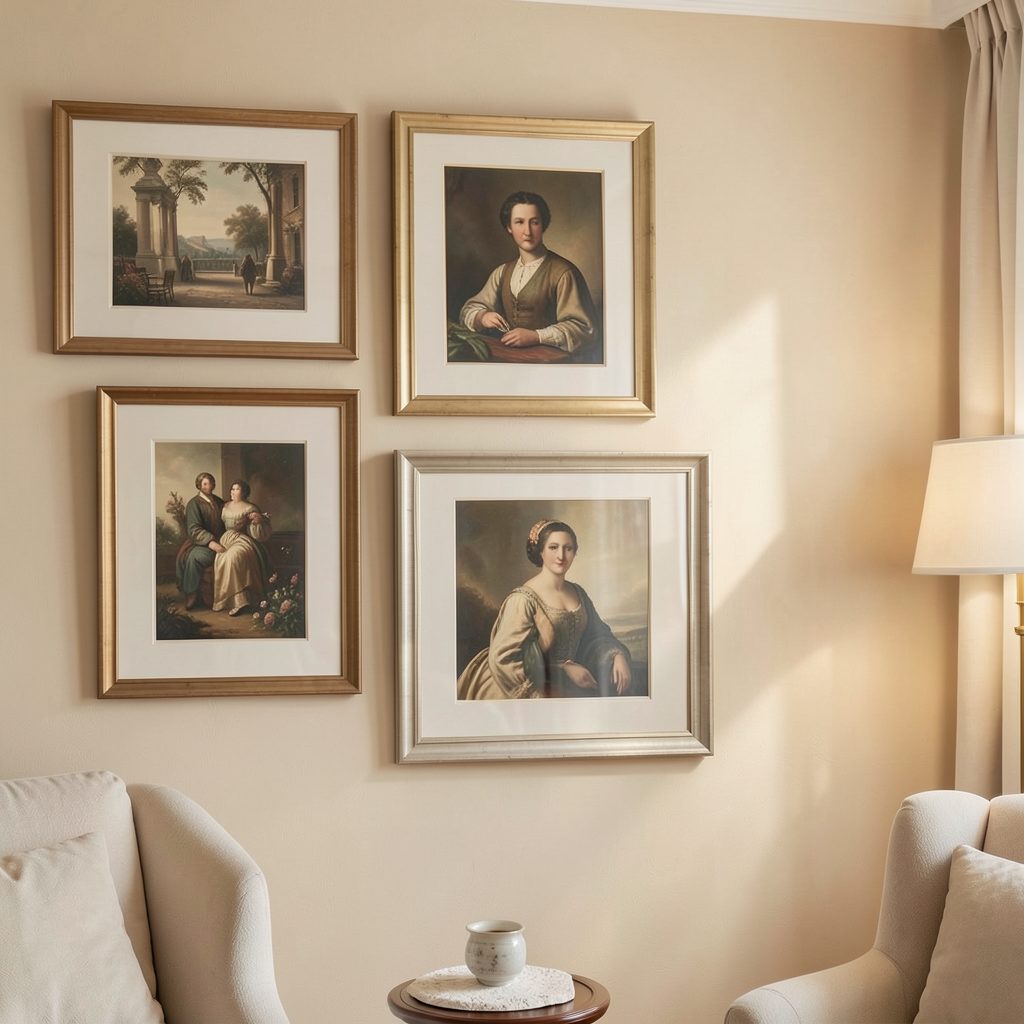
For a gallery wall, variation is usually more successful than buying every frame in the same style. Combine slim profiles with one or two deeper statement frames, then use mounts to create breathing space around smaller works. Plan the arrangement on the floor before hanging it, and think about how the strongest frame will direct attention. Guidance on creating a focal point is useful when one piece needs to lead the composition.
A practical buying checklist
A short checklist keeps the search focused and prevents decorative appeal from overriding practical details. Take measurements with you, including the artwork size, desired mount dimensions and available wall space. If you are collecting pieces gradually, record each frame’s internal measurements at home.
Use these checks before paying:
- Measure the rebate, not just the outside edge.
- Test corners and joints for movement or separation.
- Inspect glass, acrylic, backing board and hanging hardware.
- Look for woodworm holes, damp marks or strong musty odours.
- Calculate the cost of glazing, mounting and repairs before deciding.
Second-hand frames become especially valuable when they support a wider decorating scheme. A mismatched collection can bring warmth to a minimalist hallway, add texture to a bedroom or make a small bathroom feel more individual when protected behind suitable glazing. Save promising listings, revisit charity shops regularly and build your collection around the artwork you genuinely want to live with.