Choosing art for a loft bedroom with exposed brick
Exposed brick gives a loft bedroom warmth, texture and an architectural focal point, but it can also compete with busy artwork. Converted warehouses and former industrial buildings across Sydney, Melbourne, Brisbane and Adelaide often combine brick walls with high ceilings, metal windows and open-plan living spaces. The artwork needs to hold its own without making the room feel crowded.
Begin with the space rather than the artwork marketplace. Consider how the bedroom is used, where natural light falls and whether you rent or own the apartment. A piece that suits the proportions, light and everyday life of the room will look more convincing than an expensive work selected purely for its style.
Read the room before choosing artwork
Stand back from the brick wall and note its colour, mortar lines and texture. Red, brown and cream brick creates a warm backdrop, while painted or whitewashed brick allows more freedom. Check how the wall changes throughout the day, especially if nearby buildings block the afternoon sun or reflections intensify the colour.
Measure both the available wall and the furniture beneath it. The bed is usually the bedroom’s strongest visual anchor, so artwork positioned above it should relate to its width and height. Leave enough empty brick to expose the architecture; the wall’s imperfections and variations are part of the room’s character rather than areas that must be concealed.
Build a palette from brick and timber
Brick is not one dependable colour. Some walls lean toward terracotta, others towards dusty pink, charcoal or even yellow. Pull two or three tones from the wall, then connect them to the floorboards, bedding, rug and bedside furniture. Eucalyptus green, soft black, warm white, rust and muted blue can all work, provided they feel connected to the room.
Avoid choosing every artwork in the same style. A graphic print beside a quiet botanical study or a monochrome photograph can create variety while sharing a restrained palette. The Australian art market offers works from established artists, emerging makers and artist-run galleries, with original paintings, limited-edition prints and affordable reproductions available across different budgets.
If the bedroom doubles as a small display space, record the artist, title, date and edition of each work as you buy. This gallery label guidance can help you keep the information consistent and make replacing or reordering pieces much easier.
Get the scale and placement right
Choose artwork according to the wall rather than the size of your online screen. A single substantial print or canvas can suit a broad brick wall, while several coordinated pieces may work better on a narrow section. Above a standard bed, a horizontal artwork roughly two-thirds of the bed’s width usually creates a balanced relationship, but the ideal proportion depends on the ceiling height and headboard.
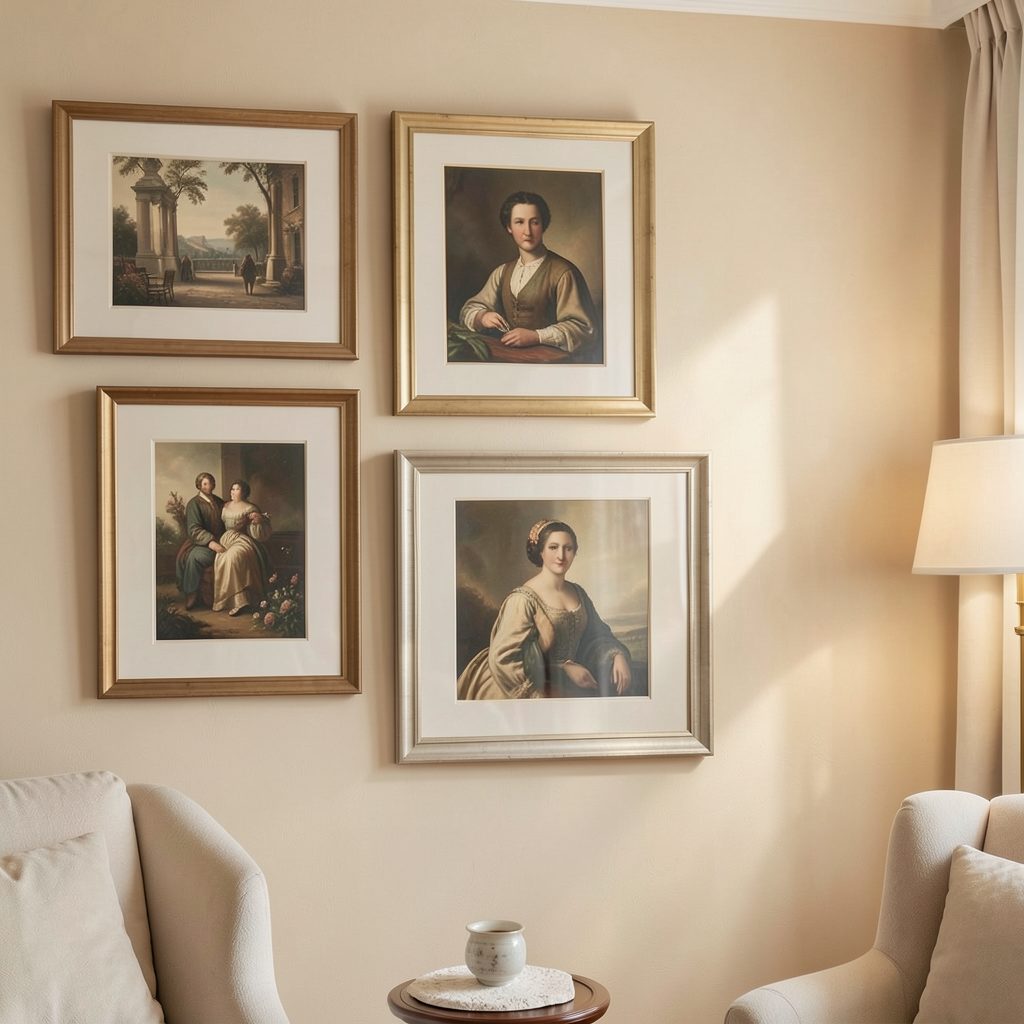
For a gallery arrangement, keep the outer edges aligned and maintain consistent gaps, generally around five to eight centimetres. Let one piece lead the group and vary the others in size so the arrangement does not become rigid. More detailed advice on measuring, spacing and combining frames is available in this practical display guide.
Choose art for Australian conditions
Australian sunlight can be especially intense on east- and west-facing walls. Direct ultraviolet exposure may fade dyes and pigments over time, even when a frame contains the work. Look for UV-filtering acrylic or suitable protective glazing, draw blinds during the strongest hours and avoid hanging valuable paper-based pieces where sunlight falls directly across them.
Humidity, air-conditioning and seasonal changes also affect paper, timber and adhesives. Coastal apartments in Sydney and Melbourne can experience noticeable moisture shifts, while sealed interiors with strong cooling may become very dry. Leave some space around framed works for air movement, and use archival mounts and quality fixings rather than inexpensive tape. Personal response remains important too; understanding the benefits of art can help you choose something genuinely restorative rather than simply decorative.
Frame and hang with renters in mind
Brick suits frameless canvases, deep timber frames and clean shadow-box surrounds, but the frame should complement the artwork rather than mimic the wall. Pale timber can soften dark brick, black creates contrast and metallic details may reflect the room’s industrial fittings. Measure the finished frame, not only the image, because glazing and mounts can change both its dimensions and weight.
Check with your landlord or agent before drilling, particularly if the lease restricts alterations. In New South Wales and Victoria, residential tenancy legislation, building bylaws and the relevant Owners Corporations Act may affect permission to fix pictures or work in shared areas. Owners of heritage-listed warehouse conversions may also need council or owners’ corporation approval for particular fixings. Use masonry anchors suitable for brickwork, but never drill into services or assume a common-property wall can be altered without approval.
Turn a shortlist into a confident scheme
Place your shortlisted pieces on the wall temporarily using removable museum squares or lean them against the wall. View them from the doorway and while sitting in bed, both during daylight and under lamps. A photograph taken from your normal position can reveal an uneven gap or a colour that changes in artificial light.
Use these recommendations to make the final decision:
- Choose one dominant piece that holds the brick wall without overwhelming it.
- Repeat two colours from the brick or timber elsewhere in the bedroom.
- Mix artwork sizes while keeping a narrow, consistent gap between frames.
- Prioritise pieces you enjoy seeing every day over trends that may quickly date.
- Check the frame, delivery method and hanging weight before ordering.
Begin with one anchor artwork, add two complementary pieces and preserve enough exposed brick for the room to breathe. Subscribe to the Focus LDN email for more practical ideas on gallery walls, framing and stylish home decorating, then create a bedroom scheme that feels personal rather than overworked.