Selecting abstract art for a green sofa and wood tones
A green sofa gives a room an immediate focal point, but it also creates a strong colour relationship that artwork must resolve. Warm timber flooring, cabinets and tables can either complement the sofa’s earthy tones or compete with them. Abstract art offers the flexibility to connect these elements without making the room feel overly coordinated. Learn more about Rugs Decor.
The right piece should support the room’s architecture and daily rhythm. Australian lounge spaces often accommodate family time, relaxed weekend entertaining and quiet evenings, so the artwork needs to work in both natural daylight and warmer artificial light. It should feel lively from a distance while rewarding closer attention to its shapes, textures and marks.
Colour matching is only one part of the decision. Scale, framing and placement determine whether artwork feels integrated or simply placed above furniture. A carefully chosen abstract composition can give a green sofa greater depth, echo the grain of the timber and establish a calm focal wall.
Compact apartments in Sydney and Melbourne often have limited wall space and uneven natural light, making proportion especially important. Brisbane homes may catch strong afternoon sun on west-facing walls, while Melbourne’s changeable seasons can shift how colours appear throughout the day. These conditions favour adaptable artwork that remains visually balanced as the light moves.
Start with the room, not the artwork
Begin by identifying the exact green in the sofa. A muted olive or sage tone pairs naturally with ochre, rust, cream and warm brown. Emerald or forest green has more depth, so pale pink, terracotta, navy or soft charcoal can provide welcome contrast. Bright grass green is best balanced with calmer colours or crisp monochrome forms.
Next, catalogue the wood tones already in the room. Honey oak and blonde ash create an airy setting, while walnut and darker timber add weight. Artwork containing a similar undertone will blend comfortably into the room; art with cool blue or purple accents can provide a deliberate counterpoint.
Measure the available wall before choosing a canvas. As a useful starting point, a single artwork should span roughly two-thirds to three-quarters of the sofa’s width. For a group, measure the combined width rather than each frame. This approach gives the composition enough presence without crowding a smaller apartment wall.
Compare the main abstract directions
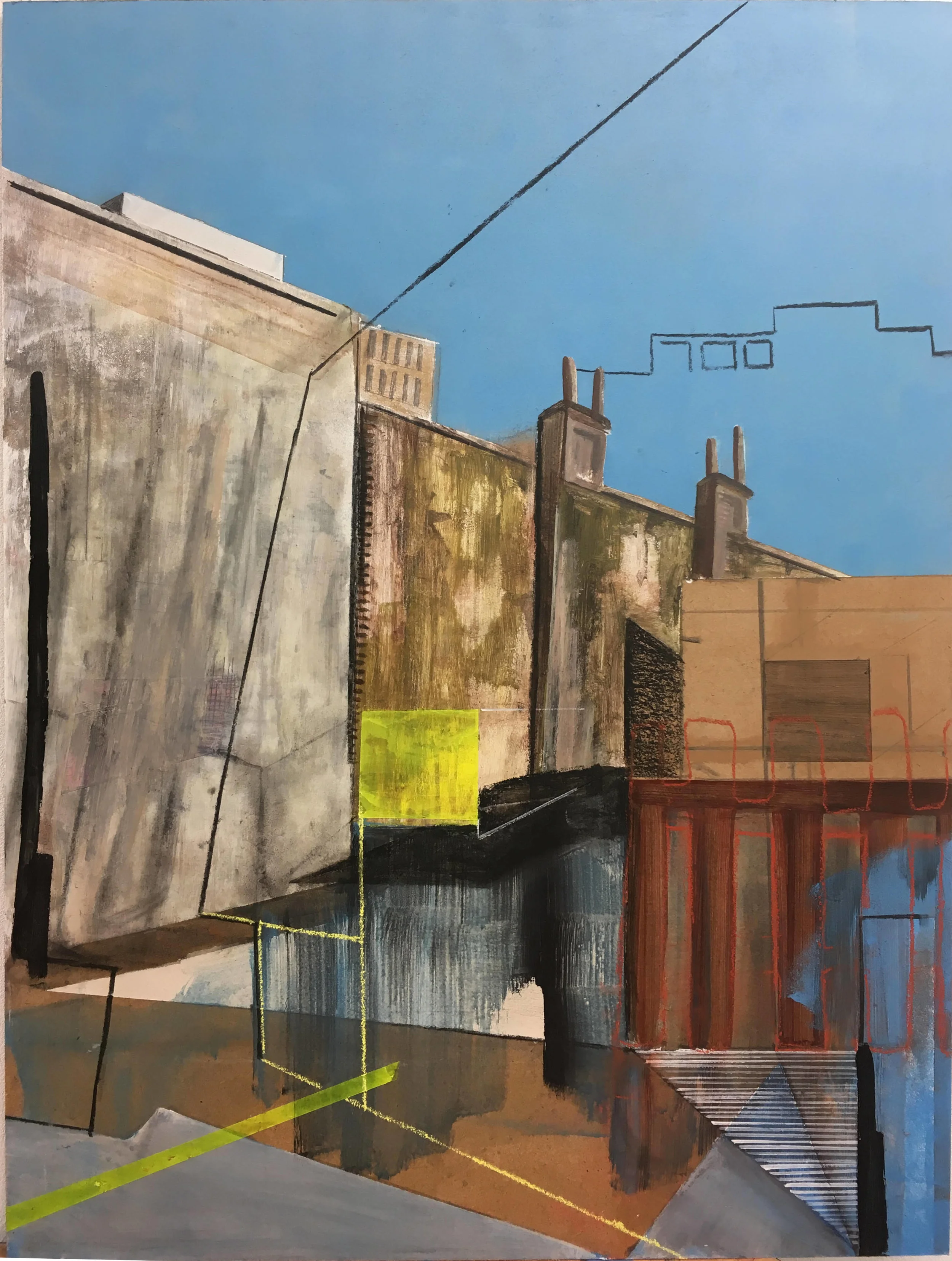
Organic abstracts use curves, blurred fields and irregular forms to echo the sofa’s softness. They work especially well with timber furniture because both artwork and wood introduce natural, flowing shapes. These pieces tend to feel restful and suit rooms where the sofa has a rounded or sculptural profile.
Geometric abstracts bring structure and precision. Repeated circles, angular blocks and layered grids can sharpen a relaxed setting and contrast with the organic grain of timber. Highly contrasting compositions suit modern interiors, while simpler geometric works sit comfortably beside mid-century or Scandi-inspired furniture.
| Artwork direction | Visual effect | Strongest pairing |
|---|---|---|
| Organic forms | Softens the room and adds gentle movement | Olive sofa, honey oak, cream textiles |
| Bold geometry | Creates focus and sharper contrast | Emerald sofa, walnut, charcoal accents |
| Gestural marks | Adds energy and an expressive character | Sage sofa, timber floors, rust or ochre details |
| Minimal lines | Preserves calm and emphasises negative space | Green sofa, blonde wood, monochrome décor |
Whichever direction you prefer, look for a controlled palette rather than every colour represented equally. Two or three dominant hues, supported by a smaller neutral accent, usually relate more successfully to a furnished room.
Build a colour and scale strategy
Pull colours from the room in deliberate stages. The sofa and timber establish the base palette, while the artwork can introduce the room’s accent colour at a larger scale. A rust painting may inspire a terracotta cushion; a blue composition might prompt ceramics in a related shade. Repeating a colour beyond the artwork creates a sense of continuity.
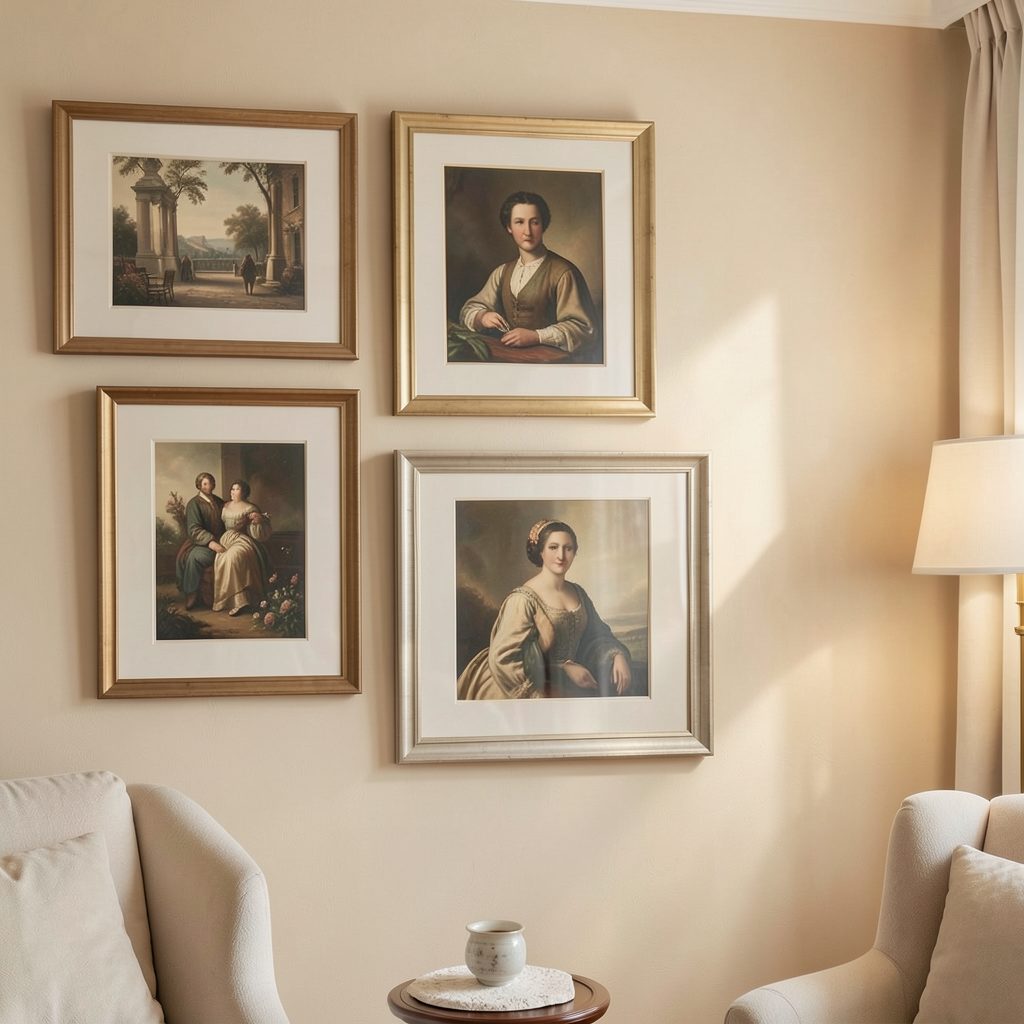
Texture should receive equal attention. Rough brushstrokes, woven fibres or dense pigment can counterpoint smooth upholstery and polished timber. This contrast adds richness without introducing another bold colour. For a layered arrangement, layering framed art offers ways to combine different sizes while keeping the overall composition balanced.
The Australian market offers many ways to source this work. Green modular sofas are widely available through retailers such as IKEA Australia, Harvey Norman and The Good Guys, making it practical to coordinate upholstery before purchasing art. Prints can be explored through Australian marketplaces including The Design Crowd and Artlandish, while local galleries in Sydney, Melbourne, Brisbane and smaller regional centres provide original work and opportunities to meet the artist.
Select the frame and plan the installation
Frame colour should either connect with the timber or provide a clear, restrained contrast. A slim natural-oak frame extends the warmth of the floorboards, while black creates a graphic edge around pale or colourful artwork. White frames can brighten a darker composition. Avoid making every frame a different finish unless the mixed-frame arrangement is an intentional part of the design.
For a single piece, aim to place its centre around eye level, commonly about 145–160 centimetres from the floor depending on the ceiling height. Above a sofa, leave approximately 15–25 centimetres between the lower edge of the artwork and the upholstery. Install two secure hooks and use a level, even when the building walls are uneven.
If vertical space is limited, floating shelf styling can incorporate smaller works into the room while leaving the main wall open. Strata living adds an important legal check. In New South Wales, apartment owners and tenants should check strata by-laws through Fair Trading, while Victorian owners corporations operate under the Owners Corporation Act and Owners Corporations Victoria. Obtain landlord consent before hanging items and body-corporate approval before drilling into a wall or fixing anything that could damage communal property.
Bring the room together and commit
Ground the furniture with a rug that repeats either the sofa’s green, a timber tone or one colour from the artwork. A neutral rug keeps the composition flexible, while a patterned option can bridge several colours across the room. Advice on decorating with rugs can help with scale, placement and the balance between soft furnishings and wall art.
Complete the arrangement with a few restrained accessories rather than matching every element. One ceramic vessel, a woven basket or a small lamp is often enough around the sofa. Check the finished room from the doorway, then from a seated position, and make any final adjustments to colour balance, spacing and visual weight.
Choose the abstract work that makes the green sofa and timber feel deliberately connected, then give it room to breathe. Browse Focus LDN’s decorating guides and join the email list for fresh ideas on gallery walls, minimalist interiors and stylish home living.