How to use art to make a guest bedroom feel more welcoming
Learning how to use art to make a guest bedroom feel more welcoming is less about filling every wall and more about creating a visual welcome. Artwork can guide someone from the door to the bed, soften practical furniture and give a compact room a distinct sense of personality.
Before selecting anything, consider how the room should feel. Calm coastal colours create a restful atmosphere, while warm abstracts add energy without demanding attention. The right choice should complement the bedding, lighting and existing furniture rather than compete with them.
Compact apartment living is common in cities such as Sydney and Melbourne, where a guest bedroom may need to work as an office, storage area or occasional sleeping space. Well-chosen art makes that flexibility feel intentional, even when the room is not being used.
Begin with the room’s purpose
Start by deciding what emotional effect you want. A calm room should have generous negative space and restrained colours, while a brighter space can support stronger shapes and richer tones. This prevents artwork from becoming an afterthought.
| Art direction | Visual effect | Best fit for a guest room |
|---|---|---|
| Coastal landscape | Calm, open and familiar | A room beside a window |
| Eucalyptus study | Softens white walls | Neutral bedding and simple furniture |
| Ochre abstract | Warm and layered | A compact room needing colour |
| Black-and-white photograph | Crisp and quiet | A space with one bold accent |
Choose a focal piece first, then build the arrangement around it. One commanding work often looks more considered than several small pieces chosen without a shared colour, scale or subject.
Choose art for the room’s light
Australian apartments may experience strong morning light, harsh afternoon glare or limited illumination, depending on orientation and neighbouring buildings. View the room at several times of day and notice where shadows gather. Pale landscapes can disappear against bright walls, while darker frames gain definition in a dim room.
A single artwork with a clear subject is usually easier to appreciate than a dense group. This is particularly useful in a spare bedroom viewed mainly while the door is open. If budget matters, curating affordable art can help you compare prints, original works and locally made pieces before investing in a larger format.
Build a balanced gallery wall
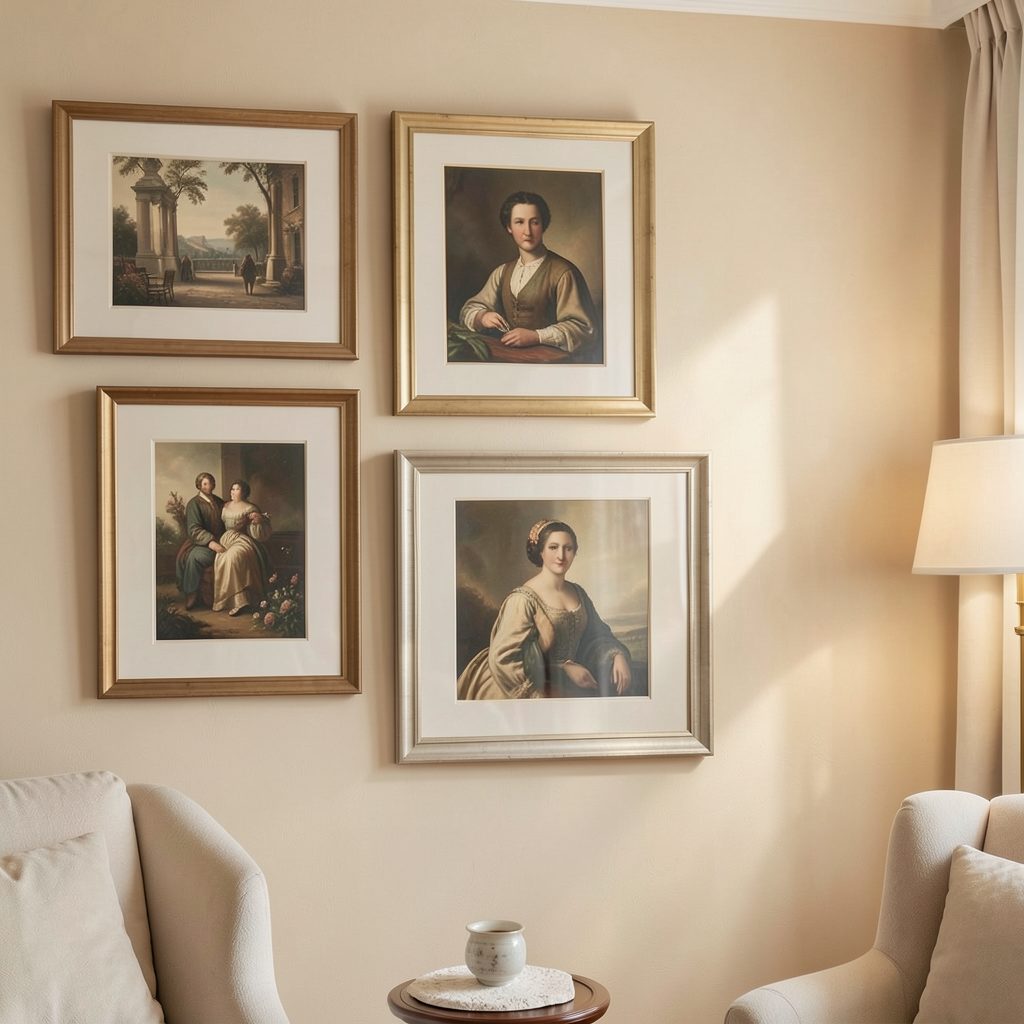
Measure the available wall before buying frames. A narrow wall between a window and a doorway may suit a vertical arrangement, while a wider wall above a bed or console can hold a horizontal composition. Keep enough space around the group so it feels connected to the furniture below.
For a bedroom, the visual centre of a salon-style arrangement often sits around eye level. When art hangs above a bed, leave roughly 20 to 30 centimetres between the lowest frame and the headboard, adjusting for the height of the mattress and the room’s proportions.
If you are also decorating a home, carry one colour from the main living areas into the bedroom. This creates continuity without making the smaller space feel crowded. Match the artwork’s mood to the bed linen and bedside lighting for a coherent result.
Create variety through careful mixing
A successful display has rhythm: large and small pieces, light and dark areas, and frames that relate without being identical. The aim is variety with control. If you enjoy mixing old and new, inherited pieces and contemporary prints can work well when colour or subject provides the connection.
Balance the sizes
- Use one larger work as the visual anchor.
- Add two medium-sized pieces to establish rhythm.
- Finish with one small accent that fills an awkward gap.
Coordinate the details
- Repeat one colour from the artwork in the bedding or chair.
- Keep most frame finishes within two related tones.
- Mix portrait and landscape shapes without changing the spacing system.
Keep the gaps between frames consistent rather than making every distance identical. This subtle structure gives a collected display a polished sense of order.
Connect the artwork to the bed
Begin with the bedding, then select art that echoes its strongest colour. A muted blue duvet might pair well with a misty landscape, while rust-coloured linen could be answered by an ochre abstract. This small repetition makes the room feel designed around its guest bed rather than assembled in separate zones.
If only one artwork is possible, choose a scale that relates to the bed but does not disappear above it. Pairing it with matching bedside lamps, a small stool or a framed object on the dresser can create a balanced focal area without filling every surface.
Account for Australian conditions
Heat, humidity and sunlight can affect both artwork and frames. Keep valuable paper works away from direct ultraviolet light and avoid damp corners, particularly in rooms with an ensuite or poorly insulated walls. Timber frames should be sealed, while metal hardware should not rust in a humid coastal location.
Australian artists often work in eucalyptus, coastal, landscape and abstract traditions, making them a natural fit for local interiors. Explore open-studio events, weekend markets and Australian print makers before purchasing generic mass-produced décor. Local delivery may also reduce the time frames spend in transit, which is helpful when coordinating several pieces.
Before hanging, confirm the wall material and use suitable anchors. Rental properties benefit from removable hanging solutions, provided their weight limits are respected and the artwork cannot be knocked loose.
Make the welcome personal
Choose one focal piece today, then build the display around its colour, scale and mood. Add only what strengthens the arrangement, leaving enough breathing space for the room to rest when nobody is staying.
For more practical ideas on frames, gallery walls and stylish apartment living, browse the Focus LDN journal and subscribe for fresh decorating guidance. Thoughtful artwork can transform a temporary bedroom into a space that feels considered, calm and genuinely ready for guests.