Decorating a Home Office with Inspiring Gallery Walls
A home office should support concentration without feeling sterile. The right artwork can soften screens, shelves, and practical storage while giving the room a distinct personality. A carefully arranged gallery wall turns an empty surface into a visual anchor that makes the space feel considered.
The most successful displays balance inspiration with restraint. Rather than filling every available area, choose a clear wall, establish a pleasing rhythm, and let a few meaningful pieces carry the room. Colour, spacing, frame style, and lighting all influence how energetic or tranquil the office feels.
A gallery-style interior also gives you room to combine different forms of art. Photography, sketches, typography, small paintings, and personal mementoes can sit together when they share a visual connection. The aim is a display that encourages ideas while remaining calm enough for everyday work.
Start with the room’s visual brief
Before choosing prints, consider the atmosphere you want to create. A neutral office with pale timber and white walls can take richer artwork, while a compact room with dark cabinetry may benefit from lighter images and simple frames. Look at the colours already present in the rug, chair, curtains, or desk accessories.
Think about the feeling you need during the working day. Abstract shapes and bold colour can add energy to a creative studio, whereas botanical studies, architectural photography, or muted landscapes may suit a reading and writing space. Let the artwork support the function of the room instead of competing with it.
It helps to select one connecting element before you begin: a repeated colour, a consistent frame finish, or a shared subject. This simple decision gives a varied collection enough unity to look intentional.
Choose the wall and map the layout
The wall behind a desk is an obvious location, but it is not always the best one. A display opposite the desk can provide a welcome focal point during screen breaks, while a side wall may be easier to appreciate during video calls. Avoid placing delicate works where a chair, door, or desk lamp could knock them.
Measure the available area and mark its boundaries with painter’s tape. Include the desk, shelves, and ceiling line in your planning, since a gallery wall should relate to the furniture beneath it. A display that is too narrow can look disconnected, while one that extends slightly beyond the desk often feels more balanced.
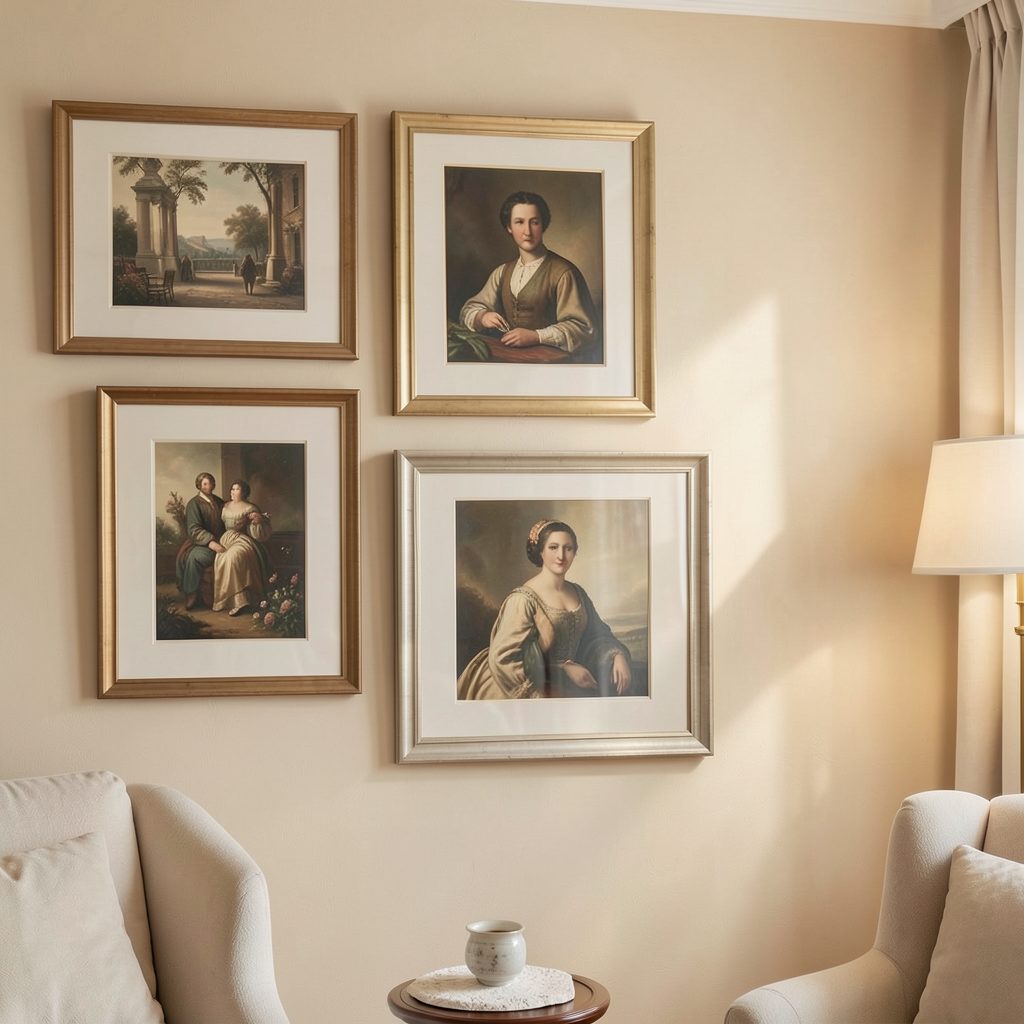
For a relaxed arrangement, begin with the largest piece and build outward. A structured grid suits minimalist offices and equal-sized frames, while a salon-style arrangement allows more variation. Keep the gaps consistent enough to create rhythm, usually around five to eight centimetres, and check the composition from the doorway as well as the desk.
Build depth with artwork and matting
A strong office gallery wall mixes scale rather than relying on many small pieces. One large print can anchor the arrangement, with medium artworks and compact accents creating movement around it. Leave enough negative space for each image to remain legible, especially if the room already contains open shelving or busy stationery.
Matting is useful when you want a collection to feel cohesive without replacing every frame. White or warm ivory mounts can create breathing room around smaller works, while a soft grey or coloured mat can connect an image to the wider office palette. This guide to choosing the right matting is especially helpful when combining different paper sizes.
Consider the visual weight of each image. A dark photograph may need a lighter piece nearby to prevent the display from feeling heavy, while a vivid print can act as a punctuation point. Personal items, such as a postcard from a favourite gallery or a small handwritten piece, add character when they are used sparingly.
Compare layouts before you commit
Testing several arrangements on the floor makes the hanging process easier and reduces unnecessary holes in the wall. Place the frames face up, begin with the central artwork, and shift the surrounding pieces until the overall outline feels balanced. Photograph each version so you can compare the compositions from a distance.
| Layout | Best for | Visual effect | Planning note |
|---|---|---|---|
| Symmetrical grid | Matching prints and clean-lined rooms | Calm and ordered | Use identical spacing and aligned edges |
| Anchored cluster | Mixed sizes and personal collections | Curated yet relaxed | Start with the largest frame |
| Vertical column | Narrow walls beside desks or doors | Tall and elegant | Keep the centre line consistent |
| Wide horizontal row | Low furniture and long walls | Open and spacious | Align the lower or upper edges |
| Organic salon arrangement | Eclectic artwork and vintage frames | Expressive and collected | Trace the outer shape before hanging |
The centre of the arrangement should sit close to eye level, though the furniture beneath it affects the final position. If the desk is against the wall, leave enough clearance for monitors, lamps, and daily use. A small gap between the desktop and the lowest frame usually helps the display feel connected without becoming cramped.
Select frames that support the room
Frames are part of the composition, so choose them with the office materials in mind. Pale oak works well with Scandinavian-inspired interiors, black frames sharpen a modern scheme, and antique or painted wood can bring warmth to a more traditional study. Mixing finishes is possible, but repeat each finish at least twice so it looks deliberate.
A large canvas can provide impact without requiring a crowded wall. If budget is a concern, these practical ideas for framing a large canvas can help you achieve a polished result while keeping funds available for additional artwork or lighting.
Glass should be considered alongside placement. Non-reflective glazing is useful opposite windows or bright task lights, while acrylic can be safer in a busy household. For valuable or original pieces, make sure the hanging hardware is appropriate to the frame weight and wall type.
Make the display work hard
Lighting can transform a home office gallery after sunset. An adjustable picture light creates a focused, gallery-like effect, while directional ceiling spots can illuminate several works at once. Avoid intense glare on framed glass and use warm, moderate bulbs so the colours remain comfortable during long working sessions.
Keep the surrounding surfaces relatively edited. A few books, a ceramic pencil cup, or a small plant can echo the artwork without turning the desk into another display. If the wall is highly expressive, choose quieter accessories; if the art is restrained, a sculptural lamp or coloured chair can add needed contrast.
A practical styling checklist
- Match the display’s scale to the desk and wall rather than the individual artwork.
- Repeat one colour, material, or subject across several pieces.
- Leave clear space around the gallery wall so it remains the room’s focal point.
- Use removable paper templates to test height and spacing before drilling.
- Reassess the arrangement after a week of working in the room.
Let the room evolve
A home office gallery wall does not need to be finished in a single afternoon. Begin with the pieces you genuinely enjoy seeing, then allow the collection to grow through travel finds, local exhibitions, new prints, or personal photographs. Leaving one or two spaces open can make future additions feel natural.
Step back from the arrangement regularly and notice how it affects your working rhythm. When the artwork feels connected to the room’s architecture, furniture, and daily purpose, the office becomes more than a place for a desk. Subscribe to Focus LDN for fresh ideas on artwork display, gallery-style interiors, and thoughtful ways to make your home feel distinctly yours.