How to Frame Artwork with Museum-Quality UV-Protective Glass
A carefully chosen frame protects artwork while shaping the mood of a room. For valuable prints, original works, family photographs and works on paper, the glazing is just as important as the timber or metal profile around it.
Museum-quality UV-protective glass helps reduce fading caused by ultraviolet light. It can also improve visibility through anti-reflective coatings, allowing the colour, texture and detail of an artwork to remain the focus.
The best result comes from treating framing as a conservation decision rather than a finishing touch. Artwork needs a stable backing, suitable spacing, acid-free materials and a location that avoids heat, moisture and intense sunlight.
This approach works particularly well in Australian homes, where strong northern light and bright coastal conditions can accelerate damage. Whether you are styling an apartment in Sydney, a terrace in Melbourne or a Queensland home, thoughtful glazing will extend the life of your collection.
Choose The Right Protective Glazing
Standard picture glass offers basic protection, but it does little to block the ultraviolet radiation that contributes to fading. Conservation glass is designed to filter a high percentage of UV light, with premium museum glazing commonly blocking around 99 per cent across relevant wavelengths. Always check the manufacturer’s specification rather than relying on a vague “UV safe” label.
Museum glass usually combines UV filtering with low reflectivity. This is especially useful when artwork is placed opposite a window, down a narrow hallway or above a glossy console. Anti-reflective glass allows viewers to see the image more clearly, although its performance depends on careful cleaning and correct installation.
For very large pieces, acrylic glazing can be a practical alternative because it is lighter and less likely to shatter. Conservation acrylic can provide strong UV protection, but it scratches more easily and may develop static that attracts dust. Glass remains a refined choice for smaller works and high-traffic living spaces when weight and breakage are manageable.
Prepare The Artwork Before Framing
Handle artwork with clean, dry hands and support it from underneath. Do not press fingers onto photographs, charcoal, pastel or unvarnished surfaces. If the work has mould, foxing, flaking paint or a musty smell, take it to a paper conservator before placing it in a sealed frame.
A conservation framer should use acid-free mat board, archival hinges and a stable backing board. The artwork should be attached with reversible methods where possible, rather than permanent adhesive or ordinary double-sided tape. These details matter because acidic cardboard and poor-quality tapes can stain paper over time.
A window mat creates visual breathing space and prevents the artwork from touching the glazing. For works with texture, a spacer or deep rebate keeps the surface safely away from the glass. This is particularly important for watercolours, pressed botanicals and mixed-media pieces.
Build A Conservation-Quality Frame
The frame must be deep enough to hold the artwork, mat, spacer, glazing and backing without pressure. A professional framer can check whether the rebate has sufficient clearance and whether the finished piece needs extra support. Oversized frames may also require stronger hardware and two wall fixings.
Choose a backing that resists moisture and remains dimensionally stable. In Brisbane or Darwin, where humidity can be high, a well-sealed frame and appropriate hanging location are especially important. Sealing the back can reduce dust and help moderate short-term environmental changes, but it does not replace climate control or good placement.
| Framing Element | Recommended Choice | Why It Matters |
|---|---|---|
| Glazing | UV-filtering museum glass | Reduces fading and glare |
| Mat | Acid-free conservation board | Separates the artwork from the glazing |
| Attachment | Archival, reversible hinges | Limits stress and permanent damage |
| Backing | Stable, conservation-grade board | Supports the work and reduces warping |
| Frame | Deep enough for all layers | Prevents pressure on the artwork |
| Hanging hardware | Rated hooks or paired fixings | Supports weight safely on the wall |
Ask for a written specification when commissioning a valuable frame. It should identify the glazing type, UV rating, mat board and backing. Australian custom framers in suburbs such as Fitzroy, Paddington and Fremantle often offer conservation packages, while larger framing chains may provide several glazing grades at different price points.
Match The Frame To Your Interior
Museum protection does not require a formal-looking frame. Slim black aluminium suits a minimalist gallery wall, while pale oak can soften a bedroom or complement Australian contemporary interiors. A wide painted timber frame may give a small artwork greater presence above a sideboard.
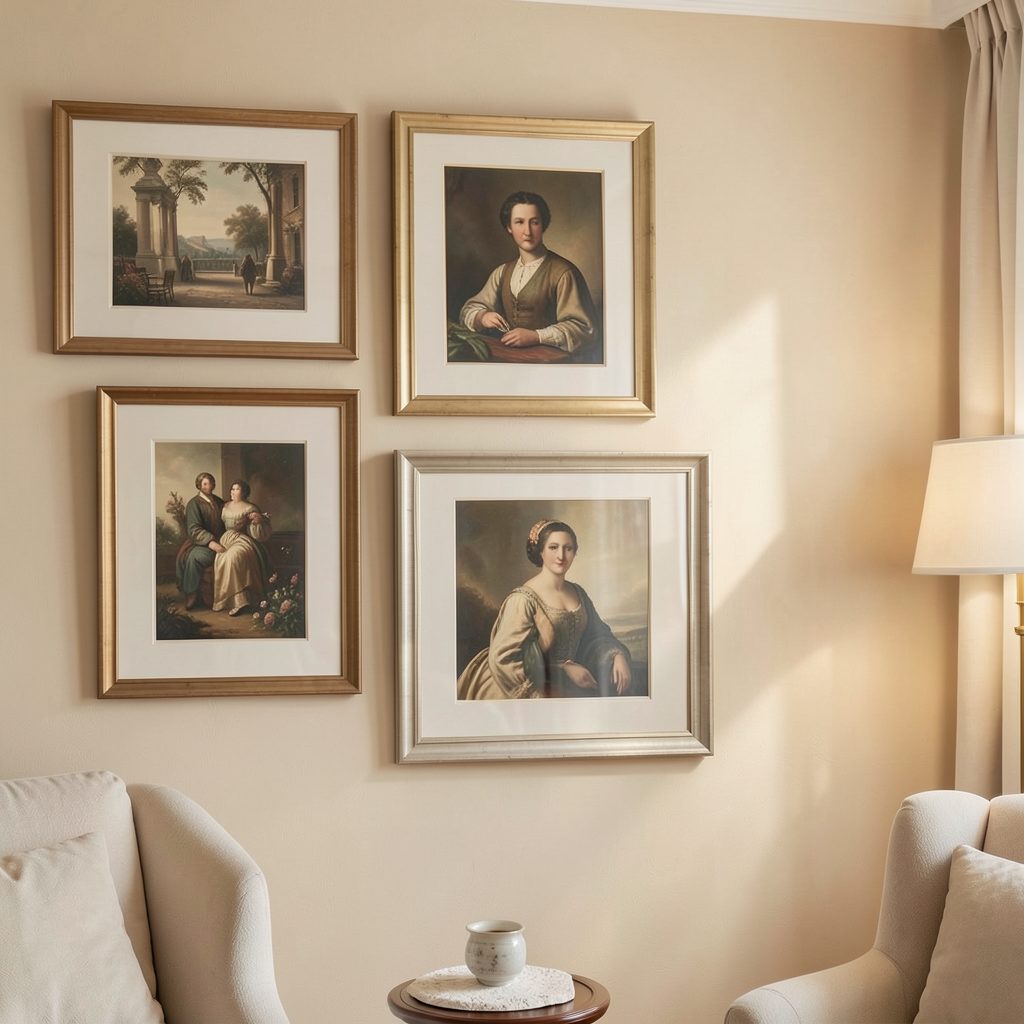
Consider the room’s existing materials before deciding on a finish. In an apartment with terrazzo, linen and warm timber, a natural frame can make a collection feel cohesive. If you are arranging several works, plan a gallery wall before ordering custom glazing so each frame has enough space and visual balance.
A generous mat can make a modest print feel architectural, while close framing creates a sharper, more modern effect. Keep the artwork’s period and medium in mind: ornate moulding may suit an old oil painting, whereas a restrained profile usually supports photography, graphic prints and contemporary works.
Reduce Light And Environmental Stress
UV-protective glazing slows light damage, but it cannot make artwork permanently sunproof. Avoid direct afternoon sun, especially on west-facing walls. In Sydney and Perth, bright coastal light can be intense; in Melbourne, a sunny north-facing room can still expose paper to considerable radiation.
Keep framed works away from heaters, air-conditioner outlets, fireplaces and damp bathroom walls. Bathrooms are attractive places for decorative art, yet steam and condensation can cause paper to cockle, encourage mould and affect wooden frames. Use only properly protected pieces in a well-ventilated powder room, and keep valuable works elsewhere.
Do not hang valuable artwork directly above a bed where a heavy frame could fall. Use appropriate wall anchors for plasterboard, brick or masonry, and check the frame periodically for movement. In rental apartments, removable hanging systems may work for lightweight pieces, but substantial museum-glazed frames generally need secure fixings.
Clean And Maintain The Finished Frame
Dust the frame with a soft, dry microfibre cloth. For the glazing, follow the manufacturer’s instructions and apply cleaner to the cloth rather than spraying the surface. Liquid can seep into frame joints or beneath the mat, leaving marks that are difficult to remove.
Never use abrasive products, household ammonia or rough paper towels on anti-reflective glass. Coatings can be delicate, and small scratches are especially visible when light falls across the surface. Ask the framer whether the glazing has a specific cleaning requirement before taking the work home.
If you are expanding a collection, mix frames confidently while keeping the conservation standards consistent. Different frame finishes can coexist when the mats, spacing and overall alignment are controlled.
Plan The Cost And Long-Term Value
Museum glazing costs more than standard glass, and the price increases with custom sizes, anti-reflective coatings and heavy frames. Treat the expense as protection for the artwork as well as an investment in presentation. Replacing faded paper or repairing damaged photographs can cost far more than selecting quality materials at the beginning.
Ask for two or three quotes from Australian framers and compare what each package includes. Confirm whether the price covers conservation mat board, UV filtering, fitting, hanging hardware and delivery. A cheaper quote may use ordinary glass or acidic backing, so compare specifications rather than the total alone.
For a growing collection, prioritise the most light-sensitive works first. Original watercolours, posters, works on paper, textiles and photographs generally deserve the strongest protection. Use the same considered approach across your home with this framing guide, then let the frame support the artwork instead of competing with it.
Choose one important piece, take its dimensions to a reputable local framer and request a museum-glazing specification. With the right UV protection, archival materials and thoughtful placement, your artwork can remain vivid, legible and beautifully integrated into your home for years.