How to Balance a Large Mirror with Smaller Framed Art
A large mirror can bring light, depth and movement to an apartment, while a cluster of smaller frames adds personality and a collected feel. Together, they create a layered wall arrangement that feels deliberate rather than overly matched. Learn more about How To Plan 2.
The key is to treat the mirror as a major architectural shape and the smaller artworks as supporting pieces. Their position, spacing, frame finishes and relationship to furniture will determine whether the display feels calm and gallery-like or crowded and unsettled.
Give Each Element A Clear Role
Begin by deciding which object should command attention. A generously sized mirror usually works best as the anchor, especially above a sideboard, sofa or console. The framed pieces can then form a visual counterweight beside it, below it or in a compact group that leads the eye towards the reflective surface.
Avoid placing several equally dominant items at the same height. A mirror with a bold black frame and five large artworks may compete for attention. Instead, combine one substantial mirror with smaller prints, photographs or sketches that have quieter borders and varied proportions.
Measure The Wall Before Hanging
Measure the wall, the furniture beneath it and the mirror itself before making any holes. Use painter’s tape to mark the outside edge of the mirror and the overall footprint of the frame cluster. This makes it easier to judge negative space from across the room.
A useful arrangement often leaves 10 to 20 centimetres between the mirror and the nearest frame, depending on their scale. The grouping should also sit in relation to the furniture below it: around 15 to 25 centimetres above a sideboard is usually comfortable, while a larger gap may be needed above a deep sofa.
Balance Weight And Negative Space
Visual weight comes from size, colour, frame thickness and contrast, not simply from the number of objects. A dark mirror frame may need lighter artworks nearby, while a pale timber mirror can support richer prints or deeper-toned borders.
Keep some wall visible between each piece. Negative space prevents a small gallery wall from looking like a single busy block. If the mirror is positioned to one side, use the frames to balance its mass without creating a perfectly symmetrical arrangement. A slightly offset composition often feels more relaxed and contemporary.
Create A Cohesive Frame Language
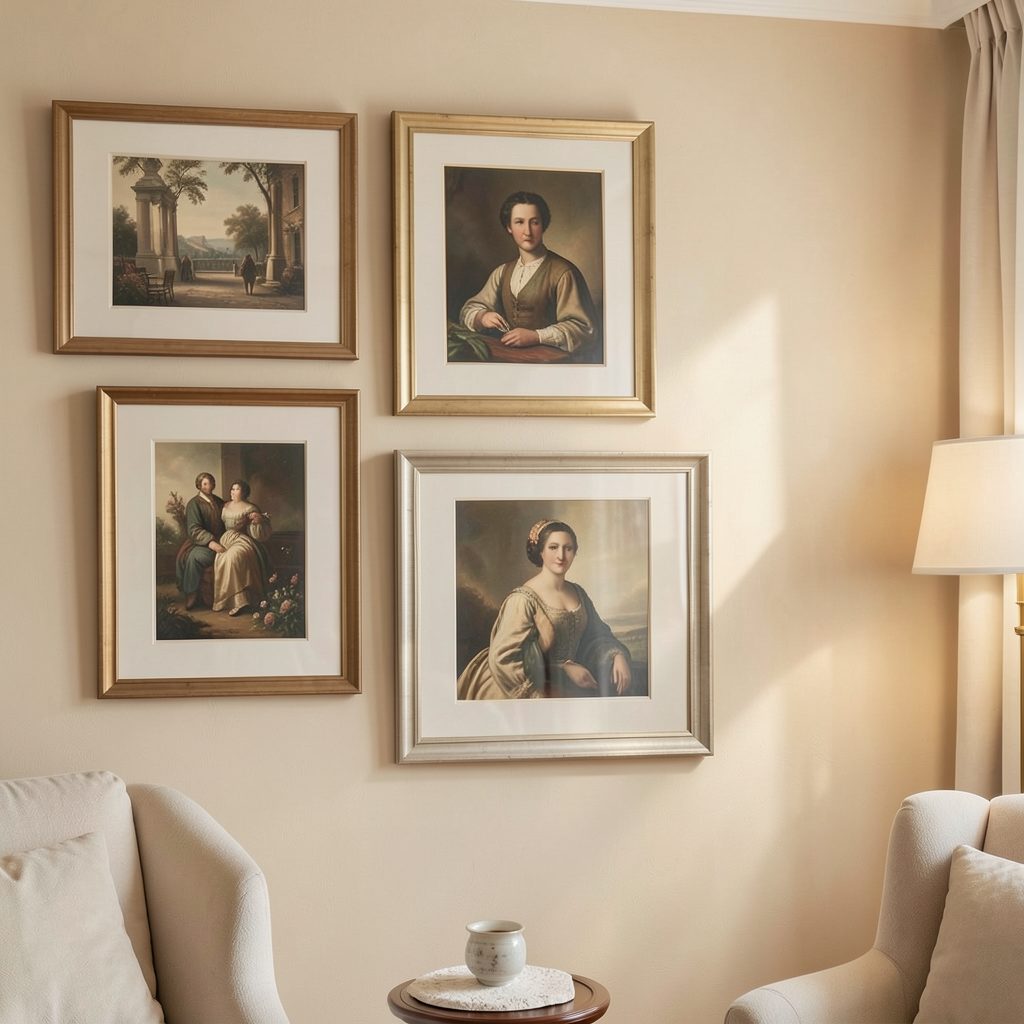
A cluster can include different frame materials, but it needs a connecting detail. You might use black and timber frames together, repeat a warm brass accent, or limit the artwork to a restrained palette of cream, charcoal, ochre and muted green.
For a polished apartment interior, choose one dominant frame finish and one supporting finish. Matching every frame can feel overly formal, while too many materials create visual noise. The mirror’s border should be included in this decision, since it is part of the overall frame language.
If you are still selecting prints, photographs or paintings, use this art selection guide to refine the mood before choosing frame sizes. Artwork that shares a colour, subject or level of contrast will make the arrangement feel connected.
Respond To Australian Light And Scale
Australian homes often receive strong natural light, particularly in north-facing rooms and apartments with broad windows. A mirror opposite direct afternoon sun can create glare or reflect heat, so angle it slightly or position it where it catches softer light from a nearby wall.
In compact Sydney terraces, Melbourne apartments and Brisbane units, vertical arrangements can make a narrow room feel taller without extending too far across the wall. In larger open-plan homes, the mirror may need a substantial frame cluster beside it so the display does not look lost against a wide expanse of plaster.
Local furniture proportions matter too. A low Australian sideboard, slimline console or rattan cabinet may call for a lighter arrangement than a deep, dark timber piece. Consider nearby materials already common in Australian interiors, such as pale oak, travertine, woven fibres and brushed metal.
Plan Around Rental And Strata Rules
Before installing anything, check whether you are renting or living under strata rules. Many Australian rental agreements restrict excessive wall damage, while apartment buildings may have by-laws concerning common walls, drilling, heavy fixtures or changes that affect shared services.
For a rental, use approved picture-hanging systems where suitable, and check the manufacturer’s weight limit rather than relying on adhesive alone. A large mirror is heavier than it appears, especially with a metal or timber frame. In a strata apartment, confirm that the wall is appropriate for anchors and that the installation will not interfere with plumbing or electrical services.
Test the arrangement with removable hooks, paper templates or a full-size cardboard mirror. You can refine the composition without committing to a permanent installation, which is especially helpful when planning your layout in a new apartment.
Install For Safety And Everyday Use
A mirror should be securely fixed according to its weight and the wall construction. Masonry, plasterboard and brick require different anchors, and a professional installer is worthwhile for a very large or heavy piece. Use two fixing points when recommended to prevent the mirror from twisting or shifting.
Think about what the mirror reflects. A view of a leafy balcony, artwork opposite or a well-styled lamp can add depth. A television, cluttered entryway or harsh downlight may become more noticeable. In busy hallways, keep frame corners clear of shoulders and bags, and avoid placing fragile glass where children or pets can knock it.
Refine The Arrangement With Purpose
Once the main pieces are positioned, step back and inspect the wall from the doorway, sofa and usual walking paths. The centre of the display should generally sit near eye level, but the furniture and room proportions matter more than a rigid rule.
Use these practical checks before finalising the installation:
- Keep the mirror large enough to anchor the composition without covering every open section of wall.
- Repeat one colour or material across at least two frames for visual continuity.
- Leave consistent gaps within the artwork cluster, with a slightly larger gap beside the mirror.
- Align one edge, centre line or horizontal band to stop the arrangement feeling random.
- Check reflections at different times of day, especially in bright Australian rooms.
- Use paper templates before drilling into plasterboard, brick or concrete.
- Reassess the display after adding nearby lamps, plants, books and decorative objects.
A successful arrangement should feel balanced from a distance and interesting up close. The mirror supplies openness and light; the smaller framed works provide texture, memory and character. Together, they can turn an ordinary apartment wall into a considered focal point without making the room feel overdecorated.
Take a photograph of the wall from the main entry point, adjust the spacing while the pieces are still templated, and then install each item with suitable hardware. For more apartment decorating ideas and display techniques, subscribe to Focus LDN’s email updates.