Planning a Gallery Wall Around a Television
A television can be the most visually dominant object in a living room, especially when it sits above a console or fireplace. A carefully arranged gallery wall helps the screen feel integrated rather than isolated, turning a practical viewing area into a considered part of the home.
The best layouts balance the strong horizontal and rectangular shape of the television with artwork that introduces variation. Scale, spacing, frame finishes, and the surrounding wall colour all influence whether the arrangement appears calm, collected, or overcrowded.
Before choosing prints, measure the full area available and decide how much visual weight the wall can support. The goal is a composition that acknowledges the screen without competing with it.
Start With The Room’s Architecture
Look at the television wall as a whole rather than treating the screen as an object that must be disguised. Note the position of doors, windows, shelves, radiators, sofas, and power points. These fixed elements determine the outer boundaries of your artwork arrangement.
A gallery wall usually works best when its overall width relates to the furniture beneath it. If the television is mounted above a media console, aim for artwork that extends slightly beyond the screen on each side, while keeping the composition visually connected to the furniture below.
Leave enough breathing room around the television. A narrow border of empty wall can make the layout feel intentional, while frames pressed too close to the screen may create a cluttered edge.
Choose A Visual Anchor
The television should remain the practical centre of the arrangement, but it does not need to be the artistic focal point. A large painting, textile, photograph, or pair of substantial prints can provide a counterweight and help distribute attention across the wall.
For a symmetrical scheme, place similar-sized pieces on either side of the screen. An asymmetrical display feels more relaxed: combine one larger work with several smaller pieces, allowing the shapes to balance each other without mirroring one another exactly. Browse this gallery art guide for inspiration when deciding whether your collection should feel curated, eclectic, or minimal.
Use the television’s edges as reference lines. Frames can align with its top, bottom, or side edges, but avoid making every line perfectly rigid unless the rest of the room has a strongly architectural style.
Match Scale And Spacing
The relationship between the screen and the artwork matters more than the number of pieces. Small frames scattered across a large wall may look incidental, while oversized works can make the television appear trapped. Build the arrangement around a clear visual rhythm.
| Wall Situation | Suitable Artwork Approach | Spacing Guide |
|---|---|---|
| Wide wall above a low console | One large work with smaller supporting pieces | 8–15 cm between frames |
| Compact wall with a medium screen | Two or three balanced works | 6–10 cm between frames |
| Television above a fireplace | Narrow vertical pieces at the sides | Keep clear of heat and mantel edges |
| Dark screen on a pale wall | Tonal art with a few darker accents | Repeat dark tones sparingly |
| Bright or patterned wall | Simple frames and quieter artwork | Use fewer pieces with wider gaps |
Lay the frames on the floor before making holes. Begin with the largest piece, position the television-shaped rectangle in the centre, and place the remaining works around it. Cut paper templates if the arrangement is complex, then tape them to the wall to judge the proportions from the sofa.
Keep the centre of the composition at a comfortable viewing height. Artwork should generally relate to seated eye level, while the screen must remain easy to watch without forcing the neck upward.
Create Cohesion With Frames
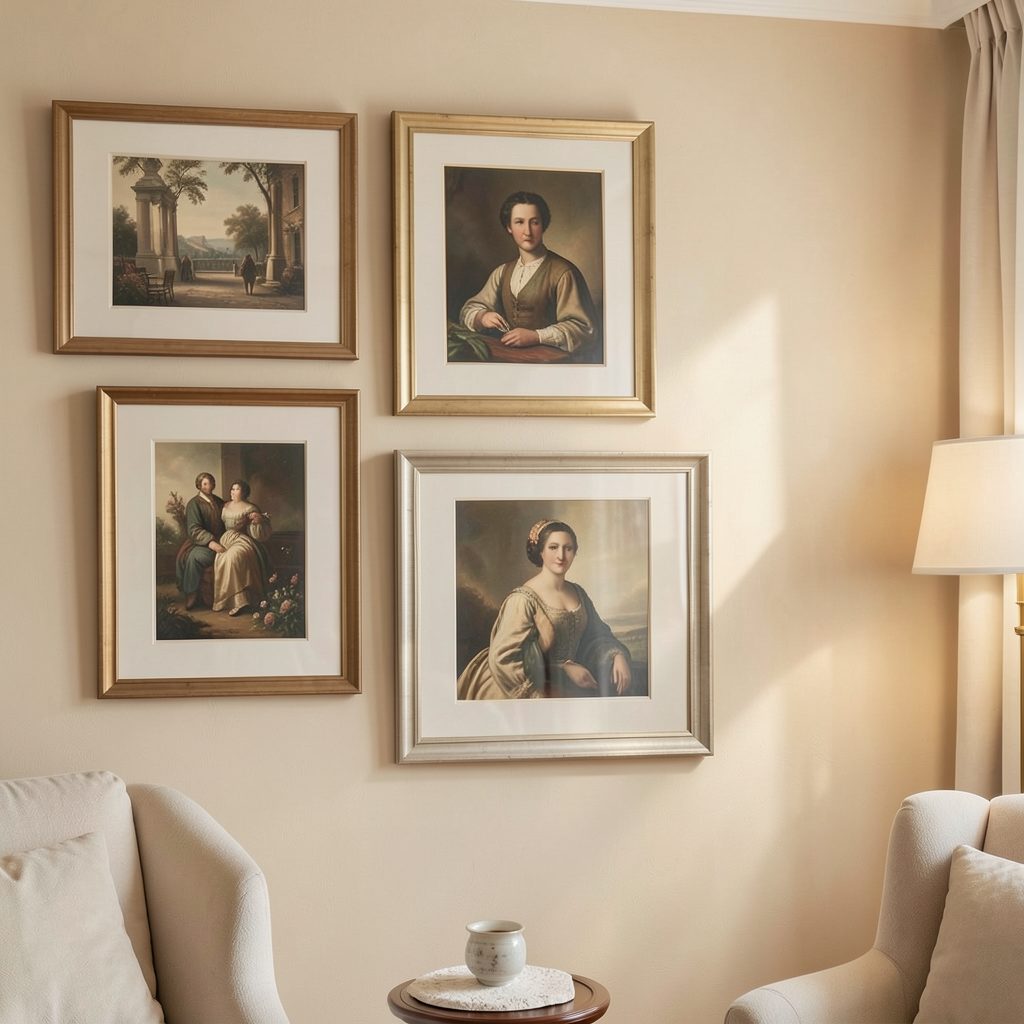
Frame consistency is one of the easiest ways to make a mixed collection look deliberate. A restrained palette of black, natural wood, white, or brushed metal can unite different images without making them appear identical.
If the television has a black bezel, black frames can echo its finish and visually connect the screen to the artwork. Natural oak or walnut brings warmth to a technology-heavy wall, while slim white frames suit a light, minimalist interior. Use one dominant finish and one supporting finish for a composed result.
Varying frame widths can add depth, though too many mouldings may compete with the screen. Consider mat boards for photographs and smaller prints; the extra border gives each work room to breathe and prevents the display from becoming a dense block of colour.
Add Texture Without Visual Noise
A television is a smooth, reflective surface, so introducing tactile materials can soften the wall. Consider a woven wall hanging, a ceramic piece, a shallow carved panel, or artwork printed on textured paper. These additions create subtle contrast without relying on bold colour.
Texture is especially useful in neutral rooms where a gallery wall might otherwise feel flat. Ideas in minimalist art styling show how linen, handmade paper, timber, and restrained artwork can add warmth while preserving a clean aesthetic.
Keep reflective glass away from direct windows or lamps where possible. Glare can make both the artwork and the screen difficult to enjoy. Anti-reflective glazing is a worthwhile choice for particularly bright rooms, especially when the gallery wall is opposite a large window.
Refine The Arrangement
Once the major pieces are in place, edit with purpose. The display should have a consistent outer boundary, even if the internal arrangement is loose. Step back regularly and assess it from the main seating position rather than standing directly beneath the frames.
Useful finishing principles include:
- Repeat one or two colours from the room in the artwork.
- Keep the heaviest visual pieces lower in the arrangement.
- Mix orientation carefully so vertical and horizontal works feel balanced.
- Leave space around speakers, controls, and ventilation points.
- Hide visible cables so they do not interrupt the composition.
Lighting can complete the effect. Soft wall washing, directional picture lights, or dimmable lamps will reveal the artwork after dark without creating distracting reflections on the television. Avoid placing a bright light directly behind the sofa or opposite the screen.
Make The Wall Feel Lived In
A successful display should work when the television is on and when it is switched off. That means the artwork needs enough character to hold the wall during quiet moments, while the overall composition remains calm during viewing.
Decorative objects on the console can reinforce the arrangement: a low vase, a stack of books, or a small sculptural piece can anchor the lower edge. Keep these objects low and sparse so they do not block the screen or make the wall feel overloaded.
Give yourself permission to adjust the arrangement after living with it. A frame may need to move a few centimetres, or one piece may work better in another room. For further apartment decorating ideas and display inspiration, explore Focus LDN home and build a collection that reflects the way you actually live.
Take a photograph of the wall from the sofa, check it in both daylight and evening light, and make the final adjustments with comfort and balance in mind. A television does not have to interrupt a stylish interior; with thoughtful scale, spacing, and texture, it can become part of a gallery wall that feels cohesive, personal, and ready to enjoy.