A gallery wall for a breakfast nook with bench seating
A breakfast nook with bench seating has the relaxed character of a small café, but its wall can easily become an afterthought. A considered arrangement of prints, photographs and small artworks turns this everyday corner into a clear focal point without making the kitchen feel busy.
The best gallery walls balance visual interest with practical living. They need to work around the bench, table, windows and storage, while standing up to morning light, toast crumbs and the regular movement of a busy Australian household.
Start with the bench and the wall
Begin by measuring the usable wall area above the bench. Include the height of the seat back, the depth of the tabletop and the clearance needed for anyone sitting down. A useful starting point is to keep the lowest frame around 15 to 25 centimetres above the bench, allowing the artwork to feel connected to the seating rather than floating too high.
Treat the width of the table as an invisible boundary. A horizontal arrangement can echo a long built-in bench, while a compact rectangular grouping suits a round table or a narrow breakfast corner. In a Sydney terrace or Melbourne apartment, where dining areas are often tucked beside the kitchen, keeping the composition contained helps preserve a sense of space.
Use paper templates before making holes. Cut pieces to the size of each frame, tape them to the wall and live with the arrangement for a day. Check it from the kitchen, from the hallway and from the seated position. This simple test reveals whether the artwork is too low, too wide or competing with a pendant light.
Build a composition that feels easy
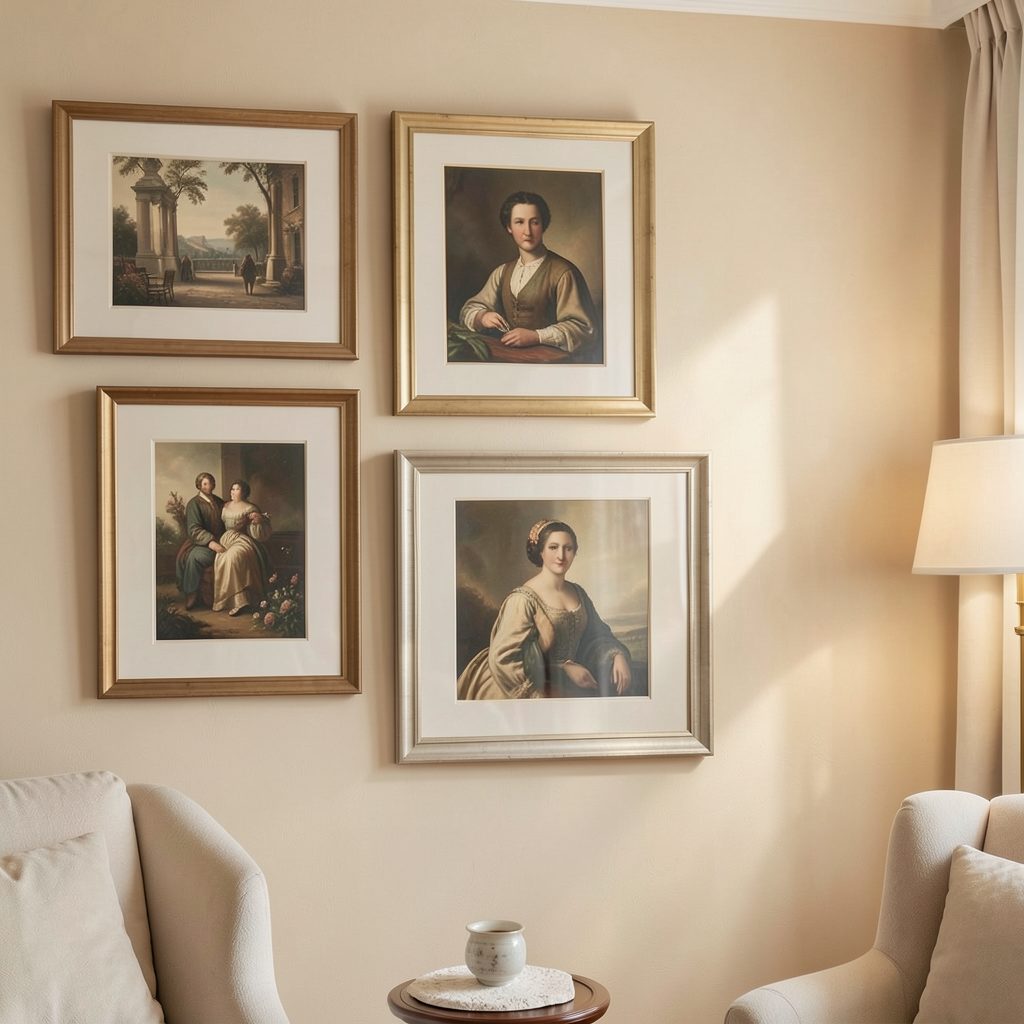
A gallery wall looks collected when it includes variation, but the arrangement still needs a visual rule. You might use a shared colour palette, matching timber frames or a consistent margin between pieces. For a softer breakfast nook, combine botanical drawings, food photography, abstract shapes and small line studies in warm neutrals.
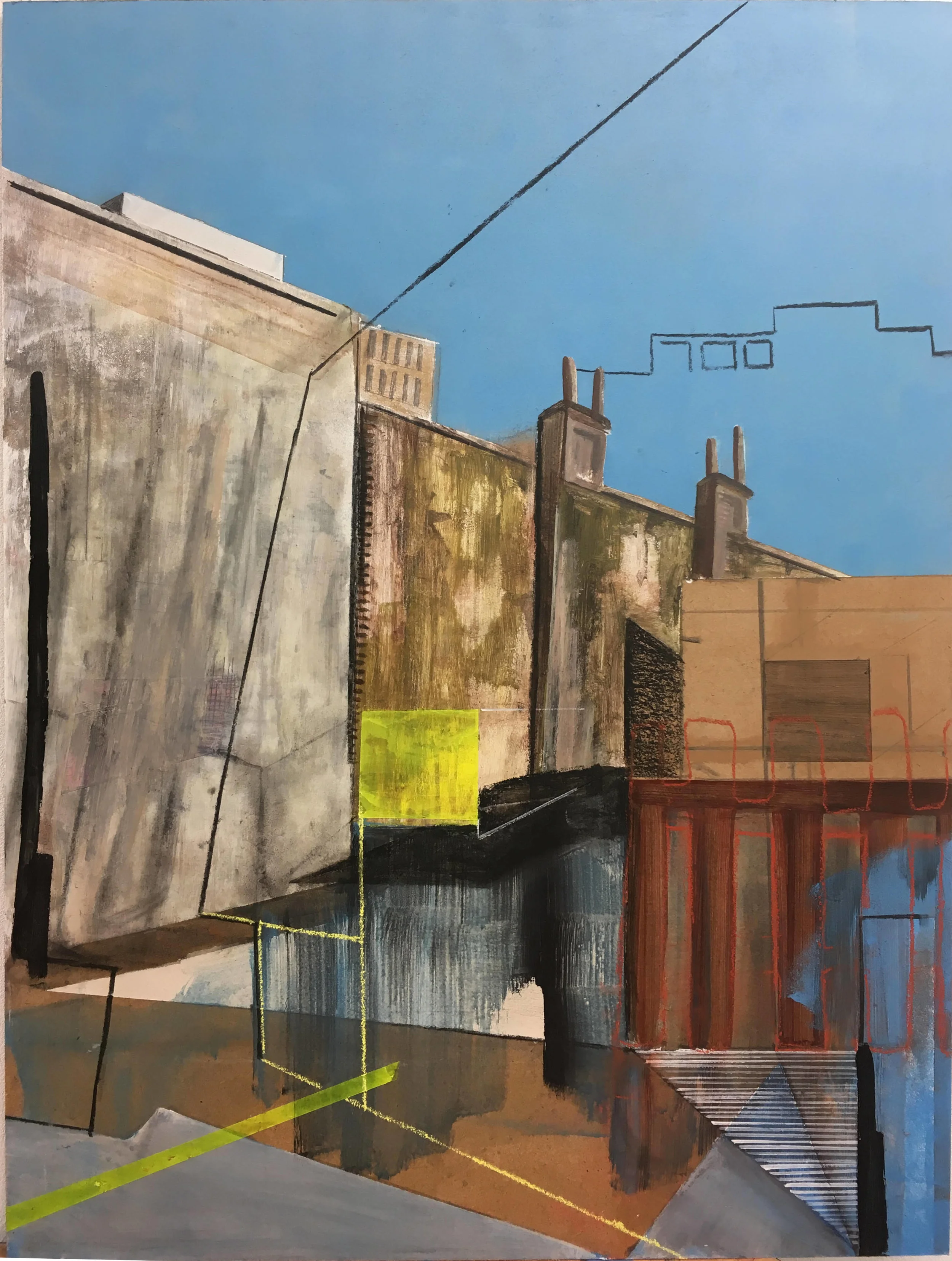
The subject matter can connect subtly with the room without becoming overly literal. Fruit, flowers, ceramics, landscapes and café scenes all suit a space associated with coffee and meals. Browse these art subject ideas for a wider selection, then choose pieces that reflect the colours already present in the upholstery, splashback or crockery.
Try placing the largest artwork slightly off-centre and building smaller pieces around it. This creates movement and prevents the display from resembling a rigid grid. If the bench is upholstered, repeat one or two of its colours in the artwork so the wall feels part of the nook rather than an unrelated collection.
Choose art for morning light
Natural light changes dramatically across Australian homes. A north-facing nook in Brisbane may receive strong sun for much of the day, while a south-facing Melbourne corner can feel cooler and dimmer. Observe the wall at breakfast time before selecting valuable originals, delicate paper works or highly saturated prints.
Glass can create reflections near a window, especially when the sun reaches the wall at a low angle. Consider non-glare glazing for prominent pieces, or place brighter works on the less reflective side of the arrangement. UV-protective glazing is worthwhile for works exposed to direct sunlight, as fading can be difficult to reverse.
Humidity also matters in coastal areas such as Sydney, Perth and Brisbane. Avoid placing unsealed paper directly against a damp external wall, and allow a little air circulation behind frames. Archival mounting and acid-free backing help protect prints from yellowing over time.
Select frames for daily life
Frame style has a major effect on the mood of the nook. Pale oak and ash create a Scandinavian feel, black frames add definition to white walls, and brushed metal can complement stainless-steel appliances. A mix of finishes often looks more relaxed, provided one material appears more than once.
For a small kitchen wall, scale is just as important as style. These small kitchen wall ideas can help you plan a compact display without overwhelming cabinetry or open shelving. Keep especially bulky frames away from the area where shoulders and bags pass, and avoid deep ledges above the bench if they reduce head clearance.
Choose wipeable, durable surfaces where possible. Acrylic glazing is lighter than glass and less likely to shatter in a busy household, although it can scratch more easily. If you use inexpensive ready-made frames from Australian retailers such as Kmart, IKEA or local homewares stores, upgrade the backing and hanging hardware when the artwork deserves better protection.
Hang safely in an Australian home
The wall construction determines how you should install the display. Plasterboard, brick veneer and masonry require different fixings, so locate studs where possible and select hardware rated for the combined weight of each frame. A gallery wall above a bench should feel secure rather than relying on a collection of undersized adhesive hooks.
Renters should check their agreement before making holes. Rules vary between states and properties, and Australian tenancy legislation may allow reasonable picture hanging in some circumstances while still requiring approval for particular alterations or heavier fixtures. Strata buildings can also have by-laws affecting drilling, especially in apartments with shared or fragile walls.
For a rental in Adelaide or Canberra, removable picture strips may be a practical choice for lightweight prints, but follow the manufacturer’s weight limits and surface instructions precisely. Do not use them on dusty, freshly painted or textured surfaces without checking compatibility. Grouping smaller frames on one picture ledge can reduce the number of fixings, although the ledge itself still needs proper support.
Finish the nook with practical details
Once the art is positioned, style the rest of the breakfast corner with restraint. A ceramic vase, a bowl of citrus, a linen cushion or a small plant can reinforce the colours in the gallery wall. Keep the tabletop mostly clear so the nook remains useful for breakfast, homework and the inevitable laptop.
Lighting can strengthen the display after sunset. A warm wall light or adjustable track fitting makes the artwork visible without producing harsh glare. In open-plan Australian homes, use a light temperature that works with the kitchen and living area rather than creating a noticeably colder patch above the bench.
Finally, check that every frame can be cleaned easily and that no artwork is vulnerable to splashes from the sink or stovetop. Leave enough breathing room around the composition for future additions, but do not add pieces simply to fill gaps. A small, well-edited collection will make the bench feel intentional every morning.
Save your favourite prints, test the layout with paper templates and build the wall around the way your household actually uses the nook. With thoughtful spacing, suitable frames and secure hanging, an ordinary breakfast corner can become one of the most welcoming details in the home.