Best art subjects for a spa-like bathroom
A bathroom designed to feel like a spa should engage the senses without becoming visually busy. Artwork plays a quiet but important role: it can soften hard tile, introduce an organic note, and give the room a sense of intention. The most successful pieces support relaxation rather than competing with mirrors, lighting, or useful surfaces.
The best choices often draw from nature, water, movement, and gentle abstraction. These subjects create a visual pause, especially when paired with warm neutrals, muted greens, pale blues, or mineral-inspired shades. Framing, scale, and resistance to humidity matter just as much as the image itself.
A spa-style bathroom does not need to look sterile or overly minimal. A carefully selected print, photograph, or small gallery arrangement can add personality while preserving the calm atmosphere associated with boutique hotels and wellness retreats.
Set the emotional direction
Before choosing a subject, decide how you want the bathroom to feel when you enter it. A room intended for slow mornings may suit misty landscapes, delicate botanical studies, or soft sunrise imagery. For an evening bathing space, darker mineral tones, moonlit water, and abstract forms can create a more enveloping mood.
Consider the visual temperature of the existing scheme. Crisp white tile works well with pale coastal photography and simple line drawings, while warmer stone and wood finishes can support desert landscapes, clay-toned abstracts, or dried botanical art. The artwork should connect with the room’s materials without matching every detail too literally.
Bring nature indoors
Botanical artwork is one of the most reliable choices for a relaxing bathroom. Ferns, eucalyptus, palms, grasses, and olive branches introduce the idea of fresh air and outdoor calm. Select finely detailed studies for a refined look, or use oversized leaf forms when the room needs a stronger focal point.
Water-themed images can work beautifully, too. A quiet shoreline, rippling surface, fog-covered lake, or abstract study of waves provides movement without the visual intensity of a busy scene. Avoid photographs with dramatic storms or crowded beaches if the aim is a restorative, spa-inspired interior.
Floral subjects are best when they feel restrained. A single stem, pressed-flower composition, or tonal flower photograph often looks more sophisticated than a colorful, densely arranged bouquet. Botanical prints can also bridge the gap between modern minimalism and more traditional bathroom styling.
If you are an artist or collector with a piece suited to a serene interior, you can submit your artwork for consideration and discover how a carefully presented work might contribute to a broader design story.
Use abstraction for visual stillness
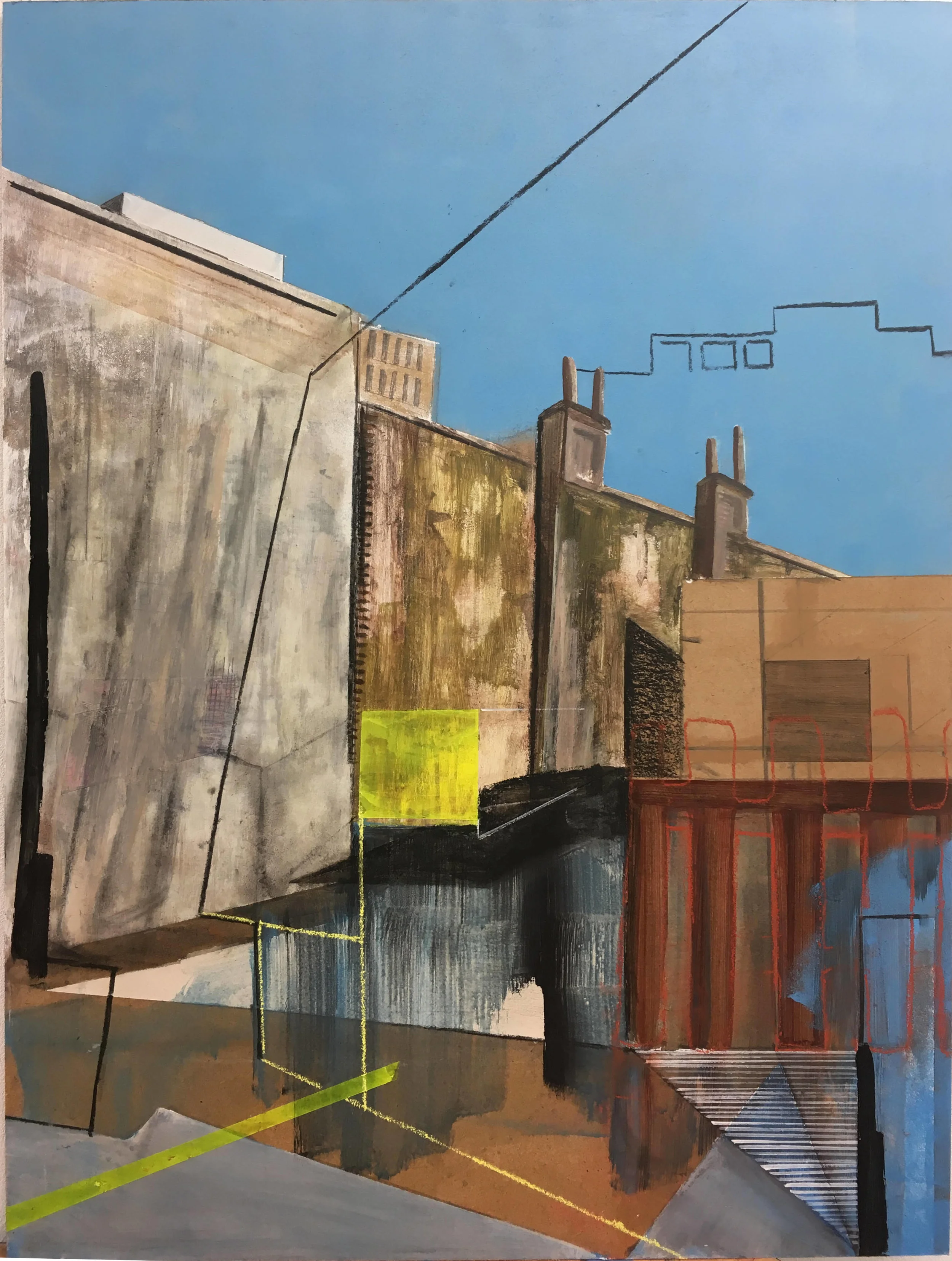
Abstract art can create a spa-like atmosphere without depicting a specific place. Look for compositions based on soft curves, layered washes, blurred edges, or gently repeated shapes. These forms encourage the eye to move slowly around the image, which is useful in a room designed for decompression.
Mineral-inspired abstracts are particularly effective. Shapes that suggest stone, sand, water, or marble add depth while remaining compatible with a neutral palette. Tonal pieces in cream, taupe, grey, sage, or dusty blue can be calming, while a small amount of terracotta, ochre, or charcoal gives the arrangement definition.
Minimal line art is another versatile option. A continuous line drawing, architectural contour, or spare figure study can add a human touch while preserving a clean visual field. Choose a design with generous negative space so it feels deliberate rather than unfinished.
| Art subject | Mood created | Best placement | Suitable palette |
|---|---|---|---|
| Misty landscape | Quiet and spacious | Above a freestanding bath | Blue-grey, cream, sage |
| Botanical study | Fresh and organic | Beside a vanity or window | Green, ivory, charcoal |
| Rippling water | Fluid and restorative | On a broad empty wall | Pale blue, silver, sand |
| Mineral abstract | Grounded and refined | Above a towel rail or bench | Taupe, stone, clay |
| Minimal line drawing | Elegant and personal | In a small wall grouping | Black, white, beige |
Choose art that suits bathroom conditions
Bathrooms expose artwork to moisture, temperature changes, and occasional splashes. Original works on unsealed paper, delicate textiles, and valuable pieces may deteriorate in a poorly ventilated room. Reserve the most vulnerable art for a powder room or a wall well away from the shower.
Use glazing with care. Acrylic glazing is lighter and less likely to shatter than glass, making it useful above a bath or in a compact space. A sealed frame, archival backing, and a small gap between the artwork and the wall can provide additional protection. Strong ventilation remains essential, since no frame can compensate for persistent condensation.
Placement affects longevity as much as materials do. Keep artwork away from direct spray, open containers, and areas where wet hands may touch the frame. A wall opposite the shower, a niche beside the vanity, or the space above a closed toilet cistern is usually safer than the immediate edge of a tub.
Build a balanced arrangement
A single large artwork can make a bathroom feel considered and architectural. Choose a scale that relates to the vanity, bath, or main wall rather than selecting the largest available frame. As a general visual guide, art above a vanity should occupy roughly half to two-thirds of the furniture’s width, leaving enough breathing room at either side.
Small bathrooms benefit from a narrow vertical print or a pair of modest works stacked one above the other. In a larger room, three coordinated pieces can create a gallery effect without overwhelming the peaceful quality of the space. Keep the spacing consistent and let one element—such as a dominant color or frame finish—unify the group.
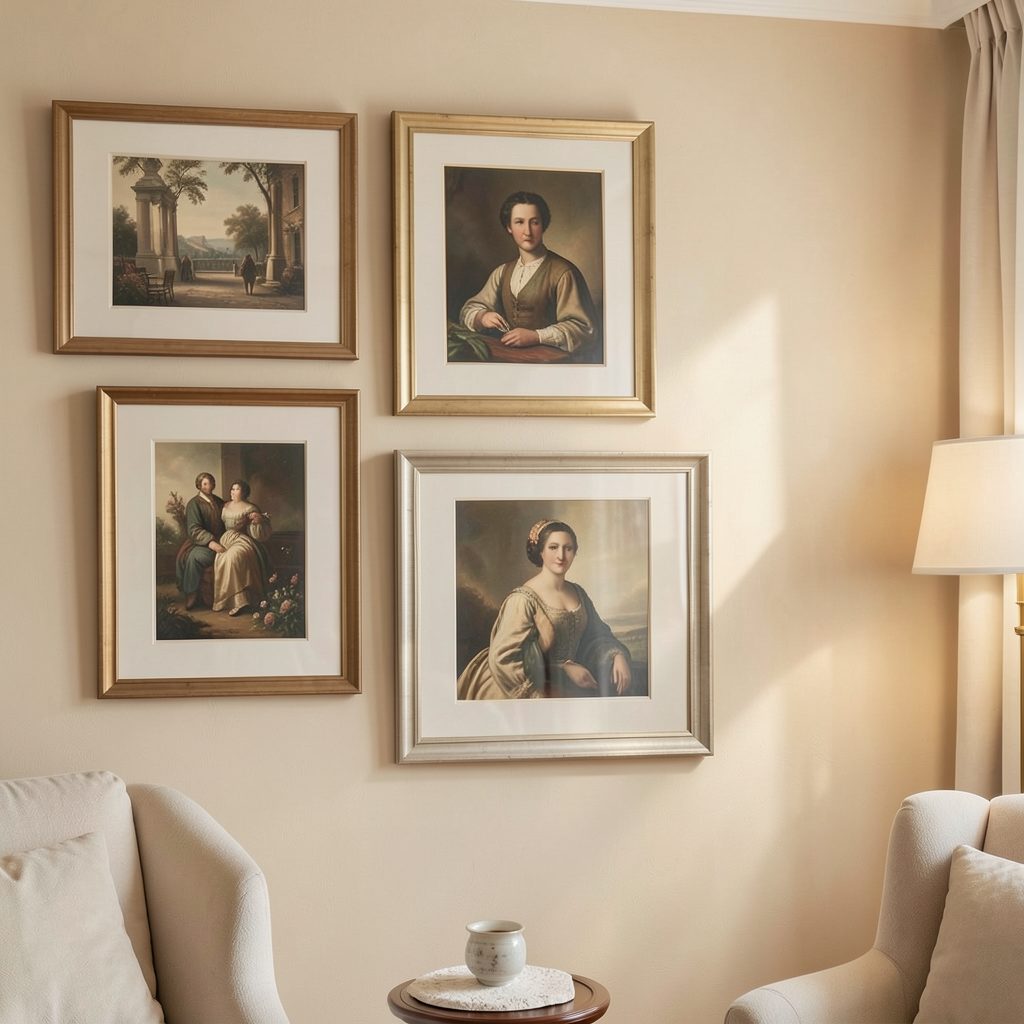
Museum-inspired presentation can make even simple prints feel purposeful. Small gallery-style labels beside a favorite piece add an editorial detail, especially in a guest bathroom or a home with a collected, design-conscious character. Keep the wording minimal so the label enhances the artwork rather than turning the wall into a display board.
Practical styling choices
- Select one dominant subject, such as a botanical, landscape, or abstract form.
- Repeat one bathroom color in the artwork for a subtle connection.
- Use matching frames when the room is small or visually detailed.
- Leave clear space around each piece to preserve a restful rhythm.
- Hang art at eye level while accounting for seated and standing views.
Add texture without visual clutter
Artwork feels more integrated when the surrounding accessories support its mood. Natural wood, honed stone, brushed metal, and woven fibers can echo the organic qualities of landscapes and botanical studies. Keep the number of finishes limited so the room continues to feel composed.
Textiles are especially useful for warming a bathroom with glossy tile. A small washable runner, a linen hand towel, or a simple woven basket can introduce softness beneath framed art. Explore ideas for soft bathroom textiles that add comfort without making the room feel crowded or difficult to maintain.
Lighting should reveal the artwork gently. Diffused sconces or warm overhead illumination are preferable to harsh spotlights that create glare on glazing. If the piece is near a mirror, check the sightlines from different angles so reflections do not overpower the image.
Choose art that gives the room a reason to slow down. A quiet landscape, restrained botanical, or softly layered abstract can turn an ordinary bathroom into a more personal retreat. Begin with one meaningful piece, frame it for the environment, and build the surrounding details around its mood.