Art That Works Well in Rooms with Patterned Wallpaper
Patterned wallpaper brings depth, drama and personality to a room, but it also raises an immediate question for anyone hanging art: which pieces can survive the visual noise? A bold floral, a geometric print or a heritage toile all compete for attention, and choosing the wrong artwork can make a wall feel cluttered rather than curated. Getting the pairing right takes a little forethought, especially in older Australian homes where original features often meet modern interiors.
Across Sydney terraces, Melbourne Edwardians and Brisbane Queenslanders, patterned wallpaper has enjoyed a real revival in recent years. Renovators on shows like The Block have leaned into heritage prints, while local stockists report steady demand for botanical and geometric wallpapers in newer apartments. The challenge is the same everywhere: layering art onto a busy background without flattening either element.
The good news is that some styles of art naturally complement patterned wallpaper, while others fight it. The trick lies in reading your wallpaper first, then working backwards to find pieces that either quieten the room down or hold their own against the pattern. From solid colour fields to monochrome photography and botanical prints, several art styles tend to work particularly well against busy walls.
Reading the Pattern Before Choosing the Art
The first step is honestly assessing the wallpaper you are working with. Some patterns announce themselves loudly from across the room, while others recede into the background. A dense floral or a vivid Art Deco print demands very different art choices than a subtle textured design or a soft repeating motif. Walk to the opposite side of the room, squint slightly, and notice what still draws the eye. If the wallpaper itself is the loudest element on the wall, your art should probably step back rather than forward.
In Australian homes, this matters because pattern density varies so much. Federation-era prints in renovated terraces around Paddington and Balmain often feature small-scale florals that read as almost textured from a distance. By contrast, newer tropical and palm prints popular in Brisbane renovations read as bold statements. Knowing which category you are in shapes every art decision that follows, and saves you from buying a piece that disappears entirely.
Solid Colour Pieces That Calm a Busy Wall
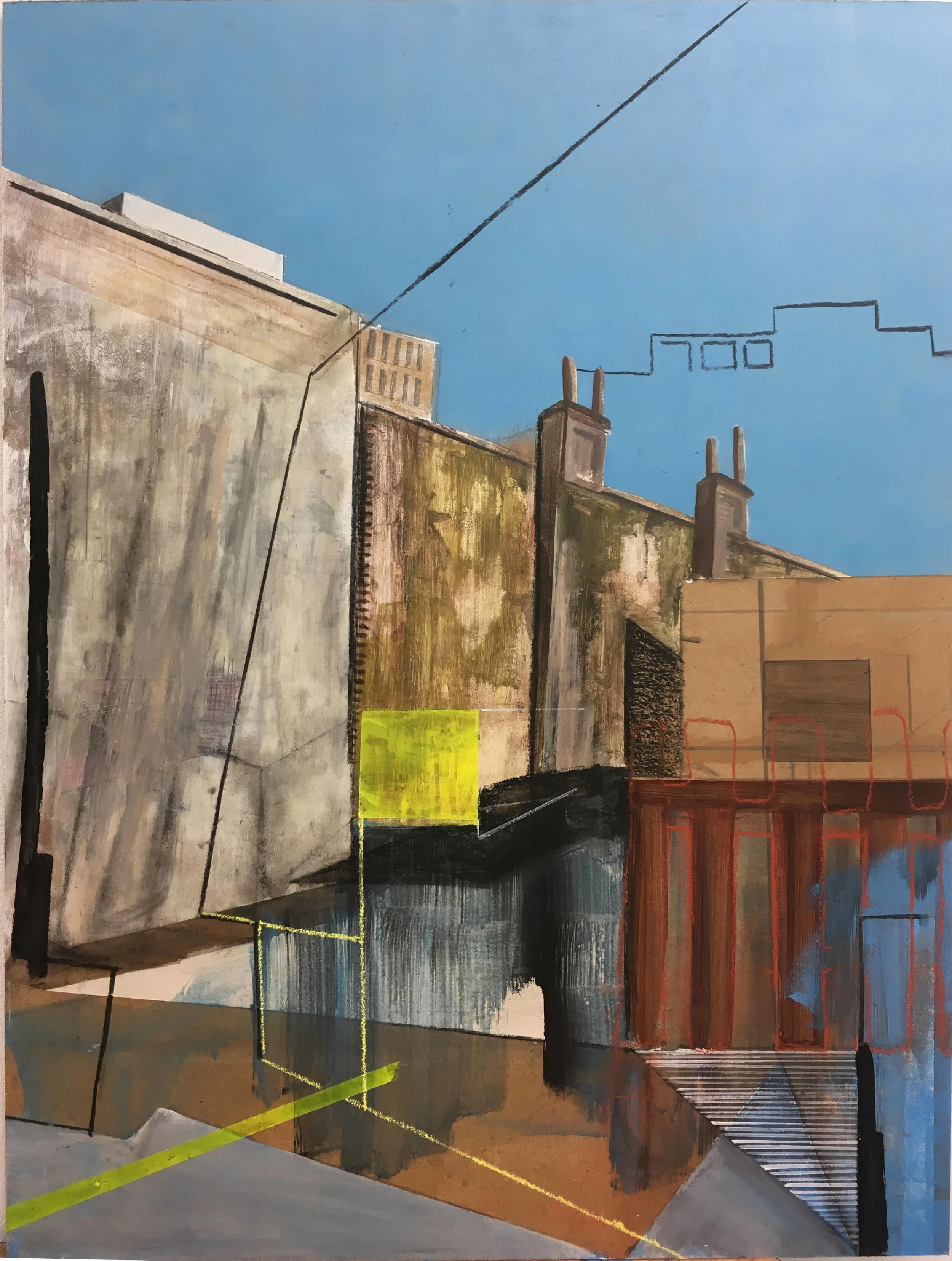
When the wallpaper is doing the talking, art with broad areas of solid colour tends to work beautifully. Large abstract pieces in single block hues, minimalist colour field works and even framed textile panels can sit against patterned walls without competing for attention. The art becomes a moment of visual rest, the eye landing on a calmer rectangle before travelling back to the wallpaper's detail.
Some of the most reliable options include:
- Large abstract paintings in a single block hue
- Colour field prints in muted or considered tones
- Framed textile panels or woven wall pieces
- Monochrome photographic prints in solid frames
Australian artists working in this style are easy to find online and at local markets, particularly in inner-city suburbs of Sydney and Melbourne. Look for painters who work in flat colour, sculptors who create wall-hung pieces in single materials, or high-quality prints of international colour field works. The aim is a piece that feels confident in its simplicity, letting the wallpaper remain the supporting actor.
Black and White Photography as a Quiet Anchor
Black and white photography is one of the most reliable partners for patterned wallpaper. The absence of colour strips the artwork back to shape, light and composition, which means the pattern behind it can do the colour work without any clash. A single large monochrome print can anchor an entire wall, while a series of smaller frames can create rhythm along a hallway or above a sideboard.
Consider sourcing prints from Australian photographers, or commissioning a local artist for a portrait series. Cities like Melbourne and Sydney have strong photography communities, and many galleries sell affordable limited editions. Hanging the frames with generous white mounts makes the quiet effect even stronger, giving each photograph room to breathe against the patterned backdrop.
Botanical Prints That Echo the Wallpaper
If you cannot resist leaning into the pattern rather than away from it, botanical and nature-themed prints offer a natural bridge. Wallpapers featuring leaves, blooms or trailing vines pair beautifully with framed botanical illustrations, vintage seed catalogues or contemporary photographs of Australian flora. The themes rhyme without duplicating, creating a layered look that feels collected rather than chaotic.
Australian native botanicals work particularly well in homes with European-style heritage wallpapers, adding a subtle local touch. Eucalyptus, banksia and flowering gum motifs sit comfortably next to classic toile or chintz. Just keep scale in mind: if your wallpaper features small-scale botanicals, choose artwork with larger, looser foliage so the two patterns do not blur together. For more on arranging pieces thoughtfully across a busy wall, see the layering guide.
Frames and Mounts That Support the Pairing
Frame choice can make or break the combination. Slim metal frames in black, brass or white tend to disappear into the wall, letting both the art and the wallpaper lead. Thicker wooden frames can work too, particularly in homes where natural timber already features heavily, but they tend to add another visual layer that can quickly become too much.
A few reliable combinations include:
- Slim black metal for monochrome prints
- Natural oak or walnut for botanical works
- Simple white box frames for photography
- Floating frames for canvas or textile pieces
Mounts also matter more than people realise. A wide white mount around a photograph or print gives the eye a buffer between the art and the busy pattern behind. For practical advice on preparing and hanging pieces in tricky spots, the hanging guide covers everything from choosing hardware for plaster walls in older Queenslanders to spacing frames evenly along a feature wall.
Layering Pieces Without Visual Chaos
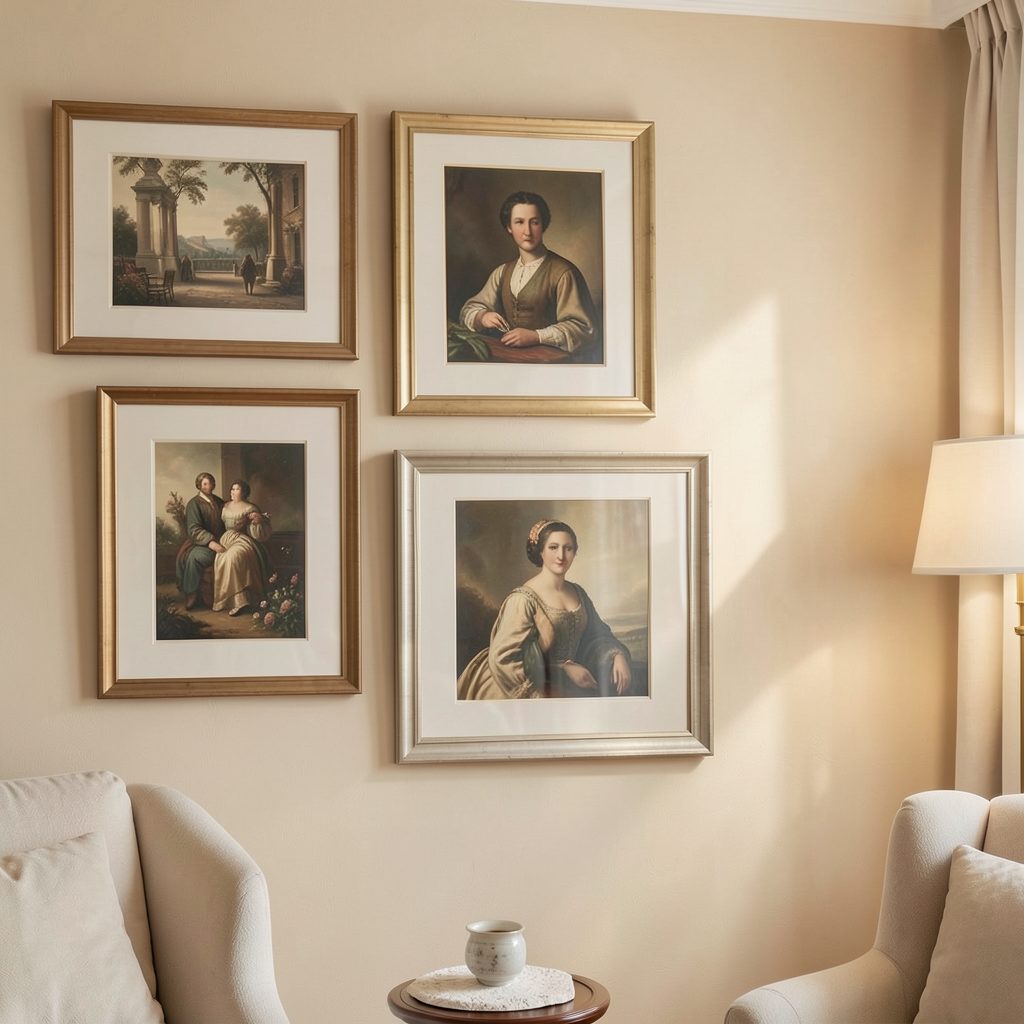
The final consideration is how multiple pieces sit together. When patterned wallpaper is already in play, restraint is everything. Hang one large piece rather than three small ones where possible, and resist the urge to fill every centimetre of wall. Empty space around the artwork allows the wallpaper to be appreciated too, and stops the wall from feeling like a competition.
Where you do want a gallery wall, treat the wallpaper as a third member of the arrangement rather than a backdrop. Choose pieces that share a thread, whether that is a recurring colour, a common subject or a consistent frame, and let the wallpaper tie them together through its rhythm. Done well, the wallpaper becomes the connective tissue of the whole wall rather than something to work around.
There is plenty of inspiration out there for creating calm, considered arrangements. The Focus LDN gallery gathers ideas on minimalist walls, frame selection and stylish home living across Australian and international interiors, with options to suit any room with patterned wallpaper.