Layering Art on a Mantelpiece for Depth and Interest
A mantelpiece gives artwork a natural stage, but the most compelling arrangements rarely look perfectly flat or evenly spaced. By layering frames, prints, objects, and organic details, you can create a display that feels collected over time while still working with the proportions of the room.
The aim is to build depth without making the fireplace feel crowded. A successful mantel arrangement usually combines different heights, textures, and visual weights, allowing each piece to contribute to the overall composition.
Before placing anything, consider the wall, the fireplace surround, and the furniture below it as one visual zone. The mantel should support the room’s style rather than compete with a television, statement mirror, or large architectural feature.
Start With A Strong Backdrop
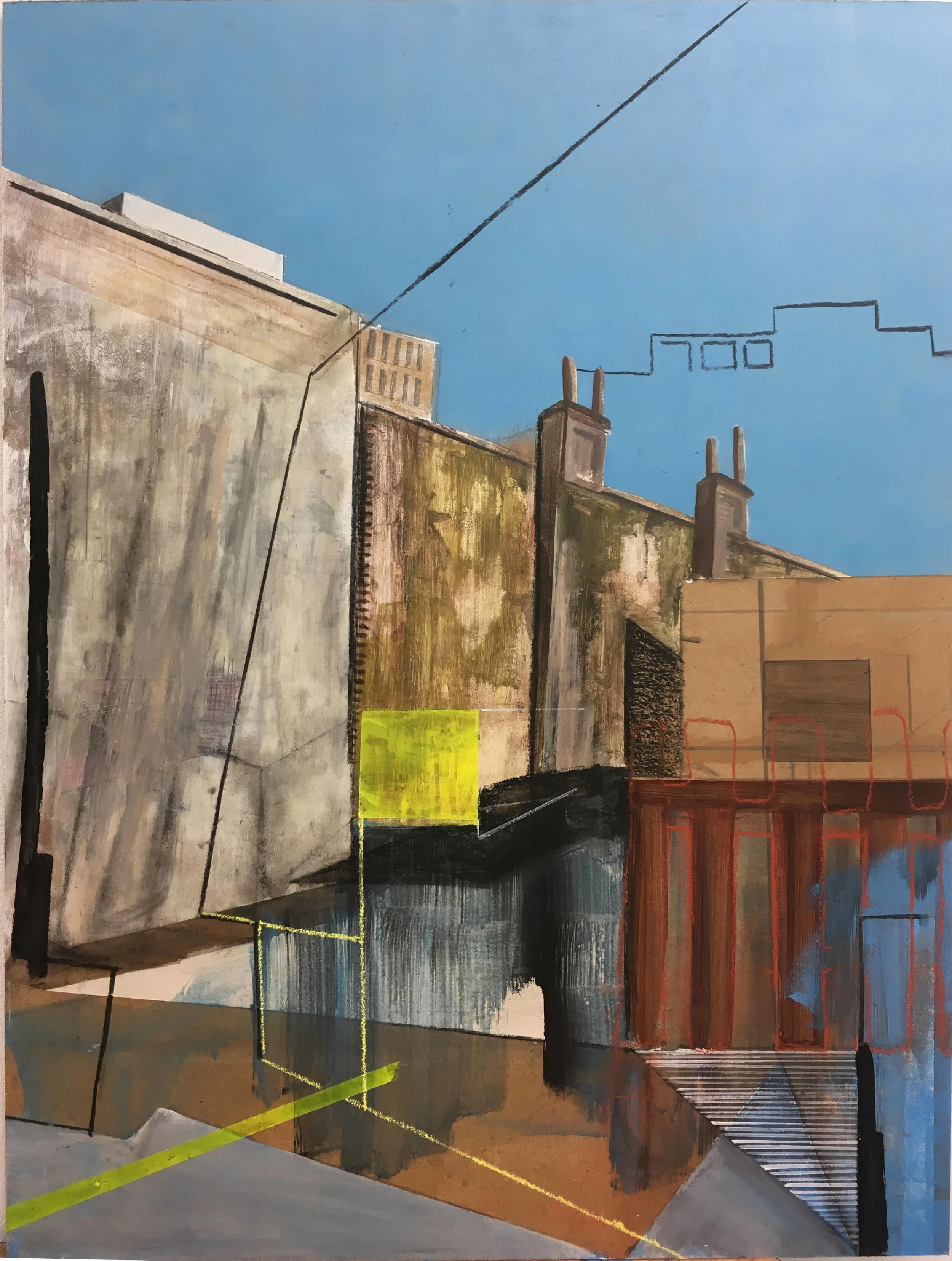
The largest artwork should usually sit at the back of the arrangement. A framed canvas, oversized print, or quiet abstract piece can anchor the display and establish its colour palette. It does not need to fill the entire wall, but its width should relate comfortably to the mantel and fireplace beneath it.
Lean the main frame rather than hanging every piece. This creates a relaxed gallery effect and makes it easier to change the display later. If the artwork is valuable or the mantel is narrow, secure it discreetly with museum putty or a small frame stop.
A mirror can take the place of a large artwork, particularly in a dark room where reflected light is useful. Choose an arched, round, or softly irregular shape to contrast with the strong horizontal line of the mantel.
Build Vertical Layers
Depth comes from placing objects at different distances from the wall. Set the tallest artwork at the rear, then bring smaller frames slightly forward. A narrow picture overlapping the edge of a larger frame can make the grouping feel intentional and dimensional.
Avoid arranging every frame in a single straight line. Instead, allow the tops and sides to vary subtly while keeping a loose visual centre. Two or three overlapping pieces often look more sophisticated than a crowded row of small images.
Open shelving can offer useful inspiration for balancing artwork with decorative objects. The same principles apply when displaying art and objects: repeat a material or colour, vary the scale, and leave enough breathing room around significant pieces.
Combine Frames, Textures, And Objects
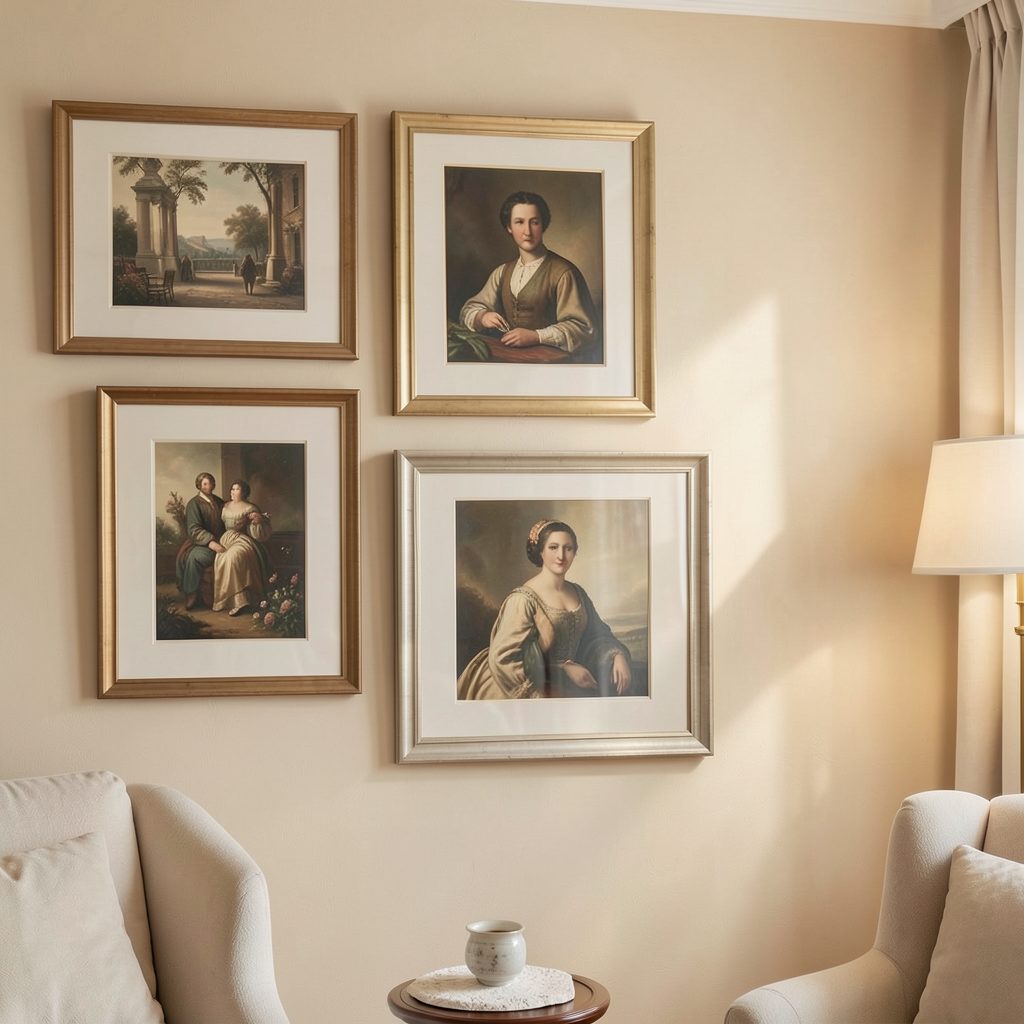
Frame variety adds character, provided it is controlled. Pair a slim black frame with a pale oak profile, or combine a traditional gilt edge with a simple painted frame. Repeating one finish elsewhere in the room will make the mixture feel connected rather than random.
Objects bring the display away from the wall. A ceramic vessel, sculptural candlestick, small bowl, or stone ornament can sit in front of the artwork and create a foreground layer. Choose pieces with interesting silhouettes, especially if the artwork behind them is restrained.
Texture matters as much as colour. Linen mounts, brushed metal, glazed pottery, aged wood, and woven accessories all catch light differently. These small variations prevent a neutral mantel from feeling cold or overly styled.
| Element | Useful role | Placement idea |
|---|---|---|
| Large artwork or mirror | Establishes the visual anchor | Rear centre or slightly off-centre |
| Small framed print | Adds scale and personality | Leaning in front of the main piece |
| Ceramic vessel | Introduces shape and texture | Near one end of the mantel |
| Candlestick or sculptural object | Creates a vertical accent | Opposite the tallest frame |
| Branches or foliage | Softens hard edges | In a low, asymmetrical vessel |
| Small book stack | Raises a shorter object | Beneath a bowl or decorative piece |
Create Balance Without Symmetry
A layered mantel does not have to be symmetrical, but it should feel balanced. If one side contains a tall frame, balance it with a cluster of shorter objects on the opposite side. Visual weight depends on colour, size, and density, so a dark small object may counterbalance a larger pale artwork.
Try building the arrangement around an off-centre focal point. A large print placed slightly to the left can be balanced by a vase and two smaller frames to the right. This approach feels more natural than matching objects at equal distances.
Step back frequently while styling. A composition that looks pleasing close up can appear too heavy from across the room. Photographing the mantel can also reveal awkward gaps, crowded corners, or a frame that needs to shift by only a few centimetres.
Choose Artwork That Works Together
The individual pieces do not need to match, but they should share a visual thread. This might be a limited colour palette, a common subject, similar line quality, or a consistent sense of age. Black-and-white photography, muted botanical prints, and soft-toned abstracts can sit together when their contrast levels are compatible.
For a more expressive display, mix original art with affordable reproductions and small works from emerging artists. Limited-edition prints online can add personality without requiring every piece to be a major investment.
Pay attention to scale when selecting new work. A tiny image can disappear behind a vase, while an oversized frame may overwhelm the mantel. Use paper templates or cardboard cut-outs to test proportions before buying or hanging anything.
Keep The Arrangement Practical
Safety should guide every decorative decision around a fireplace. Keep combustible materials away from open flames and follow the manufacturer’s recommended clearance for a wood burner, gas fire, or electric insert. Heat can damage artwork, fade paper, and affect certain finishes, so avoid placing especially delicate pieces directly above an active fire.
Leave a little empty space between the arrangement and the mantel edges. This margin gives the display definition and makes dusting easier. If the fireplace is used regularly, choose stable objects with a broad base and avoid placing fragile glass where it could be knocked.
Seasonal changes can refresh the mantel without requiring a complete redesign. Replace flowers with branches, swap a bright print for a darker winter image, or introduce one new ceramic piece. Keep the main anchor and frame structure in place so the display remains coherent.
A Simple Styling Checklist
- Begin with one substantial artwork or mirror as the anchor.
- Add two or three smaller pieces at varied depths and heights.
- Repeat one frame finish, colour, or material across the arrangement.
- Balance visual weight rather than copying objects from side to side.
- Check clearances, stability, and the effect of the fire before finishing.
A well-layered mantelpiece should feel personal, considered, and slightly relaxed. Give each artwork enough room to be noticed, then use smaller objects to connect the composition rather than fill every gap. With a strong anchor, varied textures, and a little asymmetry, the fireplace can become a refined focal point that changes naturally with the rest of your home.
Save your favourite arrangement ideas, gather a few frames and objects, and begin with the piece you most want to see every day. Subscribe to Focus LDN for more practical guidance on gallery walls, artwork display, and stylish apartment living.