Art selection for a hallway with a coat rack and shoe storage
Art selection in a hallway has to work harder than in a living room. The space stores daily essentials, receives wet coats and bags, and guides people through the home. Artwork should add calm and personality without competing with the coat rack or making the shoe storage feel like part of the clutter.
Start with the empty wall, then check how the room is used. A piece chosen for a styled corner can look lost beside everyday footwear, while artwork sized for the whole entrance may crowd a narrow apartment. Measure first, select second, and let the practical zone shape your artistic choice.
Read the room before choosing art
Measure the usable wall, not the whole hallway. Mark where the coat rack projects, where shoes gather, and whether cabinet doors need to open. A narrow Melbourne apartment may offer only a metre of uninterrupted wall, so a generous frame can interfere with pegs or coat sleeves.
In a Sydney terrace, the entrance might be framed by brickwork or a narrow passage, giving an art display less breathing room but plenty of texture. Decide whether the selected piece should contrast with those surfaces or quietly echo them, and photograph the wall in morning and evening light.
Place the storage elements before finalising artwork dimensions. Leave enough clearance for lifting shoes and swinging hooks, and avoid a surface that wet coats can brush against. For wider room-planning context, browse practical home styling and use those ideas alongside your own measurements.
Choose a format that suits narrow walls
One substantial piece usually gives a narrow hallway more presence than a cluster of tiny images. Choose a portrait-format work, or a landscape print that suits the available width, and position its visual centre near standing eye level. If a shoe cabinet sits below, raise the frame so both remain legible.
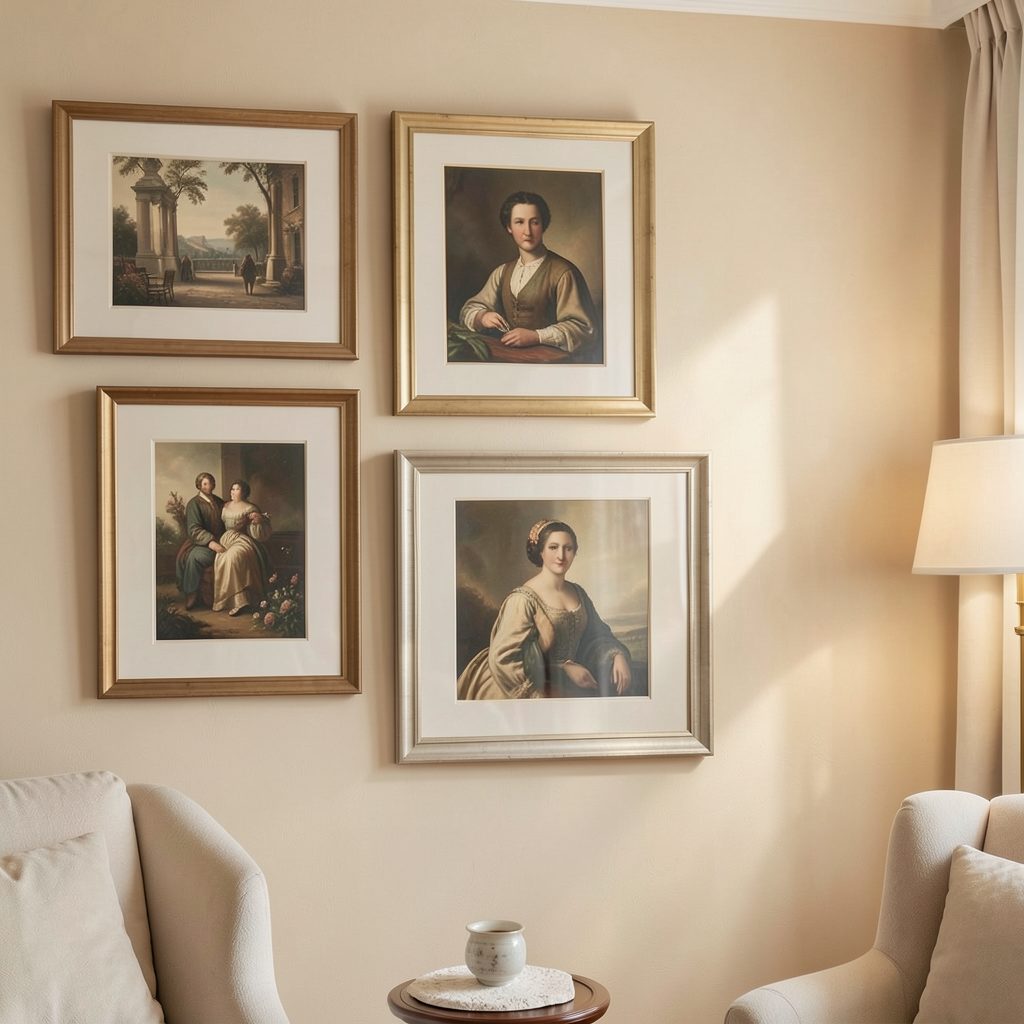
A vertical pair or small grid can work when the wall is tall but narrow. Keep the prints related, repeat the same frame, and space the edges consistently. If you want a fuller arrangement, this five-piece gallery arrangement provides a practical starting point for balancing sizes and heights.
For a narrow hall, scale matters more than quantity. A small cluster should read as one composition rather than separate pictures, while very large framed pieces need enough surrounding wall to avoid feeling compressed. Keep breathing room around every edge, especially beside a projecting coat rack.
Coordinate colour, frame and finish
Pull colour from the furnishings rather than from every object at once. Timber coat rails, black metal hooks, woven baskets and coloured shoes can provide a small palette. A mostly neutral print with one strong accent can tie these details together while keeping the route through the home visually calm.
Frames should support the artwork, not become its loudest feature. Slim black or white profiles suit gallery-style interiors; natural timber complements warmer rails and timber floors. Match matboard proportions, not just frame colour, and consider canvas where the wall is shallow or the artwork needs a softer presence.
Layering needs deliberate spacing, so read about layering artwork before trying it. Check that overlapping frames will not catch on a coat. Use UV-filtering glass or acrylic for a sunny corridor, choose fixings suited to the wall, and confirm any drilling permissions with a landlord or strata committee first.
Plan for Australian homes and daily life
Climate should influence the materials you choose. Humid conditions can expose paper to damp or mould, especially near leaks, exterior walls and poorly ventilated cupboards. Keep prints off the floor, use archival matboard, and avoid displaying work where a Brisbane shower or damp coat regularly creates moisture.
Light can be equally unforgiving. Strong western sun in Perth can fade colours and heat a frame, while Melbourne's bright summer afternoons can strike a hallway for a few hours each day. Rotate the work occasionally, keep it out of direct light where possible, and ask about UV protection.
Buy from Australian galleries, artist studios and reputable print publishers to see the physical work before ordering. For purchases from Australian businesses, the Australian Consumer Law provides protections for faulty, damaged or materially different goods, including many online art purchases. Check edition details, finished dimensions, framing and cancellation terms before paying.
Make a confident final selection
Test the proposed arrangement at home. Tape paper templates to the wall, view them from the front door, and judge the balance beside the actual storage. This reveals gaps that an empty showroom wall cannot.
A practical selection and buying checklist
- Select one focal piece or a related group that fits the measured wall.
- Test colours against the coat rack, footwear and chosen frame.
- Confirm the print's finished size, including any border.
- Measure the space needed for hooks, coats and opening storage.
- Check delivery times, framing inclusions and the return policy.
- Choose UV-resistant glazing or acrylic if the wall catches sun.
- Ask how the artwork is protected during transit.
Compare the main formats before making a final choice:
| Artwork format | Best fit | Placement | Trade-off |
|---|---|---|---|
| Single large print | A narrow but clear wall | Centred above or beside storage | Less clutter, but only one focal point |
| Vertical pair | A tall, slim wall | Stacked with even gaps | A more formal, orderly feel |
| Compact grid | A slightly wider wall | Aligned as one composition | Can feel busy beside patterned walls |
| Layered set | A relaxed, collected look | Overlapping within one boundary | Needs careful depth and spacing |
Choose the option that respects the working parts of the hallway while giving the wall a clear visual purpose. Live with the arrangement for a week before adding anything else. Subscribe to Focus LDN for thoughtful decorating ideas, fresh gallery inspiration and practical advice for stylish apartment living.