How to create a themed gallery wall around city memories
A travel-inspired gallery wall can turn a collection of souvenirs, photographs, and artwork into a personal visual diary. Rather than covering a wall with unrelated images, use one city, route, or holiday as the thread that connects every piece.
The most successful displays feel curated rather than crowded. A faded ticket may sit beside a contemporary print, while a street photograph balances a hand-drawn map. The connection comes from the story, colour palette, framing, and spacing.
You do not need a large collection to begin. Three or four meaningful items can create a strong focal point, then grow gradually as new memories find their place. The goal is to make the wall feel like an extension of your home and your experience.
Choose a story before choosing art
Start by deciding what the display is about. It could focus on one destination, such as Lisbon or Kyoto, or follow a broader theme like coastal journeys, train travel, or favourite European cities. A clear concept makes editing easier and prevents the arrangement from becoming a random collection of holiday clutter.
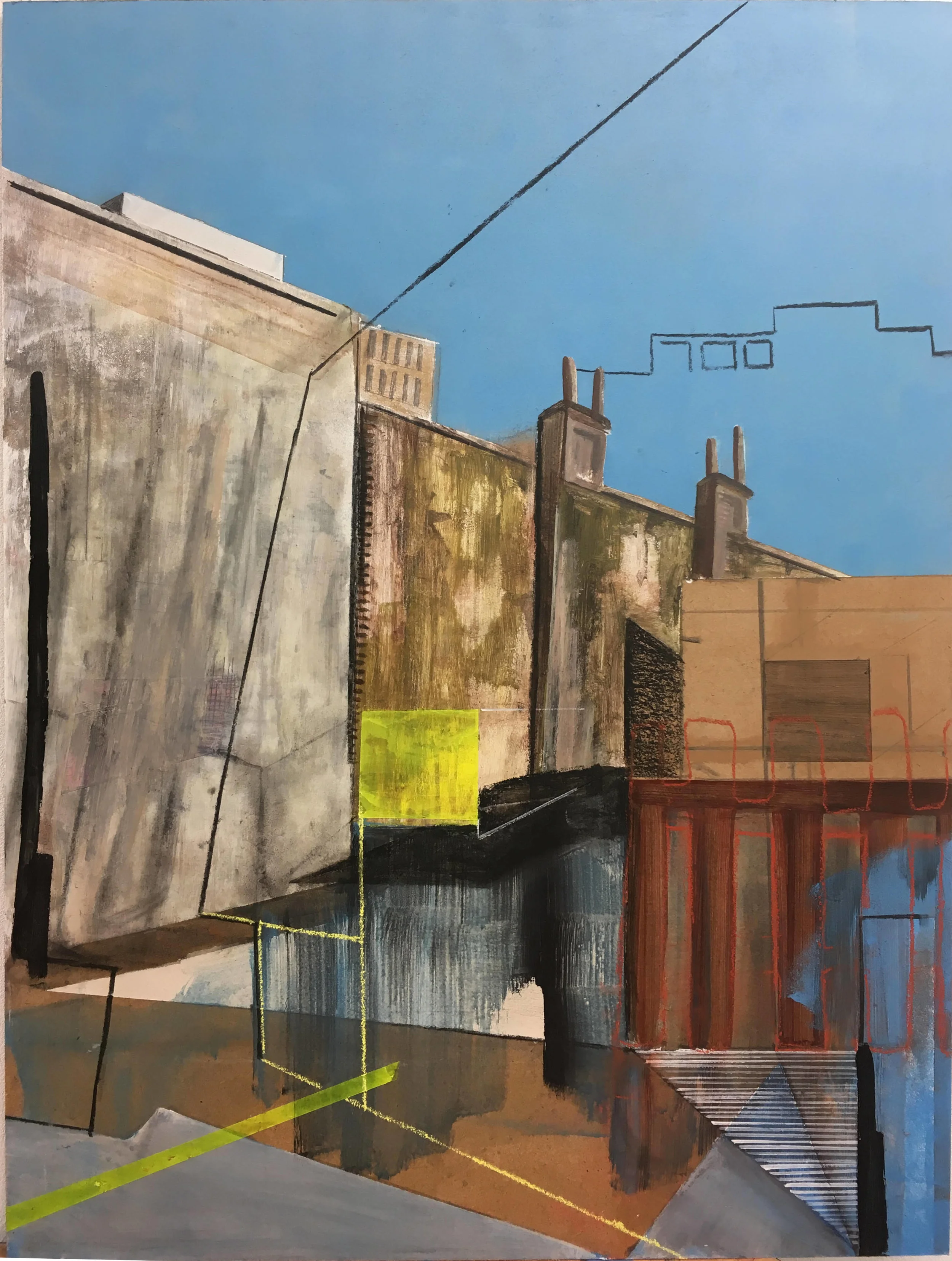
Think about the mood you want to bring into the room. A Paris-inspired wall might combine café photography, architectural sketches, and soft cream tones. A New York arrangement could use graphic posters, black-and-white street scenes, and bold typography. The subject does not have to be literal in every frame; a colour, texture, or architectural detail can carry the connection.
Select pieces with different visual roles. Include a hero image that attracts attention, quieter supporting works, and one or two personal artefacts. Menus, postcards, museum tickets, pressed leaves, and small maps can add authenticity without overpowering the artwork.
Build a visual language
A consistent palette is one of the easiest ways to make varied travel memories look intentional. Pull two or three recurring colours from the destination and repeat them across prints, mats, frames, or small objects. Warm terracotta, ochre, and faded blue can suggest Mediterranean streets, while charcoal, white, and red create a sharper urban feel.
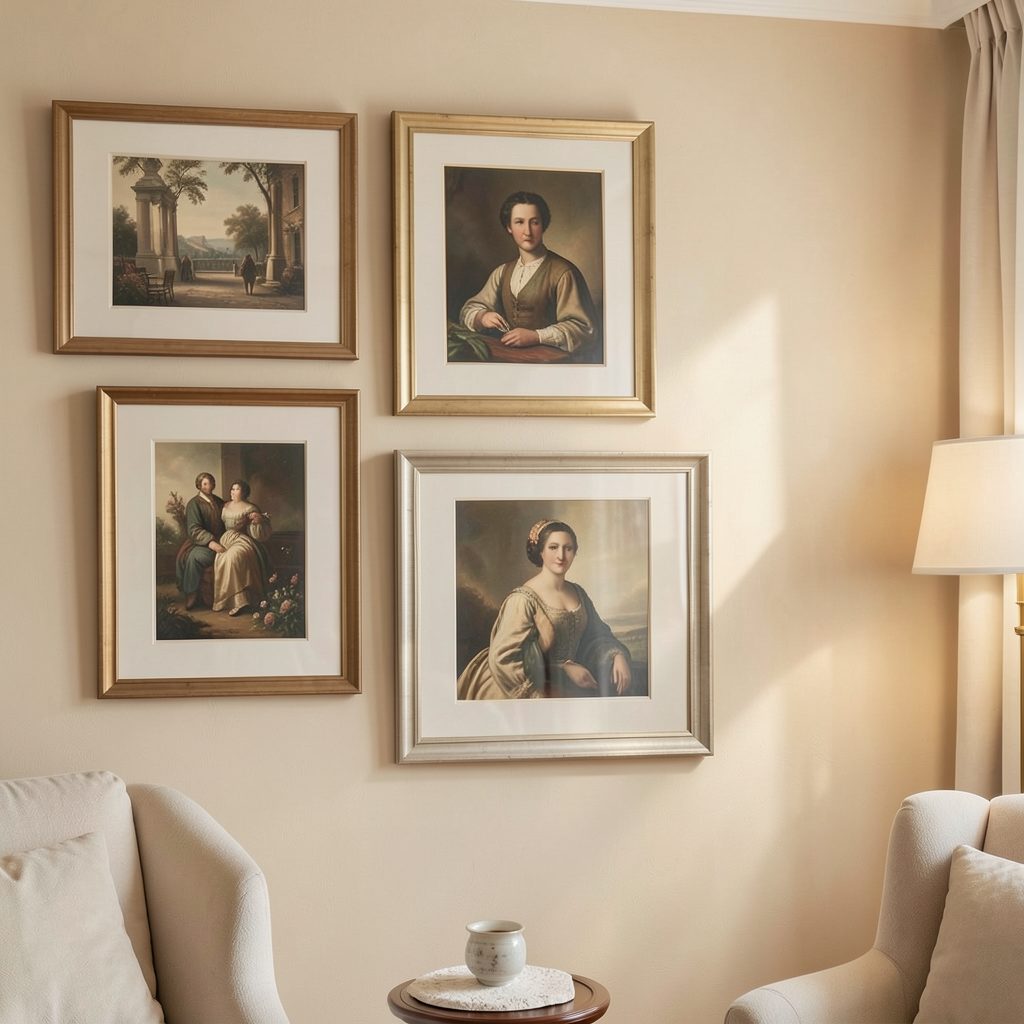
Frame choice matters just as much as image choice. Matching frames create a clean, gallery-like effect, while a controlled mix of wood, metal, and painted finishes can feel collected over time. Keep one element consistent, such as the frame depth, mat colour, or overall finish, so the arrangement retains visual order.
Consider the room where the wall will live. In a bedroom, muted images and natural wood can support a calm atmosphere. In a hallway, stronger contrasts and graphic travel posters can create energy. If the display sits near textured furnishings, ideas from these rugs and decor combinations can help you repeat colour and pattern beyond the wall.
Plan the wall like a map
Before putting a nail into the wall, lay the artwork on the floor. Begin with the largest frame and place smaller pieces around it, keeping the arrangement balanced rather than perfectly symmetrical. A central anchor usually makes the display easier to read, particularly when the collection includes different shapes and formats.
Use paper templates to test the layout in place. Mark each frame’s outline on kraft paper or recycled packaging, then attach the shapes with low-tack tape. Leave roughly five to eight centimetres between most pieces, adjusting the spacing when a particularly small or large frame needs breathing room.
The centre of the composition should generally sit at eye level, although furniture changes the calculation. A gallery wall above a sofa or console should relate to the furniture beneath it, with enough space to avoid looking detached. Step back several times while planning; the arrangement should work from the doorway as well as from close range.
| Display approach | Best for | Frame direction | Visual effect |
|---|---|---|---|
| Symmetrical grid | Matching prints or postcards | Identical frames and spacing | Calm and orderly |
| Organic cluster | Mixed photos and souvenirs | Coordinated but varied frames | Personal and collected |
| Linear story | A route, timeline, or one city | Similar proportions in a row | Clear and directional |
| Salon arrangement | Large, eclectic collections | Unified by colour or matting | Dramatic and artistic |
Pair images with meaningful objects
Travel objects add dimension, but they need editing. Choose pieces that are flat or easy to secure, such as postcards, ticket stubs, maps, stamps, or small fabric samples. A shadow box can hold bulkier items like a shell, matchbook, miniature textile, or concert wristband while keeping the wall tidy.
Use repetition to create cohesion. Several black-and-white photographs can give a mixed display a steady rhythm, while a series of similarly sized postcards can form a visual pause between larger works. If every frame contains a different colour and shape, the wall may feel busy instead of layered.
Personal photographs work best when treated like artwork. Crop distracting backgrounds, print them in a consistent finish, or use a border to give each image more presence. Combining candid moments with architectural views creates a richer narrative than using only landmark photographs.
Recommendations for a polished display
A themed wall should feel spontaneous, but a few practical decisions will keep it refined. Protect delicate paper from direct sunlight, use acid-free mounts for valuable pieces, and check that each frame is securely fixed before adding heavier objects.
Keep the arrangement flexible enough to evolve. A city wall can hold memories from one trip today and expand into a wider travel collection later. These simple choices help preserve the original character while allowing the composition to mature:
- Choose one dominant theme and edit out items that do not support it.
- Repeat two or three colours across frames, mats, artwork, or accessories.
- Mix personal souvenirs with professionally printed artwork for balance.
- Leave breathing room between frames instead of filling every section of wall.
- Photograph the finished arrangement so future additions can match its scale and mood.
Keep the arrangement alive
A travel gallery wall does not have to remain fixed forever. Rotate seasonal photographs, replace a faded postcard, or move a small print to a different position when the composition begins to feel static. This is especially useful when the wall includes changing interests or a growing collection of destinations.
A rotating display can also make a smaller art collection feel more expansive. For people who enjoy refreshing their interiors without constantly shopping, an art subscription can introduce new work that complements existing travel memories.
Treat the wall as a living record rather than a finished installation. Add a piece after a meaningful journey, leave space for an anticipated destination, or create a second cluster nearby when the story becomes too large for one arrangement. The most appealing displays reveal personality through thoughtful selection, not sheer quantity.
Start with the wall, the memories you want to keep visible, and one strong anchor piece. Gather the remaining images and objects over time, test the arrangement before hanging it, and let the finished display bring the character of your travels into everyday life.