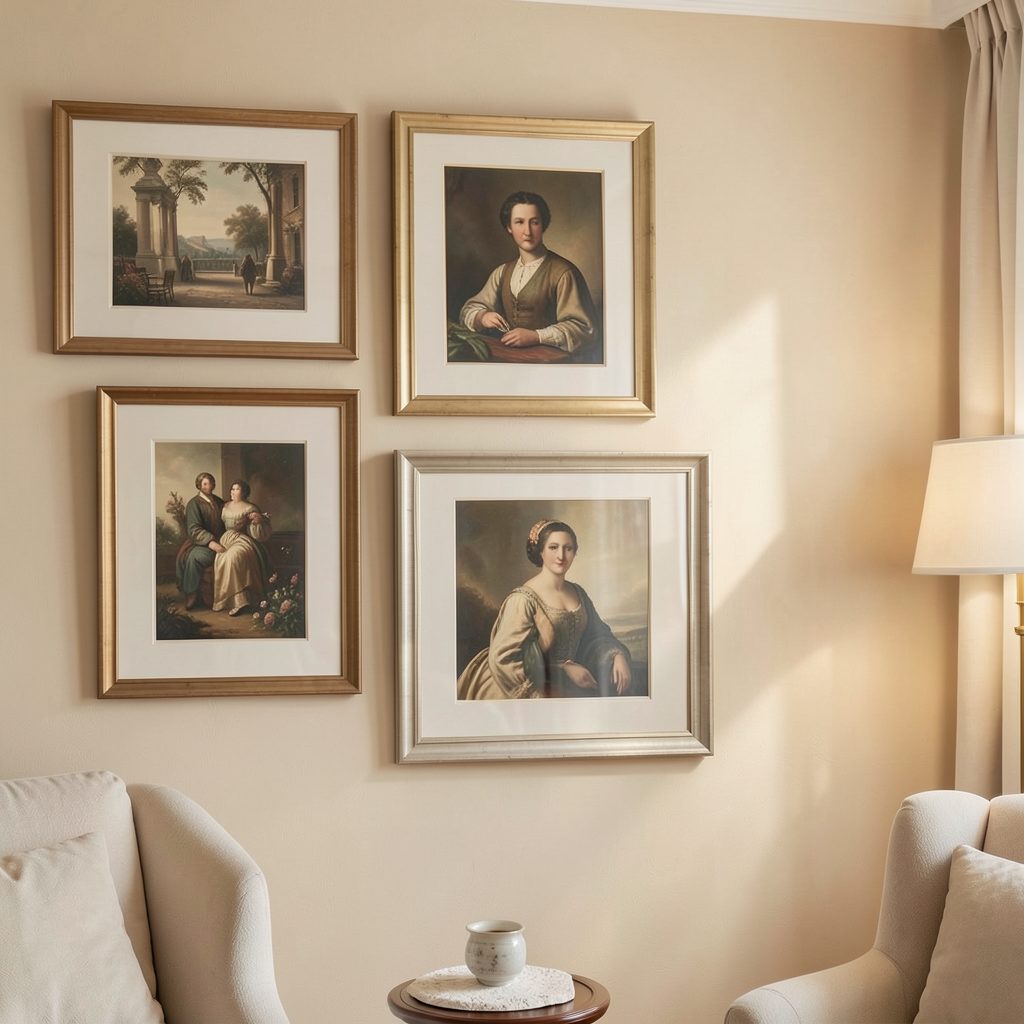
Large canvas frames that avoid glass glare
Large canvas prints bring scale, colour and personality to an Australian home, yet their size can make framing decisions surprisingly complex. A standard glass frame may create distracting reflections from pendant lights, bright windows or the strong afternoon sun, taking attention away from the artwork.
The best frames for large canvas prints without glass glare usually leave the surface uncovered while adding structure around the edges. The right choice depends on the canvas depth, the room’s light, the print’s style and how securely it needs to be displayed.
Why glass can undermine a large canvas
Glass reflects almost every light source in a room. In a living room facing a north-facing window in Melbourne or Sydney, glare can appear across the centre of a print for much of the day. Downlights and polished furniture create similar problems after dark, particularly when the artwork sits opposite a television or mirror.
Large canvases are especially affected because their broad surface catches reflections from multiple angles. Removing the glazing preserves the texture and tonal range of the printed surface, allowing matte photographic prints, abstract works and graphic designs to look more natural.
Float frames for a clean gallery finish
A float frame is one of the most effective options for a stretched canvas. The artwork sits inside a slim outer frame with a narrow shadow gap around its edges, creating the impression that the print is suspended within the frame. This construction adds definition without placing glass over the artwork.
Timber float frames suit relaxed interiors, while black or white aluminium profiles create a sharper contemporary edge. A warm oak finish can soften a minimalist apartment in Brisbane, whereas charcoal timber works well with concrete, stone and darker joinery. The shadow line also makes a large piece feel lighter on the wall.
Tray frames for depth and protection
Tray frames, sometimes called canvas box frames, surround the artwork with a deeper profile. The canvas is fixed into a recessed channel, leaving a small reveal between its edge and the frame. This gives the print a finished, substantial appearance while retaining a glare-free open face.
This style is useful when the canvas has generous stretcher bars or when the room needs a stronger architectural detail. Ask a local framer to check the exact depth before ordering, as Australian canvas products vary considerably. A made-to-measure tray frame from a workshop in Sydney, Melbourne or Adelaide can be more reliable than a standard online size.
Choosing timber, aluminium or painted profiles
Timber frames bring warmth and are a natural match for linen, wool, rattan and other tactile materials. Tasmanian oak, ash and black-stained timber are readily used by Australian framers, with grain variation adding character to a simple canvas print. Seal the timber properly if the artwork will hang in a humid coastal home.
Aluminium is lightweight, stable and well suited to very large pieces. Slim powder-coated profiles in black, white or bronze complement modern apartments and reduce the visual weight of oversized artwork. Painted timber can offer a similar look at a lower cost, though it may show chips more readily during moving or installation.
Matching the frame to the room
A frame should connect the canvas to the room without competing with it. For a colourful artwork, a quiet black, white or natural timber border often gives the eye somewhere to rest. When the print is monochrome, a richer timber or metallic finish can provide contrast and warmth.
Scale matters as much as colour. A broad wall above a low sofa may need a wide canvas with a substantial profile, while a narrow hallway benefits from a shallow frame that does not make the passage feel crowded. For more ways to build a welcoming scheme around artwork, these cozy decorating ideas can help balance hard surfaces and oversized pieces.
Getting proportions and hanging height right
Measure the finished framed dimensions, not just the canvas itself. A frame adds several centimetres to each side, and the extra depth can affect nearby doors, shelves and lighting. Leave enough breathing room around the artwork so the wall does not appear compressed.
As a general guide, the centre of the artwork should sit near eye level, often around 145 to 155 centimetres from the floor in a living area. Above a sofa, leave a practical gap between the furniture and the lower frame edge, usually around 15 to 25 centimetres. In rental apartments, use suitable wall anchors and check strata or lease requirements before drilling.
Preserving an open-faced canvas
Without glass, the print remains exposed to dust, fingerprints and ultraviolet light. Choose a canvas with a protective UV-resistant coating where possible, and avoid placing it in direct sun for several hours each day. This is particularly important in Perth and northern Queensland, where intense sunlight can accelerate fading.
Dust the surface gently with a clean, soft brush rather than a damp cloth. Keep the artwork away from steamy bathrooms, cooking vapour and areas with rapid temperature changes. If the canvas is valuable or irreplaceable, a conservator can advise whether anti-reflective acrylic is a better compromise than completely open framing.
Building a considered gallery-style arrangement
One large canvas can act as an anchor for smaller framed works, ceramics or sculptural objects. Keep the supporting pieces visually quieter so the main print remains dominant. Consistent gaps and a shared frame finish help an arrangement feel deliberate rather than crowded.
If you are combining different sizes, lay the composition on the floor first and photograph it before hanging. This makes it easier to adjust the balance between horizontal and vertical pieces. Further gallery wall guidance can help with spacing, alignment and choosing a unifying visual thread.
A large canvas does not need glass to look polished. A precisely fitted float or tray frame, a suitable protective coating and careful placement can create a refined display with none of the distracting glare. For distinctive works and inspiration, explore browse gallery art, then take your measurements to a trusted local framer and choose a finish that will suit your home for years.