Creating a Gallery Wall in a Child’s Bedroom
A gallery wall can give a child’s bedroom personality without relying on bright paint, bulky furniture, or a theme that quickly feels dated. A thoughtful arrangement of prints, drawings, photographs, and small objects can make the room feel creative, comforting, and distinctly personal.
The best displays grow with the child. Begin with a flexible visual direction rather than a rigid character theme, then combine affordable artwork with handmade pieces and meaningful keepsakes. The result should feel collected, rather than bought as a matching set.
Scale, safety, and placement matter as much as colour. Artwork needs to work with the bed, desk, shelving, and natural light, while every frame and hanging method should be secure enough for an active bedroom.
Set the Mood Before Choosing Art
Start by looking at the room’s existing palette. Pull two or three colours from the bedding, rug, curtains, or furniture and use them as a loose guide for the artwork. Soft blue, warm yellow, terracotta, sage, and natural wood can create a calm foundation without making the wall feel overly coordinated.
Consider the atmosphere you want the room to have. Botanical drawings, abstract shapes, animals, maps, and simple line art suit a relaxed space, while bold graphic prints can bring energy to a playroom-style bedroom. For a quieter setting, the restrained approach in this guide to a minimalist bedroom can help keep the display from competing with the rest of the room.
Leave room for the artwork to breathe. A gallery wall does not need to cover every available section of wall; a smaller arrangement above a reading corner or beside a desk can feel more intentional than a crowded display.
Build a Collection With Personality
Mix different types of artwork to make the arrangement feel authentic. Pair a framed illustration with a child’s own painting, a postcard from a family trip, a pressed leaf, or a small textile. Repetition in colour or framing will connect these varied pieces.
Affordable art is especially useful in a child’s room because tastes change quickly. Art prints, independent illustrators, vintage book pages, charity-shop finds, and downloadable designs can all work well. Focus LDN’s guide to affordable art sources offers useful ideas for finding pieces without committing to a large budget.
Include one or two personal items at eye level. A child will connect more strongly with a wall that includes their drawing or a photograph of a favourite place. Keep highly delicate or sentimental pieces higher up, while displaying replaceable artwork within easy reach.
Use Layout to Balance the Room
Before making holes, arrange the frames on the floor or cut paper templates to the size of each piece. Tape the templates to the wall and assess the composition from the doorway, the bed, and the main play area. This simple step makes it easier to spot awkward gaps or an arrangement that feels too heavy on one side.
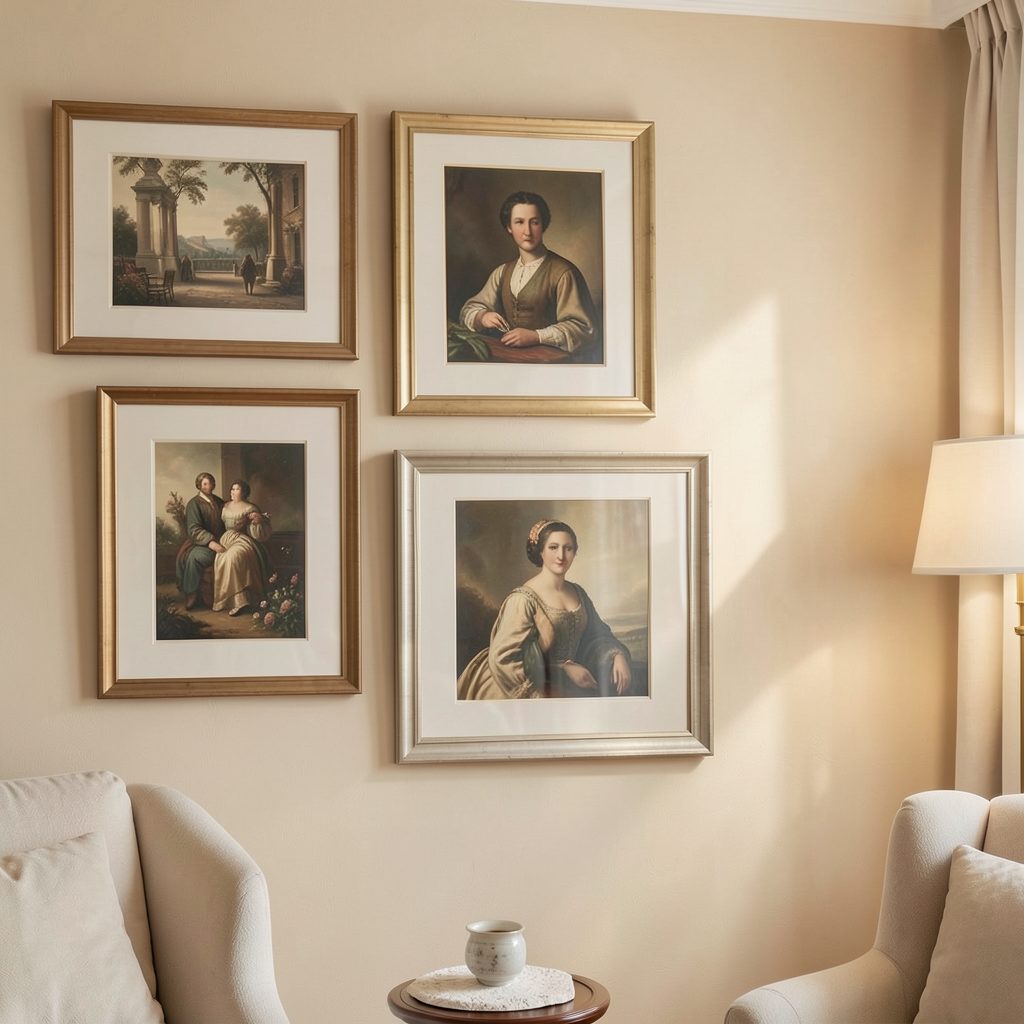
Choose a visual anchor, such as the largest frame or a distinctive textile, and position the smaller pieces around it. Keep the gaps fairly consistent, usually between five and eight centimetres, while allowing a little variation for a more relaxed look.
| Display style | Suitable artwork | Frame direction | Best placement |
|---|---|---|---|
| Symmetrical grid | Matching prints or alphabet art | Similar frames | Above a desk or low cabinet |
| Organic cluster | Drawings, photos, and small objects | Mixed frames in related colours | Beside a reading nook |
| Linear row | Travel prints or changing artwork | Identical frames | Above a bed or shelf |
| Large anchor group | One bold poster with smaller pieces | One dominant frame style | On the room’s main feature wall |
Keep the lowest frame comfortably above furniture and avoid placing artwork where it will be knocked by doors, toys, or chair backs. If the wall is narrow, a vertical arrangement can make the ceiling feel higher; a horizontal row works well above a long bed or dresser.
Choose Child-Safe Display Methods
Security should guide every hanging decision. Use appropriate wall anchors, strong picture hooks, and fixing hardware suited to the wall type. Heavy frames should be attached directly to a stud where possible, and larger pieces benefit from two fixing points to prevent tilting.
For younger children, choose lightweight frames made from wood, acrylic, or another shatter-resistant material. Avoid exposed sharp corners, loose hanging cords, and glass at a low height. Artwork placed above a bed should be especially lightweight and firmly secured.
A rental bedroom can still have a gallery-style wall with removable strips, adhesive hooks, or leaning frames on a picture ledge. The advice in this guide to decorating a rental apartment can help adapt the approach while protecting the paintwork.
Make the Wall Part of the Bedroom
A gallery wall should relate to the room’s practical zones. Above a desk, use artwork that supports focus without creating visual clutter. Near a reading chair, choose illustrations or photographs that encourage imagination. Beside the bed, softer colours and familiar images can create a comforting bedtime atmosphere.
Coordinate the display with lighting. Picture lights, a directional wall light, or a nearby lamp can highlight artwork in the evening, while daylight should be checked for glare and fading. Avoid placing valuable prints in strong direct sun, especially if the wall faces a bright window.
A picture ledge can make the collection easier to change. Layer two or three framed pieces against the wall, add a small object such as a wooden animal or ceramic pot, and keep the front edge clear enough for safe access. This format is practical for rotating school artwork throughout the year.
Keep the Collection Fresh and Manageable
A child’s gallery wall should be easy to update rather than treated as a finished installation. Reserve one frame for seasonal drawings, change a print when interests develop, or replace a babyish illustration with a more mature design as the room evolves.
Use the following checklist before fixing anything permanently:
- Choose a clear colour palette with two or three supporting shades.
- Combine purchased prints with personal artwork and photographs.
- Keep heavier or fragile pieces above reach and away from the bed.
- Test the layout with paper templates before drilling.
- Use secure, wall-appropriate fixings and inspect them periodically.
Avoid filling every gap simply because the wall is available. A little negative space gives the artwork importance and leaves room for future additions. It also keeps the bedroom visually calm, which is particularly valuable when toys, books, and school materials already bring plenty of activity into the space.
Gather a few meaningful pieces, test the arrangement at home, and build the display gradually. With secure fixings, flexible artwork, and a layout that reflects the child’s world, the wall can become a lasting feature that grows beautifully with the bedroom.