Choosing metal frames for industrial apartment walls
An industrial apartment gives artwork a convincing backdrop. Exposed brick, raw concrete, blackened steel and visible fixings create a setting already full of texture, so a metal picture frame should add structure rather than compete with the architecture. The strongest choices clarify edges and make prints or photographs feel deliberately placed.
Metal framing offers a useful balance in smaller rooms. A slim profile keeps the wall open, while a deeper profile gives one large image the authority of a focal piece. Rather than treating every frame as identical, compare width, depth, glazing and finish against the surface where it will hang and the furniture nearby.
Apartment living adds another layer: art must work from a sofa, a bed or the entrance, not only from close range. It should also sit comfortably beside switches, split-system vents and cabinetry. In Australian homes, where rooms can shift from hard daylight to warm evening light, planning for both conditions prevents a handsome frame from becoming an awkward one.
The local market makes metal frames easy to compare, yet the best result comes from samples and careful measurements. Sydney warehouse conversions and inner-city terraces often pair exposed masonry with contemporary fittings, while Melbourne apartments frequently place black metal against brick, concrete and timber. Those combinations reward restraint: one coherent frame family, varied artwork and enough space for the wall to breathe.
Read the room before choosing a finish
Begin with the wall’s dominant colour and texture. Warm red brick pairs easily with brushed silver, muted bronze or soft black; cool grey concrete often looks sharper with matte black or gunmetal. Photograph the wall at different times of day, because metal and glazing can pick up orange streetlight, blue daylight or nearby greenery.
Keep the relationship simple. If the architecture is strongly patterned, choose a narrow frame with little ornament and let the artwork provide detail. If the wall is pale or plain, a slightly wider metal profile can create definition. Glossy finishes demand attention, whereas satin and powder-coated surfaces usually integrate more calmly into a busy interior.
Match the frame profile to the architecture
The profile should echo the room’s geometry. Rectangular steel frames suit clean, rectilinear spaces; rounded corners add a softer note beside rough brick; and a fine shadow-box profile can give dimensional prints more presence. Check the frame’s edge from an angle, since a profile that looks slim head-on may project deeply from the wall.
Buy for the artwork as well as the wall. A narrow border protects a minimalist print, while a deeper frame can support a textured collage. Australian suppliers and local framers commonly stock metal frames in metric picture sizes, including A-series paper and common 50 by 70 centimetre formats. Confirm the exact artwork measurement rather than estimating from its outer edge.
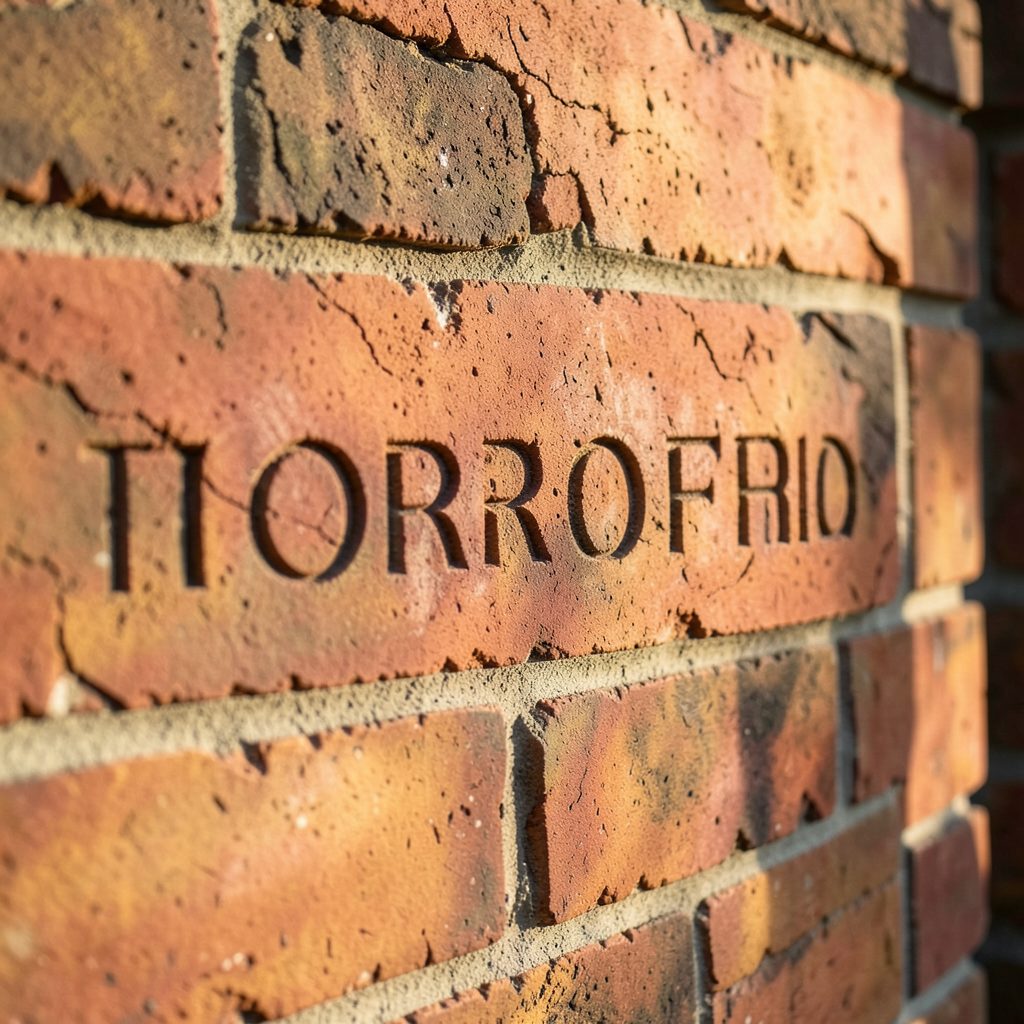
Architectural lettering or maker marks can influence placement too. Identify any custom brick engraving before arranging frames around it, so that detail remains legible rather than appearing accidental.
Size a collected wall with intention
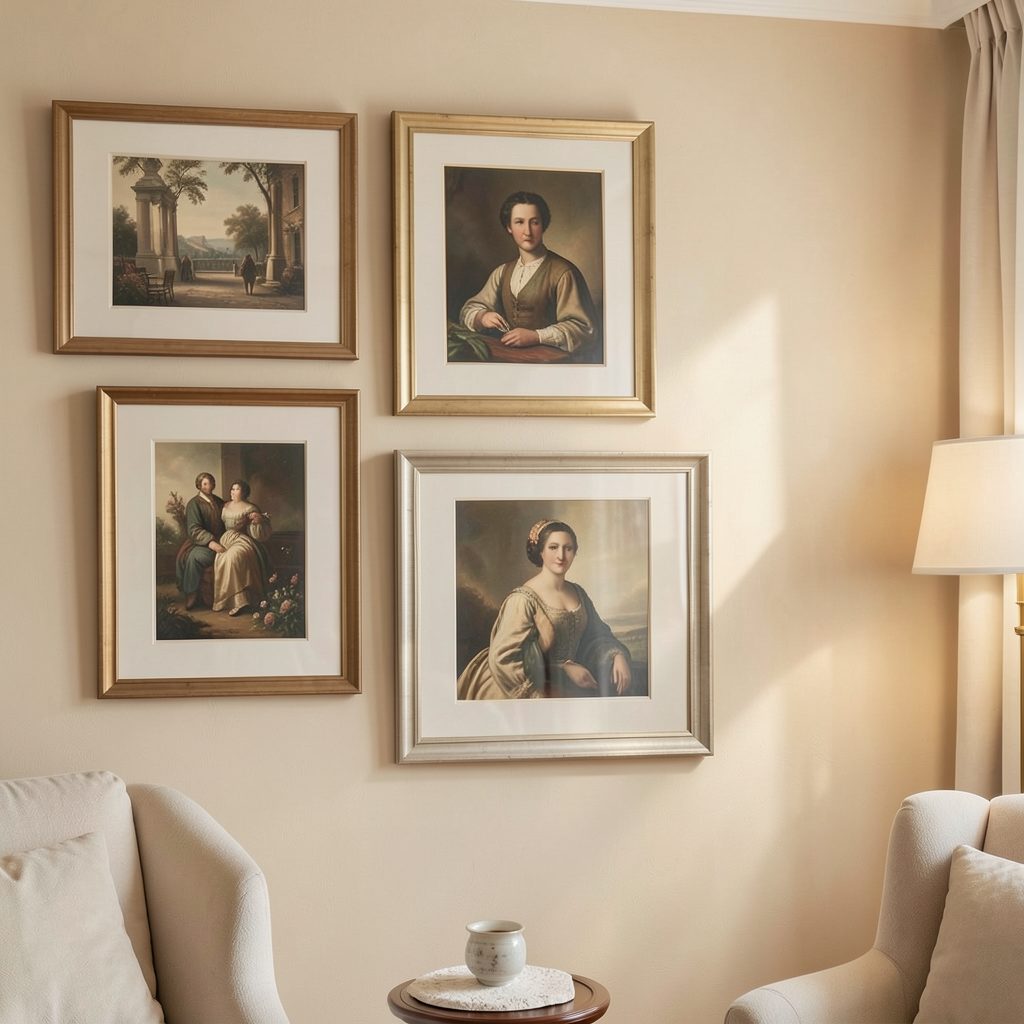
When arranging several pieces, treat the frames as a composition rather than separate purchases. A shared finish can unify photographs, drawings and graphic art, while modest differences in size create rhythm. For the basic logic of spacing and alignment, start an art gallery offers a practical place to begin.
Before drilling, tape paper templates to the wall and view them from the main approach. Keep the lower edge around 140 to 150 centimetres above the floor in a living area, then adjust for the sofa, bedhead or sightline. Leave consistent gaps, generally 5 to 8 centimetres, and avoid a rigid grid if the collection feels mechanical.
Account for Australian light and humidity
Australia’s climate makes the practical choice as important as the visual one. Coastal apartments and humid summers call for stable, moisture-resistant framing, and a bathroom wall needs extra protection from splashes. Powder-coated aluminium is a practical option; untreated steel may spot or corrode more readily if it remains damp.
Choose glazing and fixings with the room in mind. Museum glass can reduce reflections in bright spaces, while standard glass gives a cleaner budget and clearer colour. Use an acid-free mount and secure backing, especially for works on paper. For ideas suited to a compact, hard-working room, warehouse bathroom styling shows how material choices can work harder without adding clutter.
Pair metal frames with varied artwork
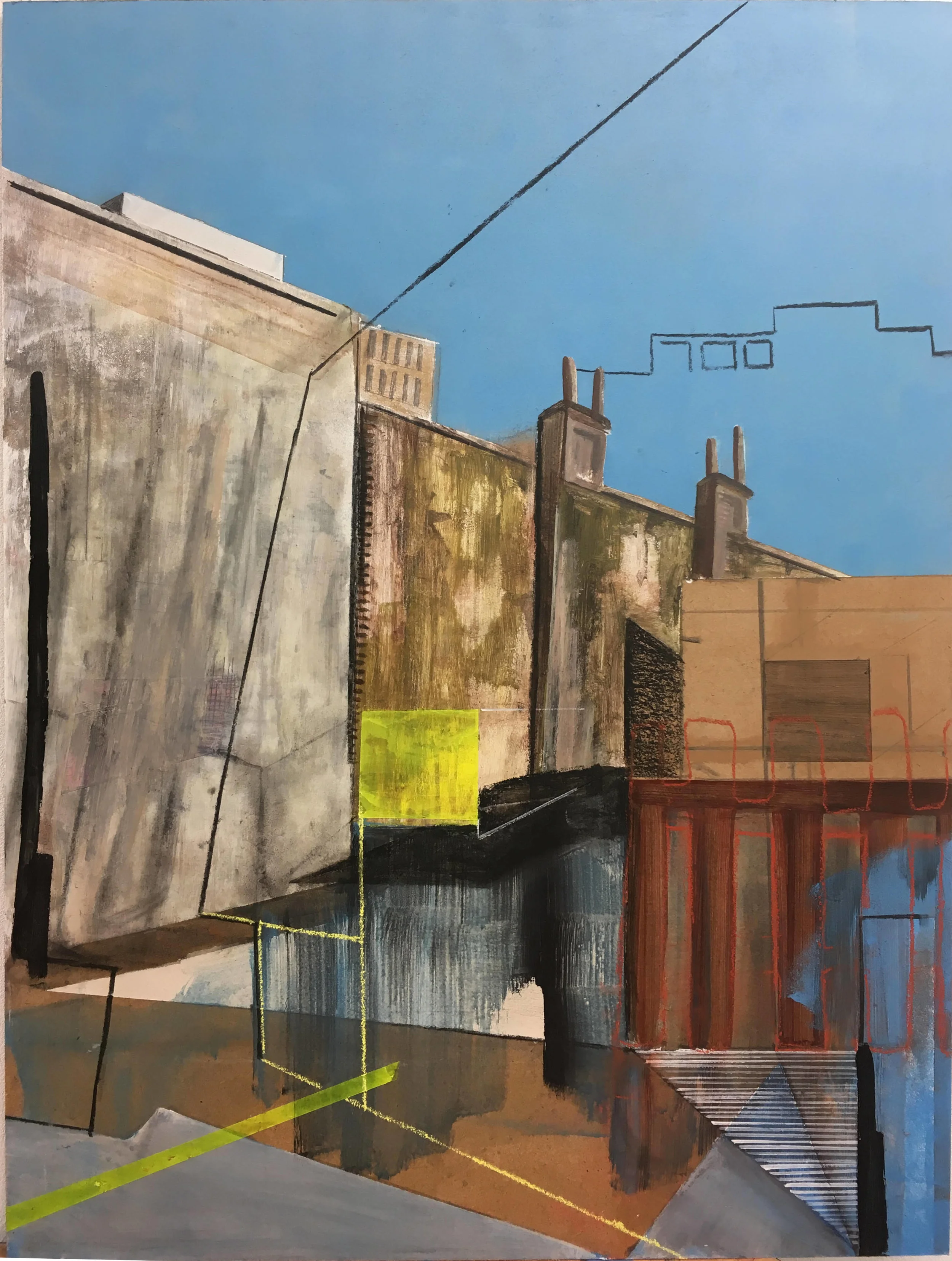
Metal frames are especially effective with work that has a strong graphic quality. Monochrome photography, bold abstracts, architectural prints and botanical studies all benefit from crisp edges. Keep the mount or border narrow if the image is already intricate, and let textured works occupy a deeper frame where their physical depth becomes part of the display.
A varied collection can feel more Australian when it supports local makers without becoming a theme. Look for editions from Australian printmakers, landscape photographers and artist-run studios in Melbourne, Brisbane, Perth and Adelaide, choosing scale and subject to suit the apartment rather than a generic wall set. Black-and-white prints calm a brick wall, while warm-toned artwork can bridge timber and metal.
Install for a rental-safe gallery wall
Installation should respect the building as much as the artwork. Apartment owners may need permission for fixed fixings, while renters should use properly rated removable hanging systems rather than adhesive strips on painted brick. Each anchor must suit the wall type; plasterboard, masonry and metal studs require different supports, and heavy frames should never be hung from a picture hook alone.
Mark the centre of each template, step back and check the arrangement before making holes. Add a shallow shadow line where the frame meets the wall, and keep vents, switches and door mechanisms clear. Once installed, view the gallery from seated and standing positions, then adjust lighting so no print is lost to glare.
Choose your strongest wall, collect a small set of frame samples and compare them beside the artwork rather than in an isolated showroom. Measure twice, view the arrangement in natural light and include one work you love; that combination creates a display with personality while retaining the clean discipline of an industrial interior.
Begin with one focal piece, repeat the chosen metal finish across the supporting frames and leave room for the architecture to remain visible. Build your industrial gallery wall one considered frame at a time.