Styling a bathroom vanity with a small art arrangement
A bathroom vanity often becomes a purely functional zone, filled with soap, skincare, towels, and grooming tools. A small, considered art arrangement can change its character immediately, giving the room the calm, collected quality of a well-designed interior.
The key is restraint. Bathroom surfaces are usually compact, lighting can be unforgiving, and humidity limits the materials that will perform well. One or two artworks, paired with a thoughtful frame and a few useful objects, can create a focal point without making the vanity feel crowded.
Think of the arrangement as a miniature gallery wall rather than a collection of leftover prints. The composition should relate to the mirror, basin, wall finish, and fixtures while leaving enough clear space for everyday routines.
Choose the right scale for the wall
Begin by measuring the available wall area above or beside the vanity. A single small print may disappear if the mirror is broad and the wall is empty, while a large canvas can overpower a narrow basin. As a general guide, artwork should occupy roughly half to two-thirds of the visual width of the vanity or the open wall section.
A pair of small pieces often feels more intentional than one undersized image. Hang them vertically when the vanity wall is narrow, or place them side by side when there is enough horizontal room. Keep the gap between frames modest, usually around five to eight centimetres, so they read as one arrangement.
Leave practical clearance below the art. Artwork positioned too close to the tap or basin can be affected by splashes and will make the wall feel compressed. A visual gap of 15 to 25 centimetres above the mirror, shelf, or backsplash usually creates a comfortable relationship between the objects.
Select artwork that suits a humid room
Choose prints, photographs, or illustrations that can tolerate the bathroom environment. Framed paper should be protected behind glass or acrylic, and the frame itself should be sealed or finished against moisture. Avoid fragile antique pieces, untreated paper, and materials that may warp when exposed to steam.
Simple subjects work especially well in a vanity setting. Botanical studies, architectural details, abstract shapes, line drawings, and muted still lifes can introduce personality without competing with toiletries. If the room already has patterned tile or veined stone, a quieter image may provide the visual pause it needs.
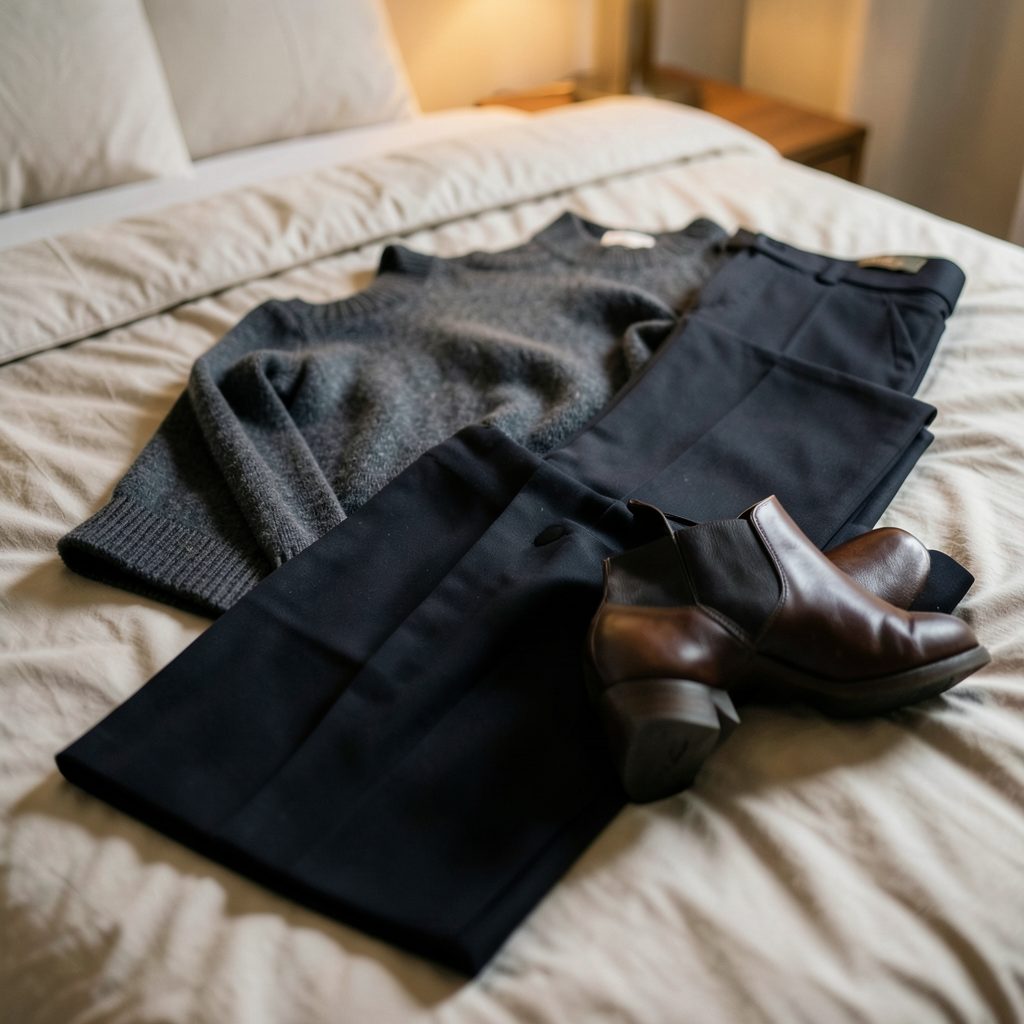
Colour should connect at least two elements in the room. A warm ochre detail can echo brass hardware, while blue-grey artwork can relate to stone, towels, or painted cabinetry. For a more eclectic bathroom, take inspiration from the polished styling of gallery opening attire, translating its confident mix of texture and tone into a smaller domestic display.
Build a balanced composition
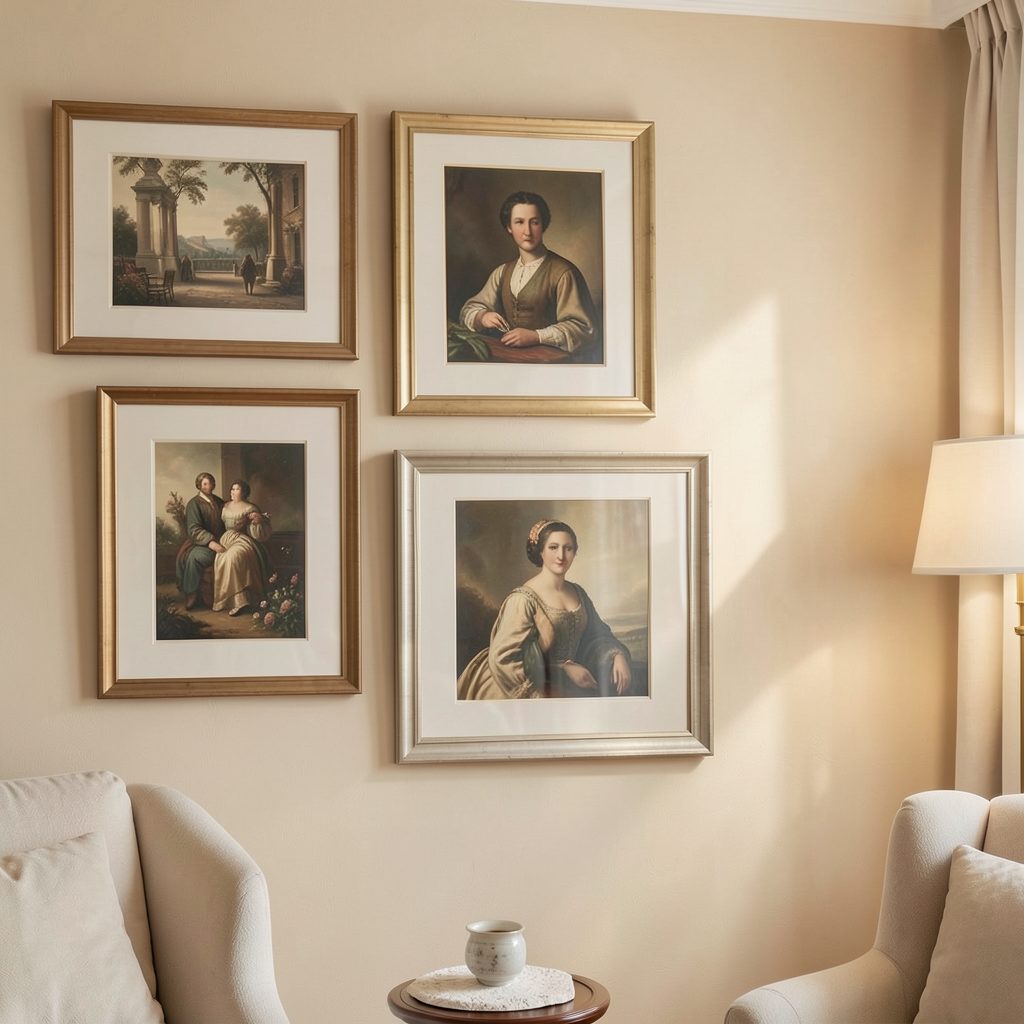
A small art grouping benefits from variation, but every piece should share a clear relationship with the others. Repeat a frame finish, a colour family, a subject, or a similar margin around the image. This creates unity even when the artwork comes from different sources.
Try combining one dominant piece with a smaller companion image. The larger work establishes the focal point, while the secondary piece adds movement. Avoid arranging everything along a rigid centre line; a slightly offset composition often feels more relaxed, particularly in a minimalist bathroom.
The mirror should remain the principal functional feature, so avoid placing artwork where it blocks sightlines or makes the reflection feel crowded. If the mirror is centred above the basin, an arrangement to one side can create an elegant asymmetrical balance. If the mirror is small, artwork above the vanity may act as the main decorative anchor.
Compare arrangement options
Different bathroom layouts call for different display strategies. Use the surrounding architecture, rather than a fixed decorating rule, to decide whether the art should be centred, grouped, or allowed to create contrast.
| Arrangement | Best for | Visual effect | Practical note |
|---|---|---|---|
| One framed print | Narrow vanities and compact cloakrooms | Quiet and focused | Choose a durable frame and a clear subject |
| Two matching works | Balanced double basins | Ordered and architectural | Keep spacing consistent |
| Mixed-size pair | Open wall beside a mirror | Relaxed and collected | Repeat one colour or frame detail |
| Small vertical trio | Tall, narrow walls | Adds height and rhythm | Use lightweight frames for secure hanging |
| Art on an adjacent wall | Busy backsplash or limited space | Subtle and unexpected | Protect pieces from direct splash zones |
Before making holes, cut paper templates to the size of each frame and attach them to the wall with removable tape. View the arrangement from the doorway, the basin, and the side of the room. This simple test reveals whether the display is too high, too low, or visually lost beside the mirror.
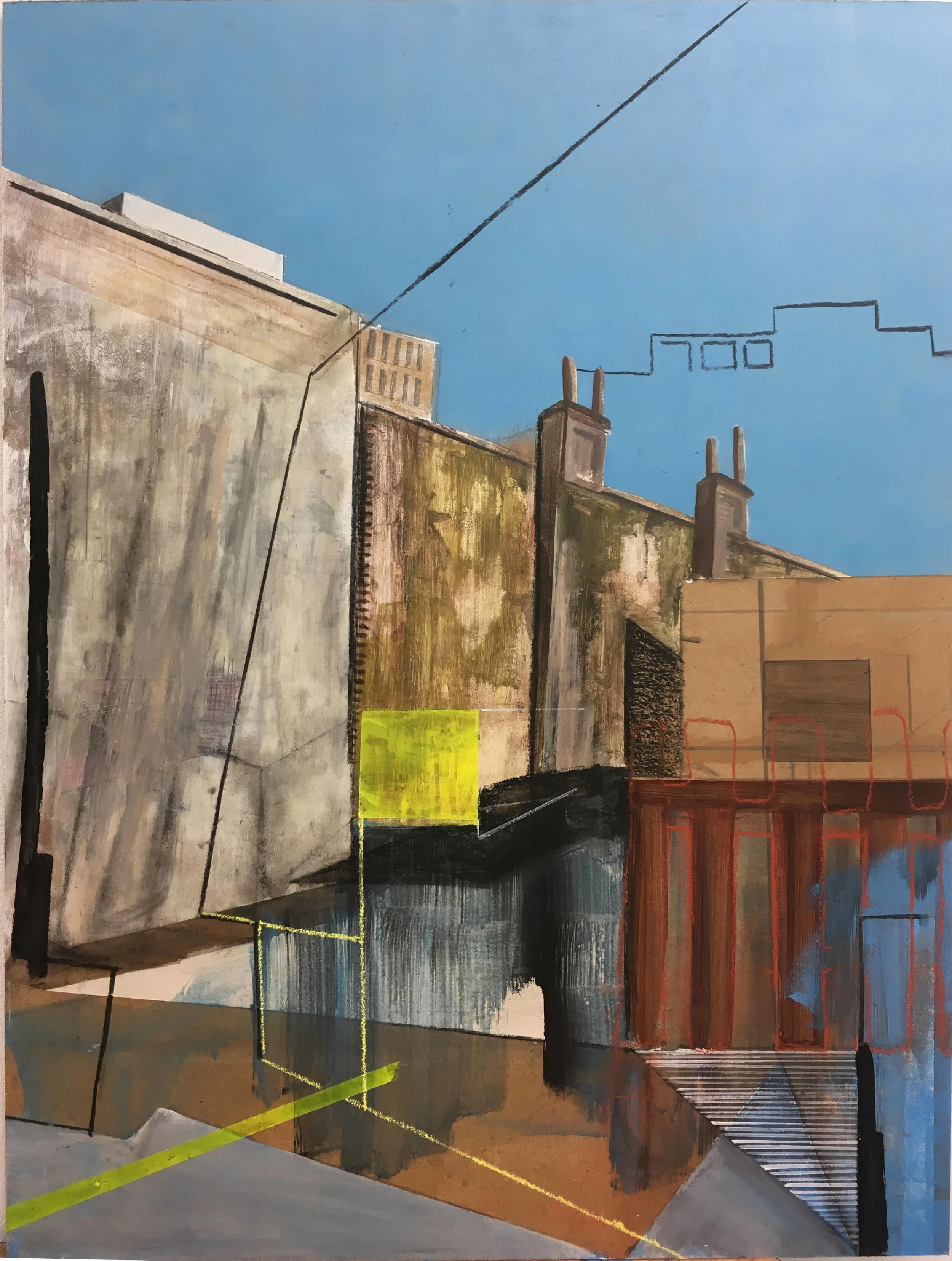
For a more dramatic scheme, consider contrast rather than perfect coordination. The principles in balancing dark and light art can be adapted to a bathroom by pairing a pale print with a dark wood frame, or a deep-toned artwork with a light wall and reflective fittings.
Layer the vanity without losing breathing room
The art arrangement should connect with the objects on the vanity itself. A low ceramic vessel, a small tray, or a lidded container can repeat the colours and shapes found in the artwork. Keep accessories grouped toward one side if the art is centred, or use them to visually counterbalance an arrangement that sits off-centre.
Height variation helps the display feel composed. Pair a shallow tray with a taller soap dispenser or a small branch in a narrow vessel. However, avoid filling every available inch. Negative space is especially valuable in a bathroom, where a clean surface makes the room feel more hygienic and easier to maintain.
A discreet picture light can highlight the artwork, though it may be unnecessary if the vanity already has flattering illumination. Warm white bulbs generally complement art better than stark, cool lighting. Check the colour temperature in the evening, when the room’s atmosphere is most noticeable.
Refine the details with intention
Frames deserve as much attention as the artwork. Pale oak and natural wood soften white tile, black frames sharpen a contemporary scheme, and brushed metal can tie the display to taps or cabinet hardware. In a traditional bathroom, a slim painted frame may feel more refined than a thick modern moulding.
Keep labels, captions, or identifying notes minimal. If you enjoy the museum-like quality of a curated display, use the guidance on gallery labels to create a tiny caption on a nearby shelf or ledge, rather than attaching distracting text beneath every frame.
Review the arrangement after a week of use. If the art catches water, interferes with cleaning, or makes the mirror feel cramped, adjust its position. Good bathroom styling should support daily life as naturally as it supports the room’s appearance.
Use these finishing principles
- Protect paper artwork behind glass or acrylic and choose sealed frames.
- Keep the artwork clear of direct splash zones and heavy steam where possible.
- Repeat one colour, material, or frame detail to connect separate pieces.
- Leave enough empty vanity surface for practical morning and evening routines.
- Test the arrangement with paper templates before drilling into tile or plaster.
A small art arrangement can give even a compact vanity a distinct point of view. Select pieces with care, frame them for the conditions, and let the surrounding wall and countertop retain some calm. Browse Focus LDN for more gallery-inspired decorating ideas, then give your bathroom a display that feels personal, polished, and easy to live with.