Choosing Frames That Complement Oak Furniture and Flooring
Paring a picture frame with a piece of oak furniture sounds simple until you're standing in the frame aisle holding two samples and squinting at them under fluorescent lighting. The grain, the undertone, the finish on the floorboards — they all talk to each other, and the wrong frame can make warm timber look tired rather than textured. A thoughtful match quietly lifts the whole room without anyone quite knowing why.
Oak has long been a favourite in Australian homes, from classic Federation terraces in Paddington to weatherboard Queenslanders lifted on stumps in Brisbane. It shows up in sideboards, dining tables, and the engineered boards sold by the pallet at Bunnings. Knowing a bit about how the wood reads in our light makes frame selection less of a guessing game and more of a calm, deliberate choice.
This guide walks through finish, profile, scale, and sourcing, with a side trip into how a few locally loved spots — Freedom, Temple & Webster, even the Sunday markets — can help you see frames in person before you commit.
Reading Oak's Undertones Before You Shop
Oak covers a generous spectrum. European oak tends to read pale, almost straw, while American white oak leans a touch pinker. The engineered boards popular in newer Aussie builds often fall somewhere warm and sandy, especially after a few years of Sunday arvos with the windows thrown open.
Take a scrap of your flooring or a drawer front with you when you go browsing. Holding a frame sample against it under shop lighting is the only reliable way to judge whether the timber sings or fights. Pay close attention to the red and yellow pigment lines hidden inside the grain, as these decide whether the wood reads cool or warm overall.
A frame that echoes those undertones will feel intentional. A frame that ignores them will look like an accidental neighbour from a different colour family altogether.
Frame Finish Options at a Glance
| Frame Finish | Visual Effect | Pairs Naturally With | Worth Watching |
|---|---|---|---|
| Natural pale timber | Echoes raw oak grain | Light Scandinavian pieces, lime-washed floors | May wash out next to very blonde boards |
| Walnut or dark stain | Grounds a bright corner | Honey oak sideboards, leather chairs | Can feel heavy in compact rooms |
| Matte black | Clean, graphic contrast | White walls, monochrome art | Loses detail on small frames |
| Brushed brass or gold | Warm metallic lift | Mid-tone oak, art with reds or ochres | Shines awkwardly in harsh north light |
| Soft white or putty | Soft, Hamptons feel | Federation joinery, coastal palettes | Can yellow over years of sun |
Keep this cheat sheet on your phone when you're on the floor at a frame warehouse or scrolling Temple & Webster past bedtime. A two-minute sample test saves a return trip with the tape measure.
Sizing Frames to Furniture and Flooring
Proportion does most of the heavy lifting once finish is sorted. A skinny frame disappears next to a chunky oak sideboard, while a thick, ornate profile overwhelms a slim bedside table. Aim for the frame width to read roughly as a third of the smallest side of the artwork.
Flooring matters too. Wide-plank oak in a Caulfield reno carries a different scale to narrow boards in a Surry Hills terrace. Bigger floors swallow smaller frames, so consider stepping up a profile or adding a double mount to recover presence.
Height off the floor changes the read as well. Hang frames so the centre sits close to eye level for the people who actually live there, not the gallery standard of 152 centimetres that assumes a six-foot viewer.
Sourcing Frames Around Australia
Bunnings carries a surprisingly useful basics range, especially the larger formats and natural timber mouldings. For something more curated, Freedom Furniture and Freedom's online store stock a decent mid-range selection, while independent framing shops in places like Fitzroy, Newtown, and Fortitude Valley will cut custom sizes in a week for not much more than off-the-shelf.
If the budget is tight, scout the Sunday markets at Camberwell, the Rocks, or Eagle's Nest in Brisbane for vintage frames that just need a clean and a rub with beeswax. Many an oak-and-glass combo has been rescued from a stall for a few dollars.
Temple & Webster is a good last stop for bedroom mirrors that need to match nearby frames, and their sample swatches help confirm the timber story before the courier arrives.
Working With Local Light and Wall Colour
Australian light varies wildly. A north-facing room in Perth gets bright, cool rays, while a south-facing lounge in Hobart leans moody and warm. Oak shifts character with that light, and so will your frame finish.
Cool white walls let warm oak breathe but can make yellow-toned frames feel jaundiced. A soft greige, a putty, or a chalky mushroom pulls the room together without competing. For art-heavy walls, consider a warm white with a hint of pink or peach under the surface, sold under names like Dulux White Duck or Haymes White Embrace at the trade counter.
If the room catches strong afternoon sun through unlined curtains, expect light oak floors to deepen over time. Pick frames in a finish that will age in the same direction rather than fight the drift.
Pulling It Together in a Gallery Wall
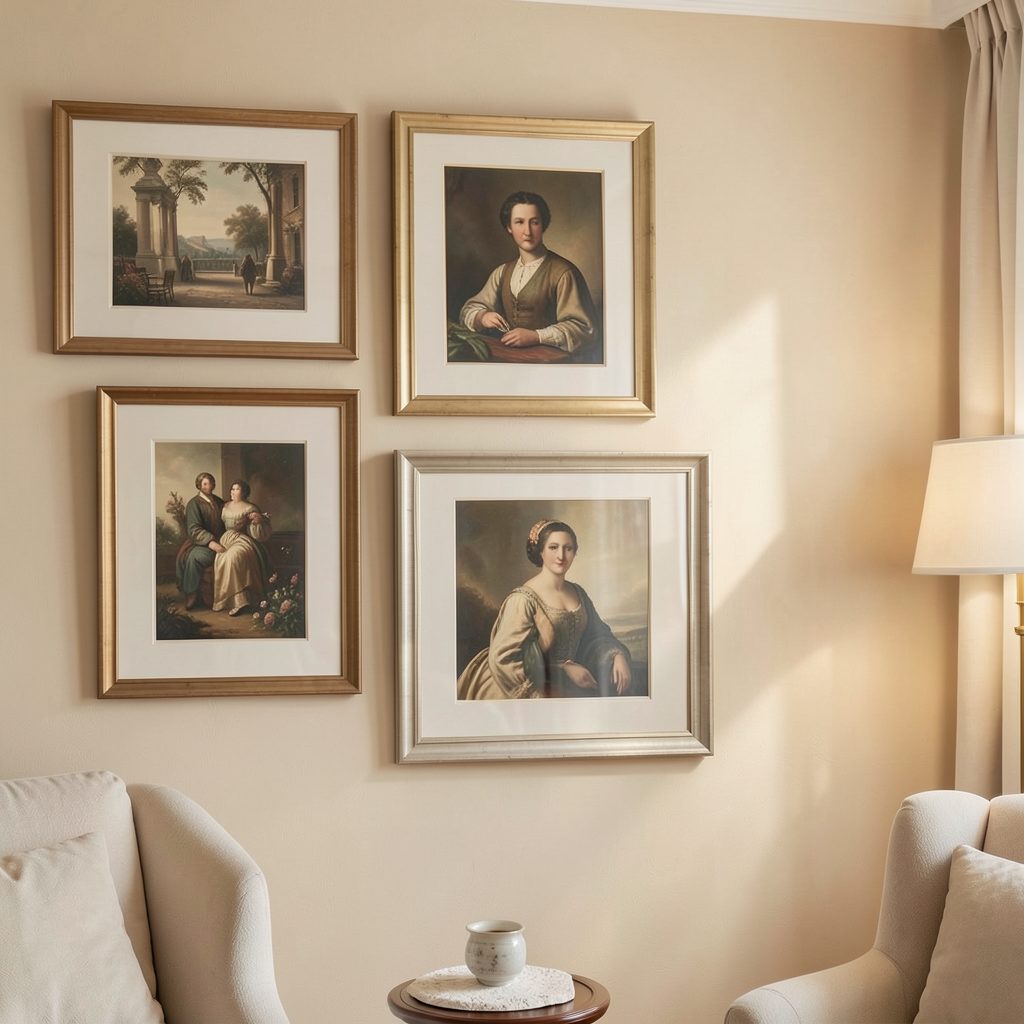
Gallery walls over oak console tables and along timber hallways reward a layered approach. Mix two frame finishes across a run — say, walnut and brass — so the wall reads as a collection rather than a buying spree. Drop in a thin black frame as a quiet interrupter so the eye has somewhere to rest.
Keep the bottom edge of the lowest frame roughly ten centimetres above the furniture surface. That little gap prevents the timber from crowding the art and gives the wall room to feel weighty instead of busy.
For inspiration on who to feature in that grouping, these five artists you should know rework Australian landscapes and still lifes in ways that sit beautifully with warm timber. If the display is heading into a bedroom, this piece on styling a bedroom walks through softening the space around timber bedside tables.
Subscribe to the Focus LDN journal for weekly notes on gallery walls, frame sources, and the small styling choices that change how a room feels.