Selecting art for a home library with floor-to-ceiling bookcases
Bookcases can turn a home library into an architectural feature, but tall shelving demands art that complements its scale rather than competing with every spine. The strongest displays establish a clear rhythm, repeat a few colours and create breathing room around the pieces you want guests to notice.
A considered selection should also suit everyday Australian life: changing daylight, compact apartment layouts, local gallery culture and the practical realities of renting or drilling into fitted cabinetry. Begin with the room’s proportions, then choose artwork that feels connected to its books, materials and daily use.
Compare formats before you shop
A mixed-media bookcase wall works best when each format has a distinct role, with larger pieces anchoring the arrangement and smaller works filling quieter gaps.
| Art format | Where it works on a bookcase wall | What to check |
|---|---|---|
| Original painting | A large empty bay or the section directly above the lower shelves | Dimensions, depth, condition and provenance |
| Work on paper | Narrow bays and intimate groupings near eye level | A-series size, glazing, edition number and frame |
| Photography | Repeated series, stairwells or symmetrical arrangements | Edition, printing process, paper and final dimensions |
| Print or reproduction | Flexible budgets and frequently changing displays | Reproduction rights, print quality and colour accuracy |
Original works on paper are commonly offered in A-series sizes in Australia, while limited editions make it possible to repeat a photographer across several bays. Ask whether each piece is original, an edition or a licensed reproduction. Australia’s Copyright Act 1968 and moral-rights rules also mean that buying a print does not grant permission to reproduce or resell copies as new artworks.
Read the room before you buy
Measure every bay, the depth of the shelves and the distance between uprights before selecting anything. In compact Sydney and Melbourne apartments, even a modest wall may need to serve storage, display and circulation, so scale matters more than filling every available space.
Decide where the eye should land first. One substantial work near the centre can hold the composition together, while smaller pieces should respond to it through colour, subject or orientation. Avoid placing every frame at the same height or spacing, as that can make an impressive bookcase look visually rigid.
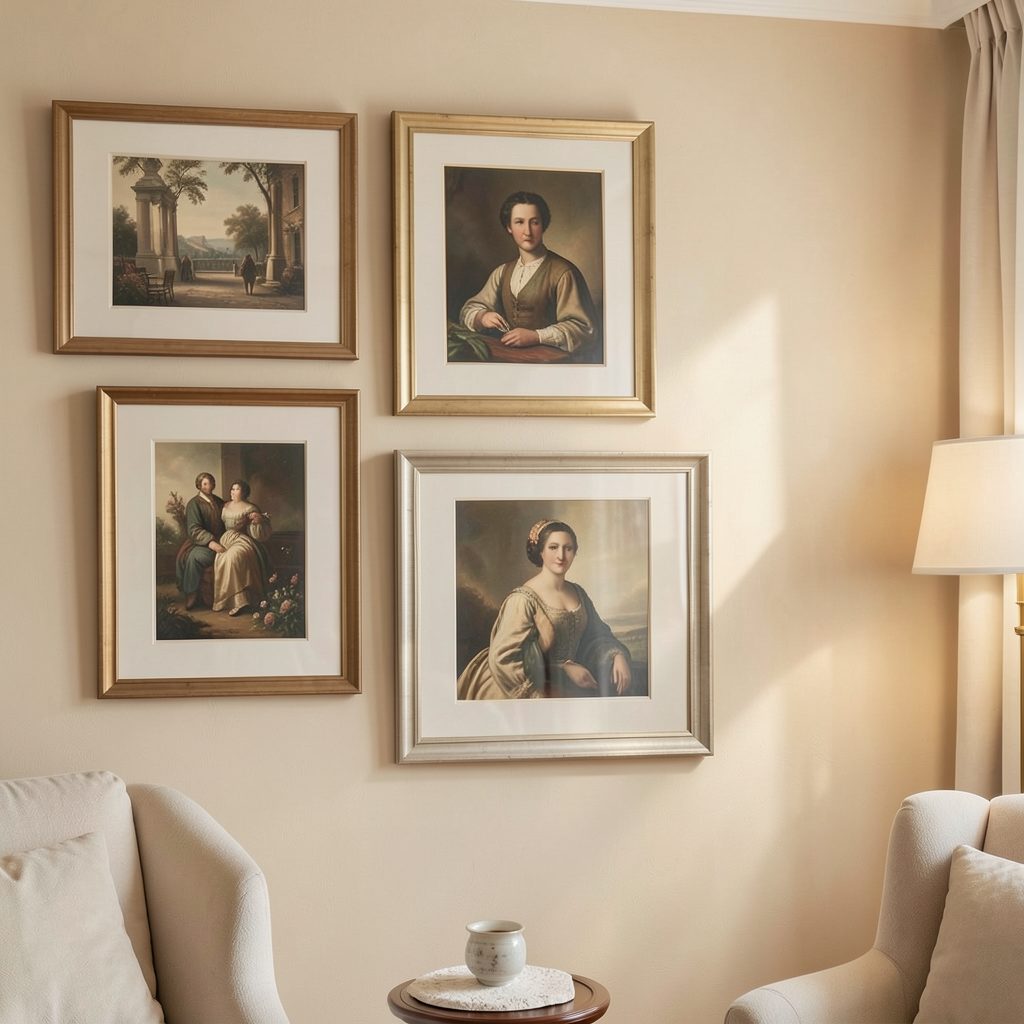
If you are choosing between gallery styles, compare a relaxed salon arrangement with a disciplined grid and photograph both on your actual shelves. Floor-to-ceiling bookcases often suit a hybrid: one anchor piece, a few clustered works and generous areas left for books and objects.
Build a palette from the room
Look for repeated colours in book bindings, timber, rugs, ceramics and walls before shopping for art. Warm timber and neutral walls can support earthy paintings, botanical prints or black-and-white photography, while a dark bookcase may suit brighter works or pale frames.
Let the shelves provide most of the colour and choose art to punctuate that pattern. A restrained scheme usually feels calmer than introducing a different frame colour in every bay. If the collection includes a vivid work, echo its strongest hue in two or three smaller pieces rather than distributing it everywhere.
Assess the display from the viewpoints people actually use: the sofa, a hallway and the path to the kitchen. Check it during daylight, evening lamp light and the busy hours when the room is shared, then adjust placements until the composition remains legible from the main seating area.
Choose art for meaning and market
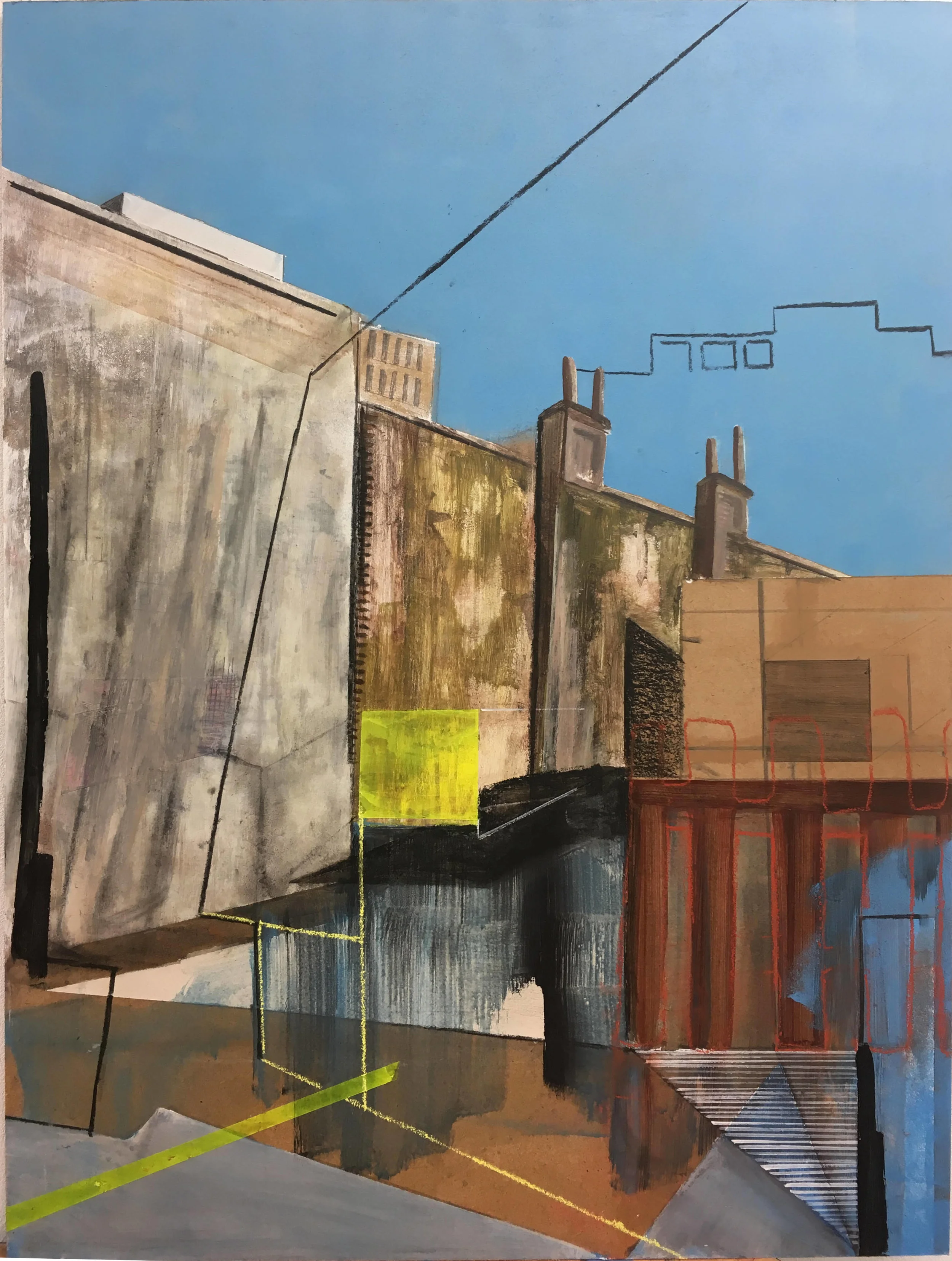
Art beside books does not need to illustrate what you read. A portrait might offer a change of pace beside architectural volumes, while an abstract work can introduce movement to a collection of reference books. Personal relevance will usually sustain a display longer than a trend-led purchase.
Australian buyers can explore artist-run studios, suburban gallery openings and events such as Melbourne Art Fair, Sydney Contemporary and Brisbane’s growing gallery precincts. These visits offer a useful way to compare scale, framing and price before committing, while supporting artists whose work suits the local context.
First Nations art should be purchased only from an authorised source with clear cultural and commercial provenance. Ask for documentation and verify the artist, title and story rather than relying on broad regional labels. For any purchase, request an itemised invoice, edition details and a condition report, and establish whether framing, installation and GST are included.
Hang with rhythm and secure fittings
Shelf displays need a different approach to conventional hanging. Lean larger framed works against the back panel, use smaller works upright on shelf risers and vary the baseline while keeping related pieces visually grouped. For a denser salon effect, starting an art gallery offers practical guidance on balancing frames and negative space.
Lighting should reveal colour without creating glare or damaging the work. Warm LED lighting around 2700–3000K complements most timber shelving, while concealed picture lights can highlight individual pieces. Avoid halogen lamps and check how east- and west-facing windows affect the display at different times of day.
Do not rely on a frame simply resting against the back of a shelf. Check the shelf’s load rating, use secure fittings and anti-slip pads, and avoid placing heavy glass frames where they could be knocked by daily books. Apartment dwellers should also check the lease and seek landlord consent before drilling. Owners-corporations rules under legislation such as NSW’s Owners Corporations Act 1996 and Victoria’s Owners Corporations Act 2021 may apply where common property or building services are involved.
Protect the collection through Australian seasons
Australian conditions can affect art differently throughout the year. Melbourne’s rapid temperature shifts, Brisbane’s humidity and strong UV exposure in many eastern cities can cause paper, timber and adhesives to change. Keep framed works away from direct sunlight and consider UV-filtering acrylic, especially for valuable works on paper.
Aim for reasonably stable humidity, particularly for mixed media, and avoid rooms that regularly feel damp. Dust frames gently with a soft cloth, inspect wooden shelving for pests and leave a small gap behind framed pieces so air can circulate. The same care applies to unframed works stored on lower shelves.
Keep purchase records, photographs and condition notes together, then check whether your home insurance policy covers the collection and where it must be stored. The Australian Consumer Law provides guarantees for many goods purchased in consumer transactions, including defective or damaged artwork, although there is no universal cooling-off period for ordinary in-store purchases. Clarify the gallery’s return policy before buying.
Build a focused collection in two stages
A short buying plan keeps the project manageable and prevents the bookcase from becoming a place for disconnected objects.
Before you buy
- Measure the widest and narrowest bays and photograph the wall at several times of day.
- Set a total budget that includes framing, lighting, installation and delivery.
- Check the artist, title, medium, edition, condition and provenance.
As you install
- Position the anchor artwork first, then arrange smaller pieces around it.
- Keep frequently used shelves clear enough for books to be removed easily.
- Review the display in both daylight and lamp light before adding anything further.
Choose one empty bay, confirm its measurements and place the first artwork that genuinely suits the room. Browse Focus LDN’s decorating guides and subscribe to the email list for fresh ideas on gallery walls, frames and stylish Australian homes.