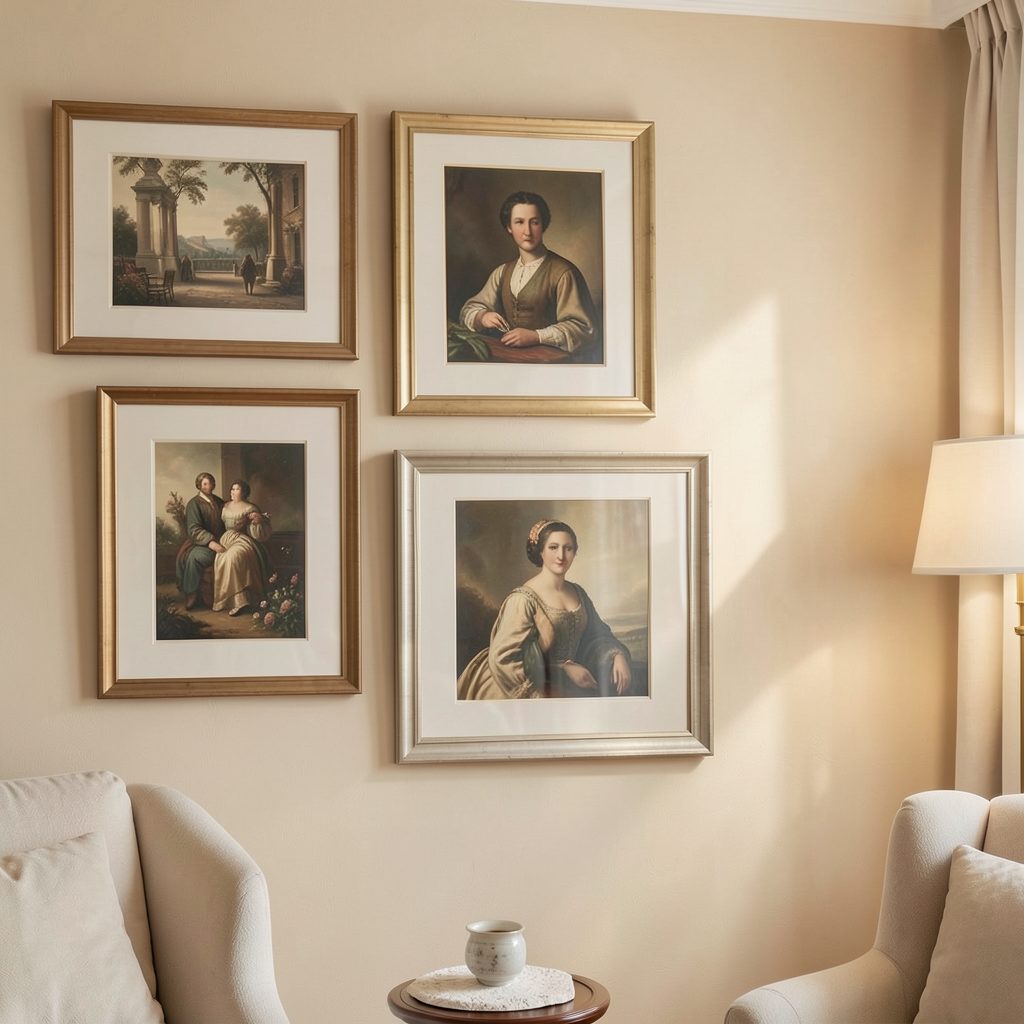
Gallery Frames or Thin Metal Frames for a Thoughtful Home
The frame determines how artwork meets the room around it. It can make a print feel substantial and collected, or give it a quiet outline that lets the image take priority. When planning a gallery wall, the choice between gallery frames and thin metal frames affects scale, mood, spacing, and even how much visual energy the display adds to the space.
Gallery-style interiors often benefit from a consistent framing language, but consistency does not mean every piece must look identical. The right approach depends on the artwork, the wall colour, the furniture nearby, and whether you want the display to feel warm and layered or crisp and architectural.
Character And Visual Weight
Gallery frames usually have a broader profile, often made from wood or a wood-look material. Their width gives artwork a stronger presence and creates a sense of permanence. Black, walnut, oak, and painted finishes can bring warmth to a bedroom, living room, or hallway where a very fine edge might feel too delicate.
Thin metal frames take a lighter approach. Their narrow borders create a clean perimeter around each image without adding much bulk, making them well suited to minimalist gallery walls and contemporary homes. Black metal is particularly versatile, while brass, bronze, and brushed silver can introduce a subtle decorative accent.
The difference is especially noticeable when several pieces are grouped together. Gallery frames produce a rhythm of solid lines and visible material. Metal frames create more breathing space, allowing the artwork and the wall itself to carry the composition.
How Light And Colour Affect The Choice
Natural light can change the appearance of a frame throughout the day. Dark wood absorbs some visual brightness and grounds a sunny room, while reflective metal may catch highlights near a window. In a north-facing room, a warm timber frame can make a display feel more inviting than a cool silver finish.
Consider the wall colour as part of the framing decision. A black gallery frame against a pale wall creates a confident contrast, whereas a thin black metal edge can appear almost drawn onto the surface. Against a dark or richly coloured wall, brass or natural wood may offer enough separation to keep the artwork from disappearing.
The glass also matters. Low-reflection glazing is useful for art displayed opposite windows or lamps, regardless of the frame style. A beautiful frame can lose its impact when glare makes the image difficult to see.
Comparing The Two Framing Styles
Both options can look polished, but they communicate different qualities. A substantial frame tends to make a collection feel established and tactile. A slender metal border supports a quieter, more streamlined arrangement that works particularly well with photography, line drawings, posters, and modern prints.
| Feature | Gallery Frames | Thin Metal Frames |
|---|---|---|
| Overall effect | Warm, substantial, collected | Light, crisp, contemporary |
| Best suited to | Paintings, vintage prints, layered interiors | Photography, graphic art, minimalist displays |
| Visual weight | Stronger and more grounding | Delicate and unobtrusive |
| Colour options | Wood tones, black, white, painted finishes | Black, brass, bronze, silver |
| Ideal wall style | Traditional, eclectic, relaxed | Modern, industrial, Scandinavian |
| Spacing approach | Can support tighter, denser groupings | Benefits from clean, even spacing |
| Maintenance | May show dust on wider ledges | Usually easy to wipe, though metal can show fingerprints |
A mixed collection can use both styles successfully when there is a clear relationship between them. For example, black gallery frames can anchor larger works while thin metal frames hold smaller pieces around the edges. Repeating one finish, mat colour, or frame shape keeps the arrangement from looking accidental.
Matching The Frame To The Artwork
Start with the character of the image. A heavily textured painting may need the visual support of a wide frame, particularly if it has a deep canvas or a rich, traditional subject. A delicate botanical drawing might look more elegant in a narrow metal frame with a generous white mount.
Matting can balance a light frame and give small artwork greater presence. A wide ivory mat inside a slim black frame creates a gallery-like finish without making the border dominant. For colourful modern prints, a simple frame often prevents the display from becoming too busy.
Collections with varied artwork benefit from a shared detail. This could be identical black frames, matching mounts, a repeated wood tone, or a common proportion between image and border. The goal is to create enough cohesion for the eye to move comfortably across the wall.
Building A Gallery Wall Around Furniture
The furniture beneath the artwork should influence both frame weight and layout. Above a substantial sideboard or sofa, wider gallery frames can visually connect the artwork to the furniture below. Thin metal frames work well above floating shelves, narrow consoles, and furniture with fine legs because they preserve an airy silhouette.
Keep the lower edge of the arrangement close enough to the furniture to feel connected, while leaving room for lamps, plants, or objects. A group that floats too high can make the wall feel disconnected from the room. Before drilling, arrange paper templates on the wall and assess the overall shape from several viewpoints.
Televisions require particular care because a large black screen already creates a strong focal point. Choose restrained artwork, consistent spacing, and frames that support the composition rather than compete with it. This television styling guide offers useful direction for creating balance around a screen.
Creating A Curated Display
The most successful gallery walls usually have an intentional pattern, even when they appear relaxed. Aligning outer edges, repeating horizontal lines, or keeping a dependable gap between frames can make an eclectic group feel designed. Thin metal frames often reward precise spacing, while gallery frames can tolerate a slightly more layered arrangement.
Pay attention to how the artwork is identified and presented. Small captions, title cards, or discreet gallery labels can make a home display feel like a personal exhibition, especially when the collection includes travel finds, family photographs, or work by emerging artists.
Lighting should be soft and directional where possible. Picture lights, adjustable wall lamps, and carefully positioned ceiling spots can reveal texture without creating harsh reflections. Avoid placing valuable pieces in direct, prolonged sunlight, and use archival mounts for works that need additional protection.
Making The Final Selection
Budget, size, and availability may settle the decision as much as style. Wide frames can cost more because they use additional material, while custom metal framing may become expensive for unusual dimensions. Measure the artwork, mount, and wall area together before ordering so the finished proportions are clear.
Use these practical checks before committing:
- Choose gallery frames when the room needs warmth, depth, or a more established look.
- Choose thin metal frames when the artwork should feel crisp, light, and contemporary.
- Repeat at least one feature across a mixed collection, such as colour, material, or mount style.
- Test frame samples against the wall in daylight and evening light.
- Consider glazing, hanging hardware, and future cleaning as part of the purchase.
The best framing decision is the one that supports the artwork while strengthening the atmosphere of the room. Select a finish, map the layout, and begin with the pieces that matter most. A carefully framed first group can become the foundation for a gallery wall that grows naturally over time.