How to use art to highlight an alcove or arched niche
An alcove or arched niche can turn a blank recess into a strong architectural feature. Sydney’s Victorian terraces often have arched doorways and deep plaster reveals, while newer Australian apartments may place a curved opening beside the entry. The recess deserves a considered art display, not an afterthought.
The strongest arrangement works with the curve: one generous focal piece, a small family of related images, or a sculptural object with breathing room. Begin with scale and sightlines, then add colour, framing and lighting. In a hallway, bedroom or bathroom, the goal is to make the architecture intentional and give the eye somewhere to land.
Measure the space with care
Start with the width, height and depth of the recess, including where a true arch begins to curve. Note the floor line, skirting, doors and furniture clearance. Cut a paper template to the measurements; it lets you compare a narrow vertical format with a wider horizontal one before buying.
Scale matters more than a rigid size rule. A tiny picture in a tall arch can look accidental, while an oversized work may overpower a shallow recess. Melbourne’s art deco and Commonwealth Scientific and Industrial Research apartments often have curved hallway recesses viewed from a distance, so choose a piece with presence while leaving exposed wall around it.
Choose artwork that follows the curve
A tall portrait or vertical print can echo the upright sides of an arched opening. A horizontal landscape suits a shallow arch if it sits low enough to relate to furniture. For a group, vary the shapes and keep spacing regular so it reads as one composition.
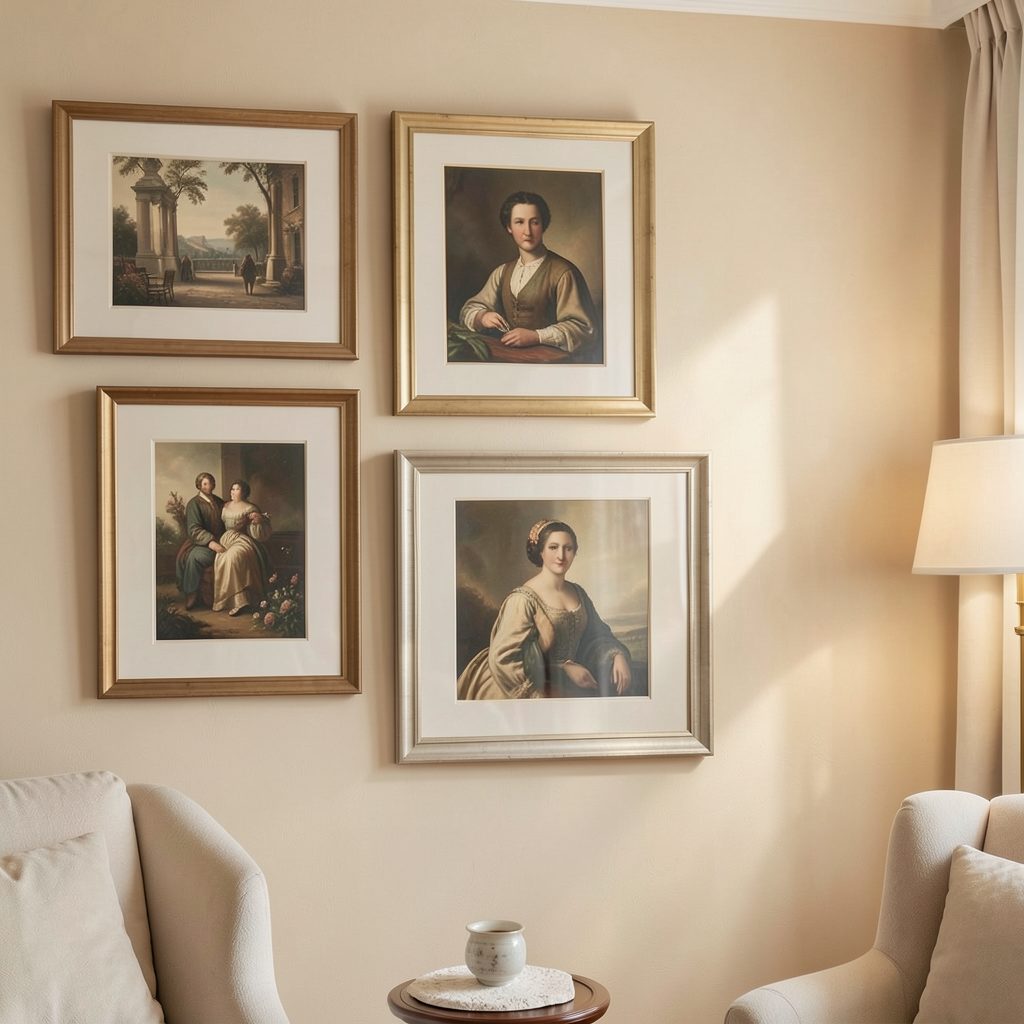
When comparing candidates, this guide to curating a gallery wall helps with balance, spacing and frame relationships. Australian gallery openings, studio trails and makers’ markets offer original paintings, limited-edition prints and photography at different price points, generally in Australian dollars. Melbourne’s inner-city studios and Brisbane’s Fortitude Valley art scene are good places to see how local artists work, and many buyers prefer a piece that feels personal rather than mass-produced.
Frame the work to echo the architecture
Frames should support the recess, not compete with it. A black or timber frame gives a narrow arch a crisp outline; a pale moulding can disappear into a light wall and let the image lead. A shadow gap or floating frame creates a clean, gallery-style panel for a minimalist interior.
In Brisbane’s Queenslander homes, a deep-set opening may sit beside warm timber and painted walls, so natural wood or soft neutral frames fit naturally. In a bathroom, choose a frame with sealed glazing or a moisture-resistant finish and protect paper from splashes. Echo one nearby furnishing rather than matching everything.
Build a considered gallery-style vignette
Art can stand alone, but a small vignette often completes an alcove. Use one low shelf, plinth or narrow console, then limit accessories to a bowl, vase or sculptural object. The supporting pieces should point toward the artwork, not create a second focal point.
These choices keep the display calm and intentional:
- Let one artwork lead the arrangement, whether a single canvas or tightly related group.
- Keep the palette to two or three colours from the artwork and room.
- Repeat a curve in a frame, vessel or mirror to acknowledge the arch.
- Add one small object below or beside the work, leaving the rest open.
- Position the group around the natural eye line, not just the centre of the wall.
- Match picture lights, shelf brackets and hooks so the hardware feels deliberate.
Before installing, stand at the entrance and check that the display is visible from the doorway and that negative space still feels generous. A well-planned vignette gives the eye a place to pause while the niche’s shape remains visible.
Light the recess for depth and atmosphere
Lighting can reveal an alcove’s depth and make a small work feel substantial. A slim picture light above the frame is simple; a concealed LED strip can wash the inner curve and emphasise its texture. Use a warm, even glow that avoids glare on glass and hot spots on prints.
Perth’s strong coastal daylight can expose reflections in a glazed frame, so test at different times and angle the light away from glass. In cooler evenings, a dimmer lets the recess become a gentle focal point. Keep cords and drivers hidden, and choose low-heat fittings for Australian summers.
Install art securely in Australian conditions
Use hanging hardware suited to the wall. Masonry anchors, cavity fixings and rated hooks behave differently, and a heavy canvas needs more than a small picture hook. Adhesive mounts may suit a light frame in a rental with landlord approval; use professional help for masonry or valuable work.
Humidity, coastal salt and direct sun can affect paper, canvas and adhesives. Keep prints out of prolonged afternoon sun, allow air around the work, and use protective glazing in a bathroom or near a kitchen splashback. In a Queenslander hallway, summer humidity can reach recessed rooms, so inspect the display and avoid damp timber or untreated MDF.
Check the height with furniture in place and ensure nothing catches a door, curtain or shoulder. Hang the frame, then step back from the room’s main sightline before adding objects. A secure, level display is part of the styling, not a separate task.
Make the niche part of the room
Carry one colour, material or shape from the artwork into the room so the recess feels connected. A timber frame might pick up a bedside table; a green print can answer a chair or rug; a vessel can repeat the arch’s curve. In a bedroom, keep the display serene; in a bathroom, one framed work can make a small space calmer.
Adelaide’s sandstone cottages often have warm, textured walls that suit earthy prints and understated timber frames. The Australian preference for relaxed, functional spaces means the best arrangement is one you can live with: easy to maintain, comfortable to pass daily and still special to guests. Browse local gallery and design events, compare pieces in person and keep scale and colour in view.
If the right piece is not available locally, you can share your artwork with the Focus LDN team, then subscribe to the Focus LDN email newsletter for more practical ideas on gallery walls, frames and stylish home living. Start with the recess’s shape, choose one strong visual idea and let the light do the final work.