How to Match Frame Width to the Size of Your Artwork
The right frame width gives artwork a visual boundary without overpowering the image. A narrow moulding can make a small print feel delicate and contemporary, while a broad frame adds presence to a modest work and helps it hold its own above a console, bedhead or bathroom vanity.
How to match frame width to the size of your artwork depends on more than the outer measurements. The image scale, mat board, glazing, wall colour and furniture beneath it all affect the final balance. A considered frame can make an inexpensive print look collected and give a gallery wall a calm, intentional rhythm.
Start With The Artwork’s Visual Weight
Begin by assessing the artwork rather than reaching immediately for a tape measure. A detailed painting, dark photograph or heavily patterned print already carries visual weight, so it usually benefits from a simple, medium-width frame. A pale line drawing or minimal abstract can take a stronger profile without looking crowded.
A useful starting point is to make the frame about 5 to 10 per cent of the artwork’s longest side. For a 600 mm-wide print, that suggests a frame face around 30 to 60 mm wide. This is a guide rather than a rule: a slim black aluminium frame may feel substantial, while a rounded timber profile can appear softer at the same measurement.
Use The Mat To Create Breathing Room
A mat changes the relationship between the artwork and the frame. It adds a quiet border, makes a small image feel more important and prevents the moulding from sitting too close to the printed edge. For many photographs and paper-based works, a mat width between 50 and 100 mm creates a polished gallery effect.
The larger the mat, the more restrained the frame should usually be. A broad white or warm-grey mat paired with a 20 mm timber frame can look refined, whereas a thick mat and an ornate 70 mm moulding may compete for attention. When the artwork already fills most of its paper, a narrow frame without a mat may be the cleaner choice.
Match Width To The Artwork Format
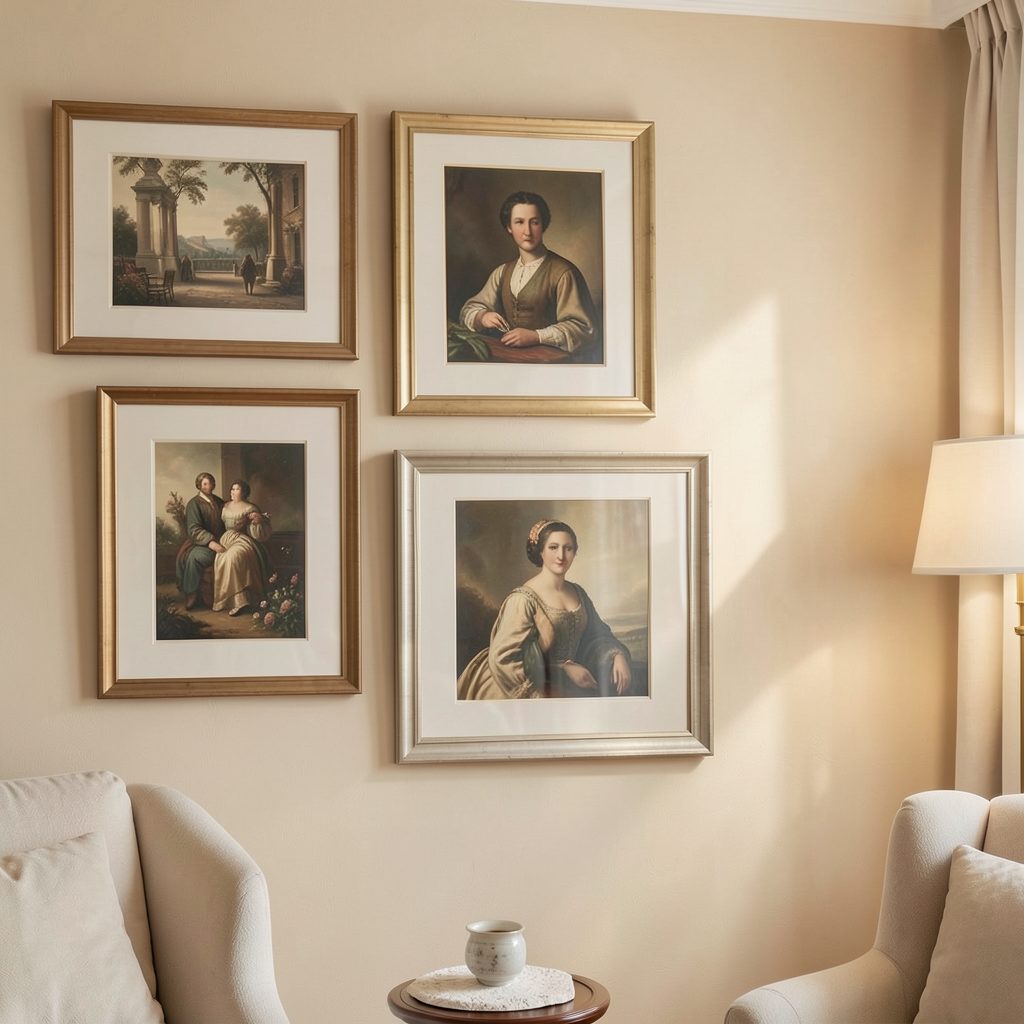
Small artworks under 300 mm wide often look best with a frame between 15 and 35 mm wide. This scale suits bedside prints, small ceramics on paper and compact works arranged in pairs. If the piece is going into a gallery wall, keeping the frame modest allows several individual artworks to read as one composition.
Medium works from 300 to 800 mm wide can generally support a 25 to 55 mm profile. Large canvases and oversized photographic prints may need a 40 to 80 mm frame, especially when displayed alone. Very wide mouldings are most successful when the room has enough visual space around the piece; otherwise, the artwork can feel boxed in.
Consider The Wall And Furniture
Frame proportions should relate to the area around the artwork. Above a sofa, the complete arrangement is often best at roughly two-thirds to three-quarters of the sofa’s width. A broad frame can help a single work meet that scale, while several narrower frames can create the same footprint with more movement.
Above a narrow console or bedside table, avoid allowing the frame to extend dramatically beyond the furniture. A 35 mm profile may suit a large print in an open hallway, but the same width could feel heavy over a small shelf. For detailed guidance on combining size, spacing and alignment, these gallery wall principles provide a useful visual reference.
Choose Materials For Australian Light
Australian homes often receive strong northern light, particularly in rooms facing north in Melbourne, Sydney or Brisbane. UV-filtering acrylic or glass helps slow fading, and it is worth positioning valuable works away from direct afternoon sun. Glare-resistant glazing is also useful in bright open-plan rooms where windows and polished floors reflect light.
Timber frames bring warmth to pale interiors and suit the relaxed, natural palette common in Australian homes. Black, white and brushed metal profiles work well in apartments with concrete, glass or modern cabinetry. In coastal areas, sealed timber and corrosion-resistant metal are sensible choices because salt air and humidity can affect poorly finished materials.
Plan For Rentals And Local Framing
Australian renters should check the tenancy agreement before drilling into walls. Rules vary between states and territories, and a landlord or agent may require written permission for alterations beyond ordinary picture hooks. Lightweight works can often be hung with approved removable systems, but heavy glazing and large frames need a properly rated fixing.
The local framing market includes independent framers, art-supply retailers and major hardware chains, so it is worth comparing conservation advice with off-the-shelf options. Ask for acid-free backing, archival mat board and glazing suitable for the work. In bathrooms, avoid unsealed paper mats and untreated timber because steam can cause cockling, mould or swelling.
Build A Consistent Collection
A room rarely needs every frame to match exactly. Consistency can come from repeating one feature, such as black edges, pale oak, warm white mats or the same glazing finish. This approach is especially effective in a Melbourne terrace or Sydney apartment where a restrained palette helps separate artworks feel connected.
Before ordering, place paper templates on the wall in the intended outer dimensions. View them from the doorway, beside the furniture and under the room’s evening lighting. Focus LDN’s home styling guides can also help connect frame choices with bedroom, living-room and gallery-wall decor.
Frame-Width Rules Worth Keeping
A few practical rules make frame selection easier when several options seem suitable. Measure the visible artwork, the mat and the finished outer size separately, then judge the entire object against the wall rather than focusing only on the moulding.
Use these recommendations as a starting point:
- Choose 15–35 mm frames for small prints, intimate photographs and compact gallery-wall pieces.
- Choose 25–55 mm frames for medium artworks displayed alone or above modest furniture.
- Use wider profiles for large canvases only when the wall has generous surrounding space.
- Pair a broad mat with a simpler, narrower frame to preserve visual calm.
- Keep ornate frames for artworks with enough scale and a room that can support their detail.
- Select UV-filtering glazing for works exposed to strong Australian daylight.
- Use paper templates to test the finished frame size before committing to a custom order.
When the frame feels too dominant, reduce the profile or add a wider mat. When the artwork feels lost, increase the outer dimensions rather than automatically choosing a heavier moulding. This keeps the image central while giving it the presence it needs.
Take one artwork from your home and measure its visible image, proposed mat and finished frame today. Test the proportions with a paper outline, then consult a local framer for glazing, hanging hardware and a profile that suits both the artwork and the room.