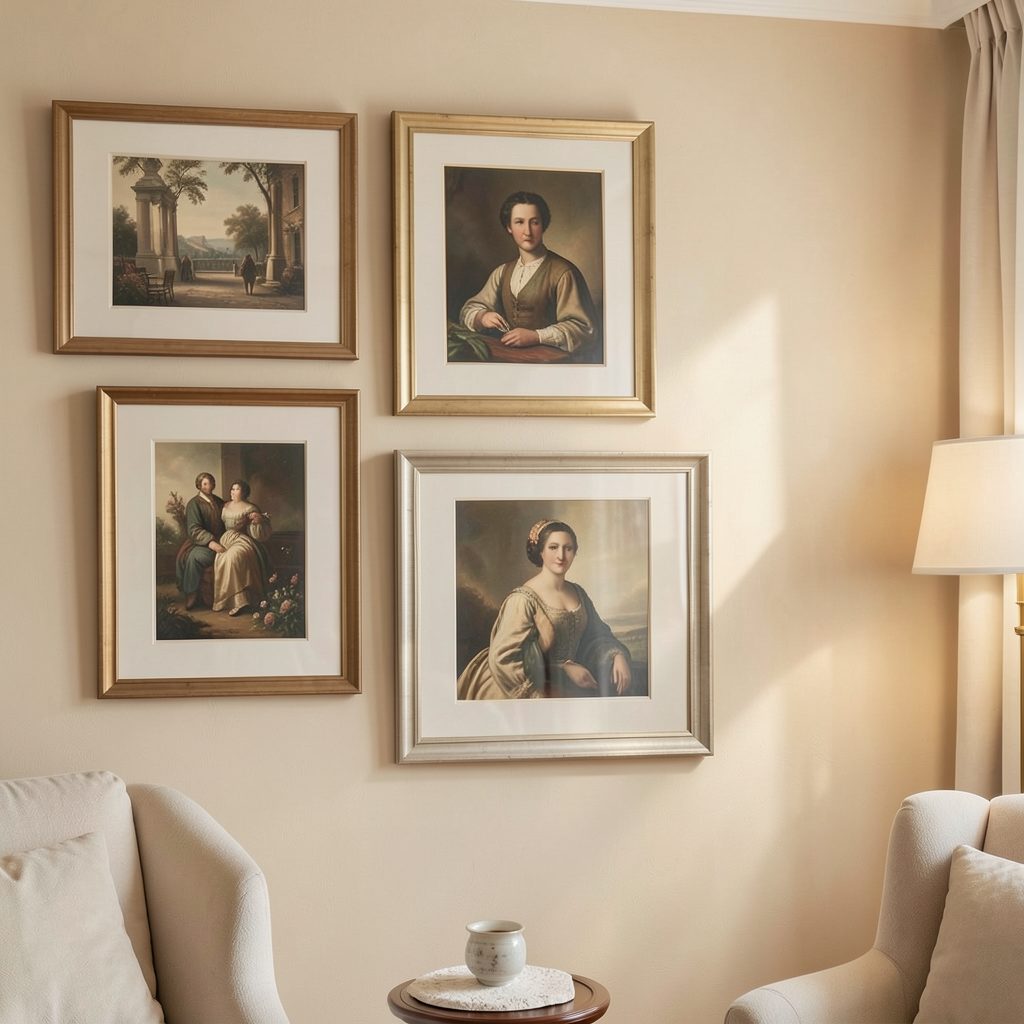
Floating frames or traditional frames for a polished gallery wall
Framing changes how artwork feels in a room. The same print can appear airy and contemporary inside a floating frame, or more grounded and classic when surrounded by a visible mount and moulding. That choice affects scale, colour, shadow, and the relationship between a picture and the wall around it.
Floating and traditional frames both have a place in stylish apartment decorating. The best option depends on the artwork, the room’s architecture, and whether you want the frame to blend into the display or become part of its visual language. For more ideas on art-led interiors, explore Focus LDN interiors.
What makes a floating frame distinctive
A floating frame holds a canvas or panel slightly away from the glass, creating a slim shadow gap around the artwork. This detail gives the image breathing room and makes the piece feel almost suspended inside its border. The result is especially effective with canvas paintings, deckled paper, photographs mounted to board, and works with edges worth displaying.
The minimal profile suits contemporary apartments, neutral bedrooms, and gallery-style living rooms. Black, white, natural wood, and metallic floating frames can all work well, although a narrow dark profile often gives colourful artwork a crisp architectural outline. Because the frame is visually restrained, the art usually remains the focal point.
There are practical limitations. Floating frames can cost more because they require precise mounting, and they may offer less protection than a fully enclosed frame with glazing. A shadow gap can also collect dust, while an uneven canvas edge may become more noticeable rather than disappearing.
Why traditional frames remain versatile
Traditional framing usually combines a visible frame with a mount, mat board, or glazing. The mount creates a controlled border between the artwork and the moulding, which can help small prints feel more substantial. It also protects the paper from touching the glass and gives the composition a calmer, more finished appearance.
This approach works across many decorating styles. A slim oak frame with an off-white mount feels Scandinavian, while a dark wood or antiqued gold frame can support an eclectic gallery wall. Simple black frames are dependable for photographs, line drawings, posters, and graphic prints, particularly when several pieces need to look related.
Traditional frames are often easier to source in standard sizes and can be more budget-friendly. Ready-made options allow artwork to be changed over time, though the proportions may not suit every image. A mount that is too narrow, too bright, or poorly matched to the picture can make an otherwise beautiful piece feel cramped.
How the two styles compare
The difference between floating and conventional picture frames is less about quality than emphasis. Floating designs highlight the artwork’s edges and provide a contemporary shadow line. Traditional designs create a boundary, add visual weight, and offer more opportunities to use mats, glazing, and decorative moulding.
Consider the following characteristics before committing to a full gallery wall:
| Feature | Floating frame | Traditional frame |
|---|---|---|
| Overall look | Modern, airy, architectural | Classic, layered, adaptable |
| Best suited to | Canvases, panels, mounted artwork | Prints, photographs, drawings |
| Visual impact | Emphasises the artwork and edges | Adds structure around the artwork |
| Protection | Varies; often open-fronted | Strong, especially with glazing |
| Cost | Frequently custom-made | Many standard-size options |
| Maintenance | Shadow gap may gather dust | Glass needs cleaning but seals the artwork |
| Gallery-wall effect | Cohesive and minimalist | More varied and collected |
For a carefully curated display, mixing the two can be effective. Use floating frames for larger canvases and traditional frames for smaller paper works, then repeat one material or colour to keep the arrangement intentional rather than disconnected.
Choosing frames for different rooms
In a living room, floating frames can reinforce a clean, modern scheme without competing with furniture. A large canvas above a sofa benefits from the extra space around its edges, particularly when the wall is painted in a soft neutral. Traditional frames are useful when a salon-style arrangement includes different sizes, subjects, and mediums.
Bedrooms generally benefit from quieter framing. Pale timber, warm white, and soft black can support a relaxed atmosphere, while heavily ornate moulding may feel too formal above a bed. When arranging several pieces, leave consistent gaps and keep the overall group broad enough to relate to the furniture below.
Bathrooms require additional care because humidity can damage paper, mounts, and unprotected artwork. Choose sealed glazing, moisture-resistant materials, and secure fixings. A floating frame can work for a protected canvas away from direct splashes, while a glazed traditional frame is often the safer choice for delicate prints.
A themed arrangement becomes easier to balance when the frame style supports the story. These gallery wall steps can help establish a shared subject, palette, or visual rhythm before you decide how much variety to introduce.
Matching the frame to the artwork
Start with the physical character of the piece. A canvas with painted edges may look unfinished inside a conventional frame but intentional inside a floating one. A delicate etching, meanwhile, usually benefits from a mount that keeps it away from the glazing and gives its fine lines room to read.
Colour is equally important. A frame that echoes a minor tone in the artwork can create subtle cohesion, while a contrasting frame can sharpen the composition. Avoid matching every frame exactly if the wall contains several mediums; instead, repeat two or three finishes across the arrangement.
Scale should guide the final decision. A thick frame can overpower a small work, while an ultra-thin profile may look insignificant around a large, expressive image. Before ordering, use paper templates on the wall to test proportions, spacing, and the balance between framed art and surrounding furniture.
Practical recommendations for a cohesive display
The most successful gallery walls combine personal meaning with visual discipline. Think about the entire collection from a distance, then assess each frame up close. This prevents one attractive frame from disrupting the rhythm of the wider arrangement.
Use these principles when selecting and installing your pieces:
- Choose floating frames for canvases or artwork with attractive, finished edges.
- Use traditional mounts for delicate paper, photographs, and smaller prints.
- Repeat a frame finish at least twice to create cohesion without uniformity.
- Match frame weight to artwork scale and the furniture beneath it.
- Use glazing and moisture-resistant materials in bedrooms, bathrooms, and bright spaces.
If you are building a collection from scratch, begin with one anchor piece and develop the surrounding works gradually. Start an art gallery with a clear palette or theme, then let the frames provide a consistent thread through changing subjects and sizes.
Make the frame part of the composition
Floating frames offer clean lines, depth, and a contemporary sense of space. Traditional frames provide protection, flexibility, and a layered finish that works across many interiors. Neither is universally better; the right choice is the one that gives each artwork enough support without taking over its visual identity.
Before buying several frames, test one piece in the room and observe it in daylight and evening light. When the artwork, frame, wall colour, and surrounding furniture feel balanced together, build the rest of the display around that successful relationship. Subscribe to Focus LDN for considered ideas on gallery walls, art placement, and stylish home living.