How to display small ceramics alongside art
Displaying a collection of small ceramics alongside art offers a useful contrast: glossy glaze against paper, rounded forms against a hard frame. Small vessels, sculptural pots and animal figures can make a wall feel collected rather than curated, but scale, spacing and visual weight must be handled as one composition. The goal is a display that still feels relaxed after coffee is poured and the room is lived in.
Start by separating the pieces you cannot live without from those that merely look good in the shop. Small objects benefit from breathing room, so an overfilled ledge rarely feels calm. Choose two or three clusters, anchor each with artwork and leave negative space around every focal point. This is useful in compact Sydney and Melbourne apartments, where one narrow shelf or blank wall may have to work harder.
Before mounting anything, check the room at morning and night. A layout balanced in daylight may disappear after sunset, so test lighting, sightlines and the daily movement of people through the space. Decide whether the ceramics should lead the composition or support the artwork before choosing the shelf that will hold them.
Start with the wall and its limits
In a managed apartment, begin with the architecture rather than the objects. Notice skirting, door tracks, window heights and the ceiling line; a shelf that looks generous can look cramped above a sofa. In a compact Sydney or Melbourne flat, one strong wall is usually more convincing than scattered arrangements. Measure the handling space, too, so a cup can be lifted without hitting the wall.
If you rent or sit in a strata building, ask the owner or agent before drilling, because by-laws may govern alterations and communal areas can have extra rules. Keep displays clear of required escape routes, stairwells and balcony thresholds. Freestanding shelves or approved hanging systems make a reversible display possible when the lease ends or the wall needs to change.
Light and climate determine how long the arrangement survives. West-facing Sydney and Melbourne rooms receive fierce afternoon sun, while humid coastal conditions in Brisbane and Darwin can affect unglazed clay, paper and timber joinery. Keep vulnerable pieces out of direct sun, away from open windows and salt-laden breeze, and use cool LED lighting. Rotate pieces rather than leaving favourites in the brightest patch.
Build groups by visual weight
Build each cluster around visual weight, not size alone. Dark glazes, dense forms and pieces on a plinth carry more weight than pale, open vessels. Place the strongest object where the eye naturally lands, then step back. Small ceramics need roughly 50–100 mm between them so each silhouette remains legible; widen the spacing for larger pots or taller frames.
The practical steps in arranging six artworks are useful for testing a layout with paper templates before anything reaches the wall. Work outward from the anchor piece, using pairs for calm symmetry or groups of three for an informal rhythm. Keep related objects together, but separate them enough for the group to read as one collection.
A low plinth can make a small pot feel important without enlarging it. On a shelf, vary height with books, blocks or a narrow riser, then check that the support feels stable. Avoid two visual centres: once the eye knows where to begin, it should move easily through the ceramics, across the artwork and back into the room.
Coordinate pottery with framed art
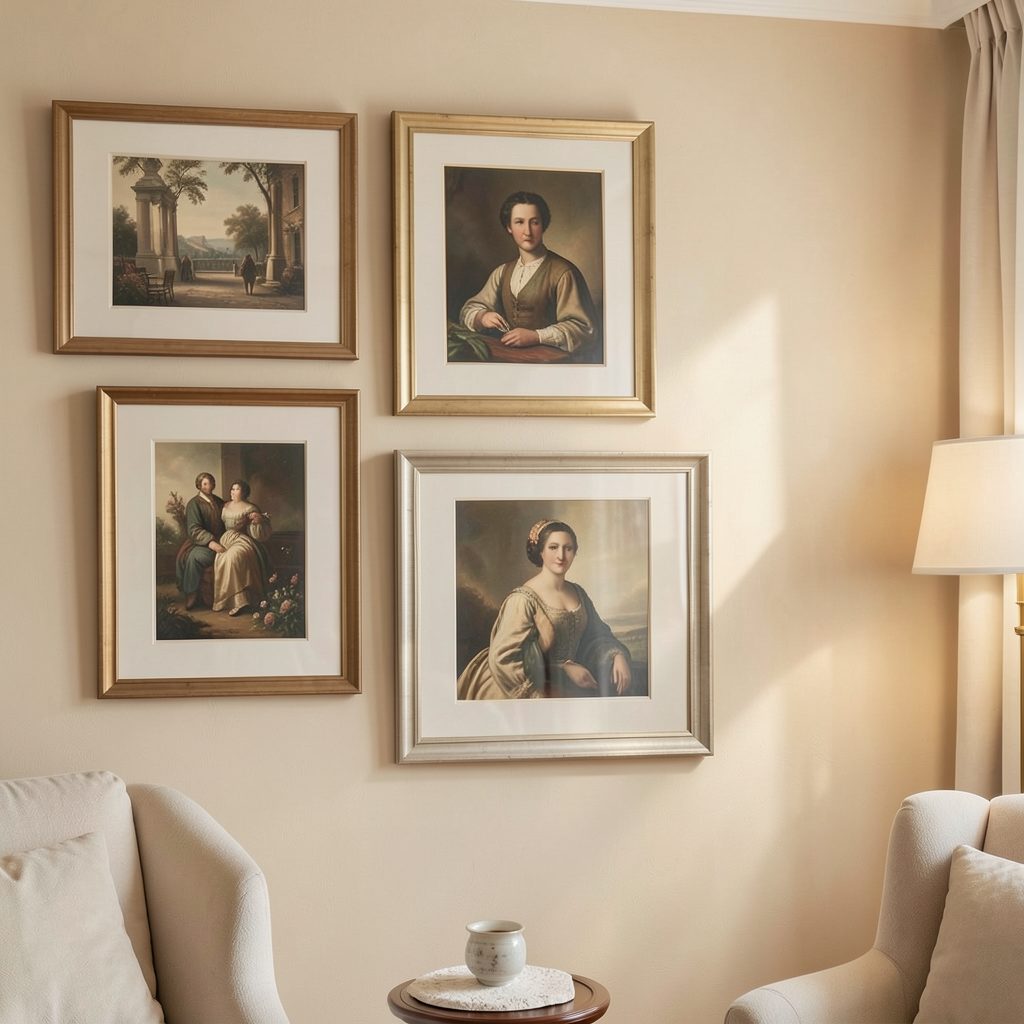
Let frames and pottery have a restrained conversation. Repeat one colour, shape or material, such as warm timber against matte cream glaze, rather than matching every element. A narrow black frame can unify pale ceramics, while mixed metal and timber suits a collected look. Keep the largest frame dominant and let the smallest vessel punctuate the arrangement.
Source Australian makers through studios or design markets such as Make It Market at Carriageworks in Erskineville, or open-studio events during Melbourne Design Week. Buying locally lets you judge scale, surface and weight in person and makes returns simpler. Follow the maker’s care advice, since some pieces are intentionally porous or unglazed.
If the display feels like two separate collections, the principles in mixing art and objects can create stronger links. Repeat a line from an artwork in the shelf arrangement, or use one ceramic as a bridge between two frames. Grouping by shared colour often works better than spreading matching pieces across the room, where the relationship becomes too subtle to notice.
Use a practical display checklist
Before installation, work through the practical checks that protect both wall and objects. These lists separate placement decisions from ongoing care, whether the display is permanent or easily rearranged.
Before the display goes up
- Measure the wall, sightlines and shelf depth; mark the layout with paper templates.
- Confirm the fixings, wall type and load, then get permission before drilling a rental or strata-managed wall.
- Keep ceramics away from balcony doors, open windows, ceiling fans and busy walk-through routes.
- Plan low-heat LED lighting before mounting, so cables and fittings can be hidden safely.
While the display is in use
- Dust gently with a soft brush, avoiding abrasive cleaners on unglazed, gilded or metallic surfaces.
- Rotate pieces out of direct sun and watch for fading, damp marks or salt haze near coastal windows.
- Recheck stability and spacing after a week of everyday use, then adjust before small objects become hazards.
Consumer protection matters as well. Under the Australian Consumer Law, guarantees can apply to a faulty or materially different item bought from a business, although second-hand sales and disclosed handmade variation can change the position. Keep the listing, receipt and delivery details, and raise an issue promptly rather than leaving a damaged piece in the display.
Finish with a layered, lived-in look
Stand at the doorway, then from the sofa, and notice what the eye catches first. The best composition has one clear centre, enough asymmetry to feel human, and a lower layer that connects wall to furniture. Add everyday objects sparingly; books, a bowl or one branch can make the arrangement feel inhabited without turning it into a styled still life.
Artists and makers can submit their work for consideration if the display has grown into a broader creative project. For a home launch, borrow the rhythm of a gallery opening: keep labels minimal, invite a few guests and give the room time to be seen before adding anything else.
Subscribe to Focus LDN for fresh decorating ideas, thoughtful gallery guides and new ways to bring art into everyday Australian homes.