How to Create a Gallery Wall with Postcards and Travel Souvenirs
A gallery wall made from postcards and travel souvenirs can turn everyday memories into a thoughtful feature of your home. Unlike a collection of expensive prints, this kind of display grows naturally over time, mixing handwritten notes, ticket stubs, small textiles and photographs with artwork.
The key is to give the collection enough structure to feel intentional. A consistent colour palette, repeated frame style or carefully measured layout will make objects from different destinations look connected rather than cluttered.
Australian homes are especially suited to this relaxed decorating style. Whether you live in a compact Melbourne terrace, a Sydney apartment or a light-filled Brisbane rental, travel mementoes can add personality without taking up floor space.
Choose a clear visual story
Start by deciding what the wall should communicate. You might focus on coastal holidays, European architecture, national parks, food markets or a broader collection of places that have personal meaning. A theme does not need to be strict, but it helps determine which pieces belong together.
Sort your souvenirs on the floor before putting anything on the wall. Group postcards, maps, fabric pieces and small artworks by colour, size or destination. A collection of blue-and-white ceramics, sandy neutrals and faded travel photographs can create a calmer result than a completely random mix.
Think about the room’s existing character as well. In a minimalist apartment, a restrained arrangement with white mounts and pale timber frames may work best. In a colourful eclectic room, black frames and vivid postcards can provide definition.
Gather souvenirs that can be displayed safely
Postcards are the easiest foundation because they are thin, light and available in many sizes. Add museum tickets, old menus, luggage tags, postage stamps, pressed maps and small paper envelopes. If you have collected fabric from markets in Marrakesh or hand-painted tiles in Portugal, display one or two pieces rather than every item.
Small objects can add depth, but they need more planning. Flat baskets, woven patches and lightweight wooden ornaments can sit inside shadow-box frames. Avoid attaching heavy shells, glass pieces or metal souvenirs directly to plasterboard, particularly in a rental property where wall damage may become an issue.
For fragile paper, use acid-free backing and avoid placing valuable pieces in direct western sunlight. Australia’s intense UV levels can fade ink quickly, especially in north-facing rooms. UV-filtering acrylic or museum glass is worth considering for irreplaceable postcards.
Build a balanced arrangement
Measure the wall and mark the available area with painter’s tape. Leave around 8–12 centimetres between frames for a relaxed arrangement, reducing the gap slightly when using many small pieces. Lay everything out on paper or use phone photos to test different configurations before drilling.
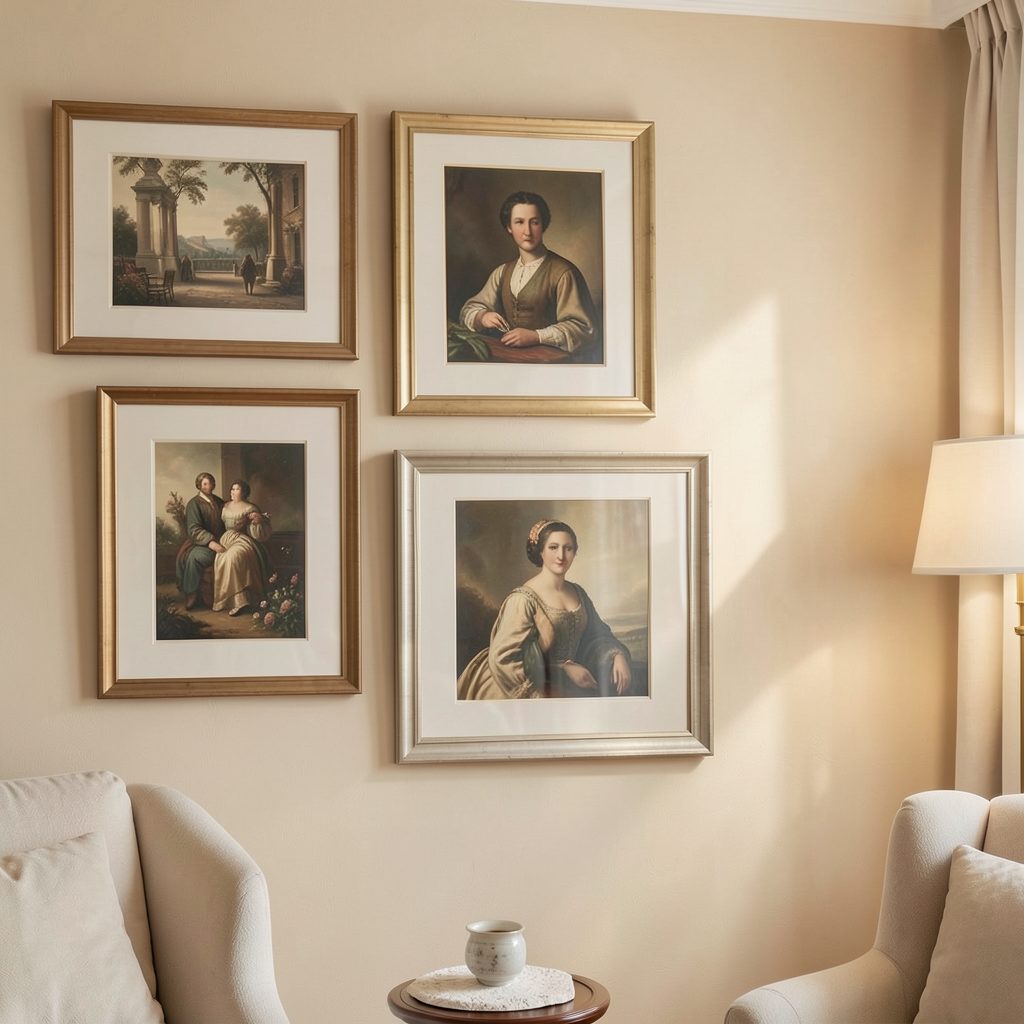
A salon-style arrangement does not have to be perfectly symmetrical, but it should have visual balance. Place the largest frame slightly off-centre, then distribute smaller pieces around it. Keep the outer edges reasonably aligned so the overall shape feels deliberate.
For a minimalist gallery-style interior, use identical frames with varied contents. For a more collected look, combine two or three frame finishes, such as light oak, matte white and aged brass. A useful starting point is to browse gallery art for ideas about spacing, scale and the relationship between individual works.
Useful layout rules
- Keep the centre of the arrangement near eye level
- Repeat one colour in at least three separate pieces
- Balance busy postcards with quiet blank space
- Leave room to add future travel memories
Select frames and mounting materials
Frames protect souvenirs while giving the wall a unified appearance. Standard photo frames are affordable and easy to replace, while deep-set frames suit layered paper, fabric or three-dimensional keepsakes. Clip frames are practical for postcards that you want to rotate regularly.
A simple mount can make an inexpensive postcard feel considered. White or warm-grey mat board adds breathing room, while a coloured mount can connect several unrelated souvenirs. Avoid using ordinary sticky tape on vintage paper because its adhesive can yellow and stain over time.
Australian hardware shops and framing businesses offer plenty of practical options, from removable picture strips to masonry anchors. Check the weight rating carefully, especially in older Sydney or Melbourne buildings with dense brick walls. In strata apartments, confirm that drilling or fixing into shared walls complies with building by-laws.
Adapt the display to your home
In a hallway, a narrow vertical arrangement can turn a passage into a personal travel timeline. In a bedroom, keep the palette soft and avoid placing reflective glass directly opposite a bright window. A home office can support a denser arrangement of maps, postcards and small reminders of places visited.
Bathrooms require extra care because steam and moisture can damage paper, adhesive and unsealed timber. Use sealed frames, acrylic glazing and copies of precious postcards rather than originals. For ideas on keeping decorative details practical in a humid room, explore this guide to bathroom styling ideas.
Renters across Australia can create a gallery wall without making permanent changes. Removable hooks may work for lightweight frames, but follow the product instructions and test them in an inconspicuous area. Australian tenancy rules vary by state and territory, and landlords commonly require written approval for significant alterations, so keep the display light and reversible.
Materials worth keeping nearby
- Acid-free paper, mounts and photo corners
- Painter’s tape and a spirit level
- Removable hooks for lightweight frames
- UV-protective glazing for special pieces
Keep the collection fresh over time
A travel display should evolve rather than become visually overwhelming. Review it every few months and remove pieces that no longer suit the room. Store valuable originals flat in archival sleeves, then display high-quality scans if the wall receives strong sunlight.
Use the Australian seasons as a gentle rhythm for updating the arrangement. After a summer road trip along the Great Ocean Road, add a coastal postcard or local gallery print. Following a trip to Perth, Cairns or Hobart, introduce one distinctive object instead of several similar souvenirs.
You can also connect the wall to everyday rituals: rotate postcards while cleaning, add handwritten captions during the holiday season, or leave one empty frame for the next meaningful find. This keeps the display personal and prevents it from feeling like a static collection purchased all at once.
Bring your favourite postcards and travel keepsakes together, test the arrangement on the floor, and start with one carefully composed section of wall. Subscribe to Focus LDN for more practical ideas on artwork display, stylish interiors and creative ways to make your home feel distinctly yours.