How to Arrange Art Around a Radiator or Heating Unit
A radiator, split-system air conditioner or wall-mounted heater does not have to leave an awkward blank patch in your decorating scheme. With the right spacing, scale and frame materials, the wall can still support a calm gallery arrangement while allowing warm air to circulate safely.
The approach is especially useful in Australian homes, where heating varies from hydronic radiators in Melbourne and Hobart apartments to reverse-cycle systems in Sydney, Perth and Brisbane. Before hanging anything, consider the type of heat, the wall surface, the artwork’s materials and any rental or strata restrictions. For further apartment styling ideas, browse Focus LDN interiors.
Start With Heat, Airflow And Safety
First identify how the unit works. A panel or hydronic radiator sends heat directly upwards, while a reverse-cycle split system needs clear space around its intake and outlet. Ducted vents require a different solution altogether, as artwork placed too close can disrupt airflow or become exposed to uneven temperature changes.
Use the manufacturer’s recommended clearances as your primary guide. If those instructions are unavailable, leave a generous gap above and beside the unit rather than treating the wall as ordinary display space. Never cover controls, vents, thermostats or electrical access points. Any change involving wiring, concealed cables or the heating system itself should be handled by a licensed electrician, as electrical work in Australia is regulated at state and territory level.
Heat and dry air can gradually warp timber, loosen canvas and fade paper. For that reason, valuable works, photographs and works on paper are better placed to the side of a heater or on an adjacent wall. A ceramic, metal or glazed print in a properly sealed frame is usually more forgiving than an unprotected original.
Choose A Layout That Respects The Unit
A single large artwork can work above a low radiator if it is sufficiently elevated and visually balanced by the furniture below. Keep the lower edge well away from the heat plume, and avoid allowing a frame to sit directly over a control panel. A horizontal work often looks more natural than a tall piece because it follows the width of the unit without crowding the ceiling.
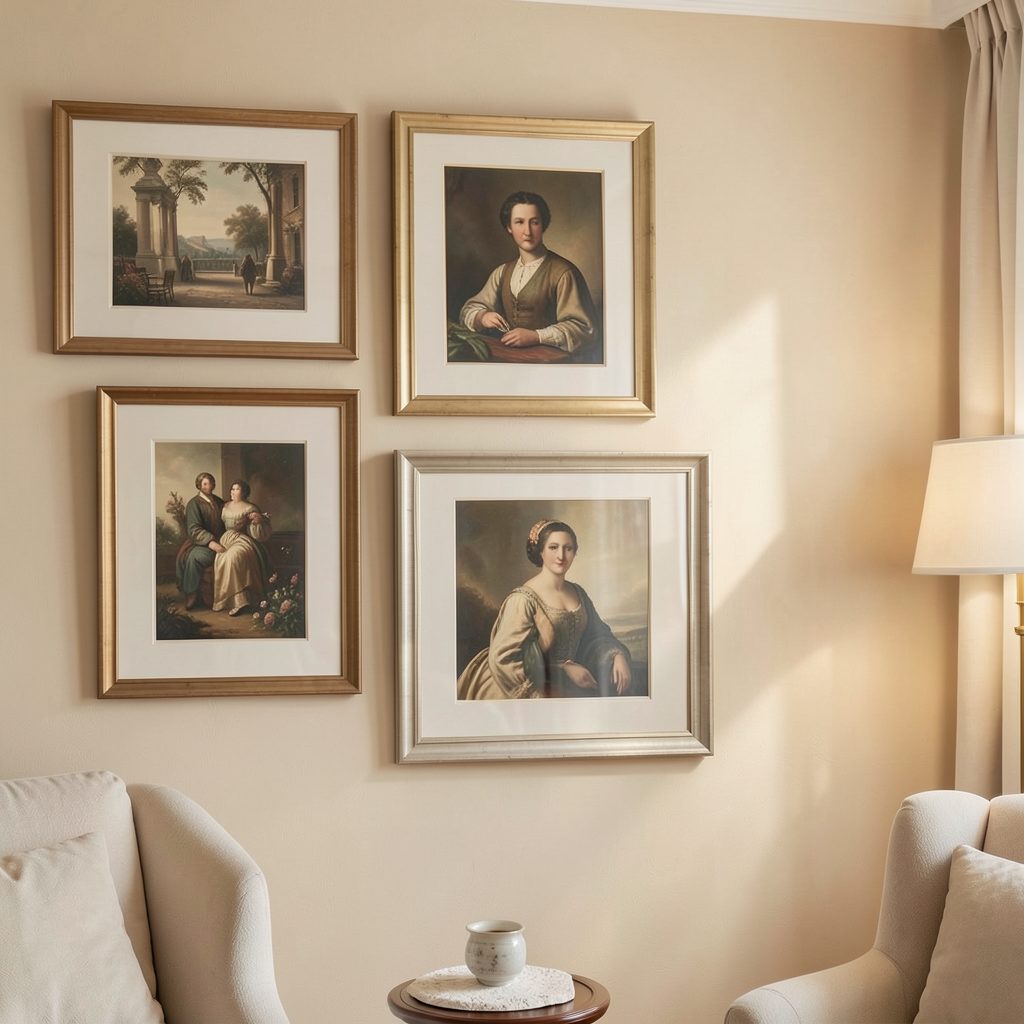
For a gallery wall, create a shape that stops short of the heater rather than forcing the arrangement across it. A vertical column of two or three smaller works beside the unit can provide rhythm without blocking circulation. In a compact Melbourne terrace or Sydney rental, this side-hung arrangement also makes a narrow room feel more deliberate.
You can map the composition with paper templates before drilling. Mark the radiator, vent or split-system outline on the wall, then position paper shapes around it. Stand back from several angles, including the main entry point, and check that the arrangement feels balanced when the heating unit is visible and when it is switched off.
Select Frames And Materials Carefully
Choose frames that tolerate moderate warmth without becoming brittle or discoloured. Powder-coated metal, aluminium and well-finished hardwood are practical options, while inexpensive plastic can soften or distort if exposed to sustained heat. Use archival backing and UV-filtering glazing for photographs and prints, particularly in bright Australian interiors where strong northern or western sun can add to fading.
Glass also needs thoughtful placement. Avoid hanging a heavy glazed frame where vibration from a wall-mounted unit could cause movement. Two fixing points are preferable for wider frames, and French cleats or suitable masonry anchors provide more stability than a single lightweight hook on plasterboard.
A restrained palette helps the display feel integrated rather than improvised. Repeat one frame finish, mat colour or accent tone from the room, then vary the artwork itself. If you are building a labelled salon-style display, these gallery labels can add a considered, exhibition-like detail without placing extra objects near the heat source.
Plan The Composition Before Making Holes
Measure the wall, furniture and heating unit as a group. The artwork should relate to the sofa, bed or console beneath it, not just to the empty area above the radiator. As a general styling principle, keep the centre of the overall arrangement around eye level, then adjust for seated viewing and the height of nearby furniture.
Measurements Worth Marking
- Width and height of the heater or vent
- Manufacturer’s clearance around the unit
- Centre line of the furniture below
- Position of studs, masonry or electrical points
Create a temporary arrangement on the floor using the same gaps you intend to use on the wall. For mixed frames, begin with the largest piece and build outwards, keeping the spacing consistent enough to look intentional. A small gap between the display and the heating zone is preferable to an arrangement that appears squeezed into every available centimetre.
Hanging Details To Check
- Use two fixings for wide or heavy frames
- Keep cords, switches and controls unobstructed
- Choose anchors suited to plasterboard, brick or concrete
- Test the display with heating and cooling running
In Australian rentals, tenancy rules differ between states and territories, and drilling or other alterations may require written approval. Apartment owners should also check strata by-laws before fixing into shared walls or changing a built-in heating surround. A removable picture rail, adhesive system rated for the frame’s weight or a leaning arrangement can provide flexibility where permanent holes are not permitted.
Make The Wall Feel Finished
When the heater sits below the display, use the surrounding room to create visual continuity. A low console, slim bench or upholstered bedhead can anchor the art without touching the unit. Keep textiles, baskets and plants away from vents and hot surfaces, especially in small rooms where objects can quickly restrict airflow.
In warmer parts of Australia, heating may only run for a few weeks, so the unit should still look acceptable when dormant. Paint it in a calm neutral, treat it as part of the room’s architecture or echo its finish in a frame. In a Perth or Brisbane home, where cooling equipment may be more prominent than radiators, the same principle applies: frame the unit with art rather than hiding its necessary clearance.
For a more layered display, mix one larger work with smaller prints, a textile piece or a shallow sculptural object placed well away from the heat. Keep the arrangement visually light around the unit and denser on the neighbouring wall. This creates a gallery-style interior that feels balanced in every season; a helpful gallery wall guide can provide further ideas for combining scale and spacing.
Take a final photograph from the doorway and check the wall at different times of day. Once the composition feels balanced, secure every frame, monitor any signs of heat damage and leave the required ventilation clear. Save the layout measurements for future rearranging, then let the artwork bring character to the room without competing with the heating system. Explore Focus LDN for more practical apartment decorating ideas and create a display that works beautifully through every Australian season.