Turn a Spare Room into an Artful Storage Space
A spare room can be far more useful than a place for occasional guests. With the right artwork, shelving and concealed compartments, it can become a calm home office, reading nook, creative studio or flexible retreat without looking like a storage cupboard.
The most successful schemes treat practical pieces as part of the room’s visual language. A framed cabinet can read as a large artwork, a picture ledge can hold books and ceramics, and a pegboard can become a changing composition of tools, prints and small objects.
This approach is especially helpful in Australian homes, where an extra room may need to serve several purposes over the year. A Melbourne study might become a guest room during the holidays, while a compact Sydney apartment may rely on one flexible space for work, hobbies and laundry overflow.
Before buying anything, consider how the room receives light, how much wall space is available and what needs to be stored. Artwork that doubles as storage should make everyday routines easier while contributing to a considered gallery-style interior.
Define the room’s main purpose
Begin with the activity that will happen most often. If the room is primarily a home office, storage artwork might include a pinboard with a slim shelf, a framed filing cabinet or a wall-mounted desk beneath a composition of prints. For a guest room, favour closed storage that keeps personal items out of sight.
A room with several functions needs visual restraint. Choose one dominant material, such as pale timber, black metal or painted MDF, and repeat it through the frames, handles and shelving. This creates unity even when the furniture has different uses.
For inspiration, explore artful storage ideas that combine decoration with daily function. The key is to make useful objects feel deliberately selected rather than temporarily placed.
Choose artwork with a practical role
Storage pieces do not need to look overtly functional. A shallow wall cabinet with a flush door can hold stationery, spare bedding or craft supplies behind a print or painted front. Likewise, a series of box frames can display small artworks while creating room for keepsakes, jewellery or cables.
Consider weight and access before committing to a design. Heavy framed cabinets require suitable wall fixings, especially in older Australian homes where plasterboard, brick and timber studs may all be present. For rented properties, freestanding shelving, leaning frames and removable hooks offer greater flexibility.
A folding screen is another useful option. It can hide open shelving, divide a work zone from a sleeping area and provide a large surface for textile art or a curated collection of postcards. Select a screen that can be folded away when the room needs to feel more spacious.
Build a balanced gallery wall
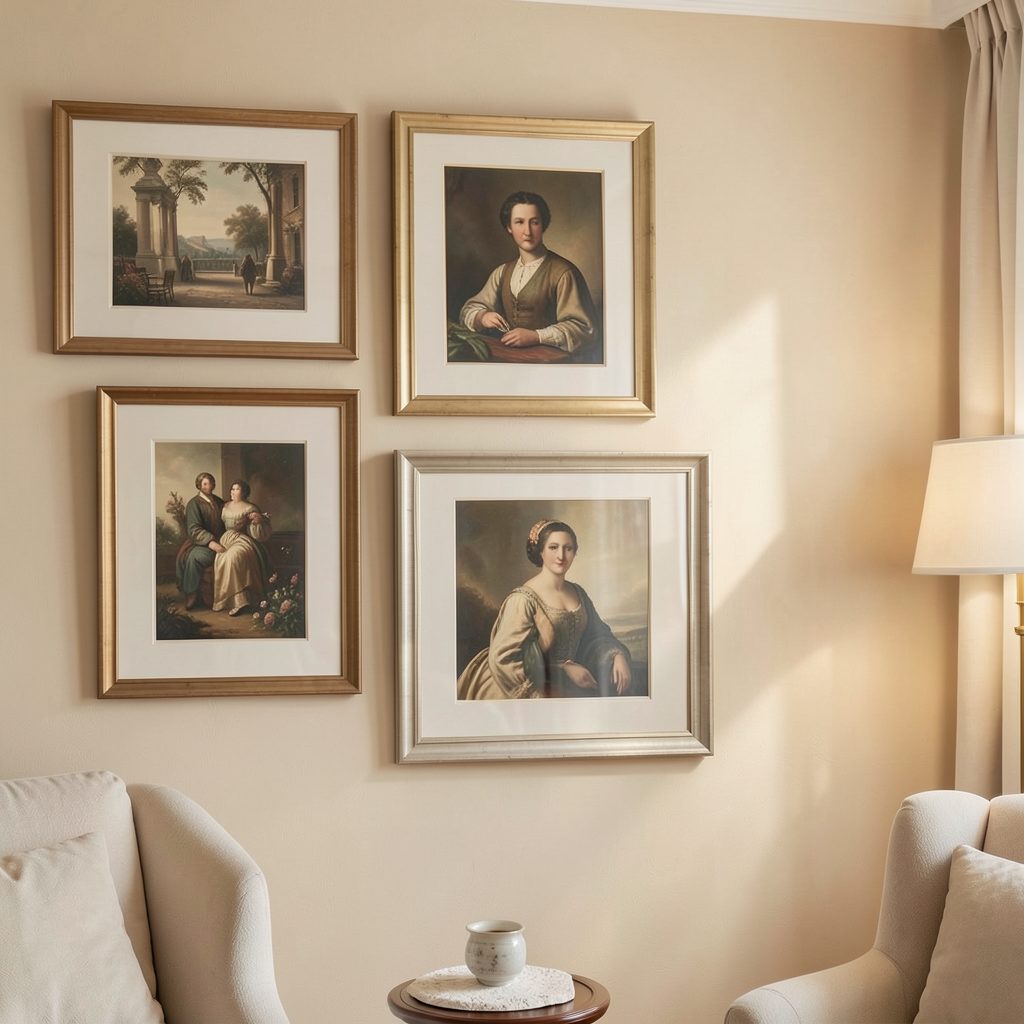
A gallery wall works best when storage is included as part of the initial layout rather than added afterwards. Start with the largest practical item, such as a cabinet, pinboard or shelf, then arrange smaller frames around it. Keep the outer edges visually balanced, even if the internal spacing is relaxed.
Use a paper template to test the composition before drilling. This is particularly useful in narrow rooms, where a crowded wall can make the space feel compressed. A consistent frame finish will create calm, while varied artwork sizes keep the arrangement personal.
For a minimalist result, leave generous gaps between pieces and choose a limited palette. In a coastal Queensland home, warm timber and sun-washed colours may feel natural; in a darker Melbourne room, charcoal frames and muted botanical prints can add definition without overwhelming the available light.
Compare storage-led display options
The best solution depends on what must be stored, how often it is accessed and whether the room needs to change function. Open shelving is attractive but requires regular editing, while concealed cupboards provide a quieter backdrop for artwork.
| Storage idea | Best for | Visual effect | Practical note |
|---|---|---|---|
| Framed wall cabinet | Small objects and stationery | Looks like oversized art | Check wall fixings and door clearance |
| Picture ledge with baskets | Books, cables and craft supplies | Casual layered display | Keep heavier items low |
| Pegboard in a deep frame | Tools and creative equipment | Graphic, adaptable composition | Works well above a desk |
| Storage ottoman beneath art | Blankets and guest items | Keeps floor zone soft and uncluttered | Choose a durable upholstery |
| Freestanding bookcase | Larger collections | Creates a full display wall | Secure it against tipping |
A second-hand cabinet from a local vintage shop or Gumtree can be more characterful than a new flat-pack unit. Refresh it with low-VOC paint, replace the handles and mount a small artwork on the door for a custom appearance.
Use the vertical space carefully
When floor area is limited, look upwards. A tall bookcase can hold baskets at the bottom, books in the centre and framed prints at the top. This draws the eye vertically and preserves valuable floor space for a desk, daybed or exercise mat.
Keep frequently used items between waist and shoulder height. Reserve the highest shelves for seasonal bedding, archived documents or decorative objects. In homes exposed to strong Australian sun, avoid placing delicate paper artworks directly beside north-facing windows; UV-filtering glazing can help reduce fading.
A narrow ledge above a doorway is another overlooked opportunity. It can display lightweight frames and small sculptures without competing with the main wall. Make sure the installation does not obstruct doors, vents or ceiling fans, which are essential in warmer parts of the country.
Make the room work for guests
A spare room should feel welcoming when it is used as a bedroom. Art with hidden storage can support this without turning the space into a visible office. A framed wall organiser might hold guest information, charging cables and reading material, while a storage bench at the end of the bed keeps extra blankets accessible.
Choose washable finishes and robust fittings if the room will be used by children or visitors. A corkboard behind a framed timber border can display local maps, postcards and notes, then be cleared quickly when guests arrive. In a compact Brisbane or Adelaide home, this kind of flexible feature can replace several small pieces of furniture.
Keep the bed wall calmer than the work wall. One substantial artwork above the bed, paired with concealed storage in a nearby cabinet, will feel more restful than a dense arrangement of shelves and frames.
Layer texture without adding clutter
Storage artwork should still feel decorative. Mix framed prints with woven baskets, ceramic vessels and small sculptural objects to introduce texture. Natural materials such as rattan, wool and timber soften the harder lines of cabinetry and shelving.
Use repetition to keep the display connected. Three black hooks, two matching baskets or a row of similarly sized frames can make an assortment look intentional. Avoid filling every surface; empty space gives useful items room to breathe.
Look for versatile display spots beyond the obvious feature wall, including the back of a door, the side of a wardrobe or the area above a compact console. These locations can hold small-scale storage without competing with the room’s main artwork.
A considered shopping checklist
Before purchasing, measure the wall, check the fixing requirements and decide what must remain hidden. A beautiful cabinet that cannot hold the necessary items will quickly become decorative clutter.
Use these priorities when selecting pieces:
- Choose storage that suits the room’s main activity and future guest use.
- Select frames and cabinetry in a coordinated material or colour family.
- Protect valuable artwork from harsh direct sunlight and damp conditions.
- Keep everyday items within easy reach and seasonal items higher up.
- Leave enough blank wall and floor space for the room to feel restful.
A spare room becomes more valuable when every item earns its place. By treating cabinets, shelves and organisers as part of the artwork arrangement, you can create a flexible space that feels polished, personal and ready for changing needs. Browse Focus LDN for further gallery wall inspiration, then begin with one practical piece and build the room around it.