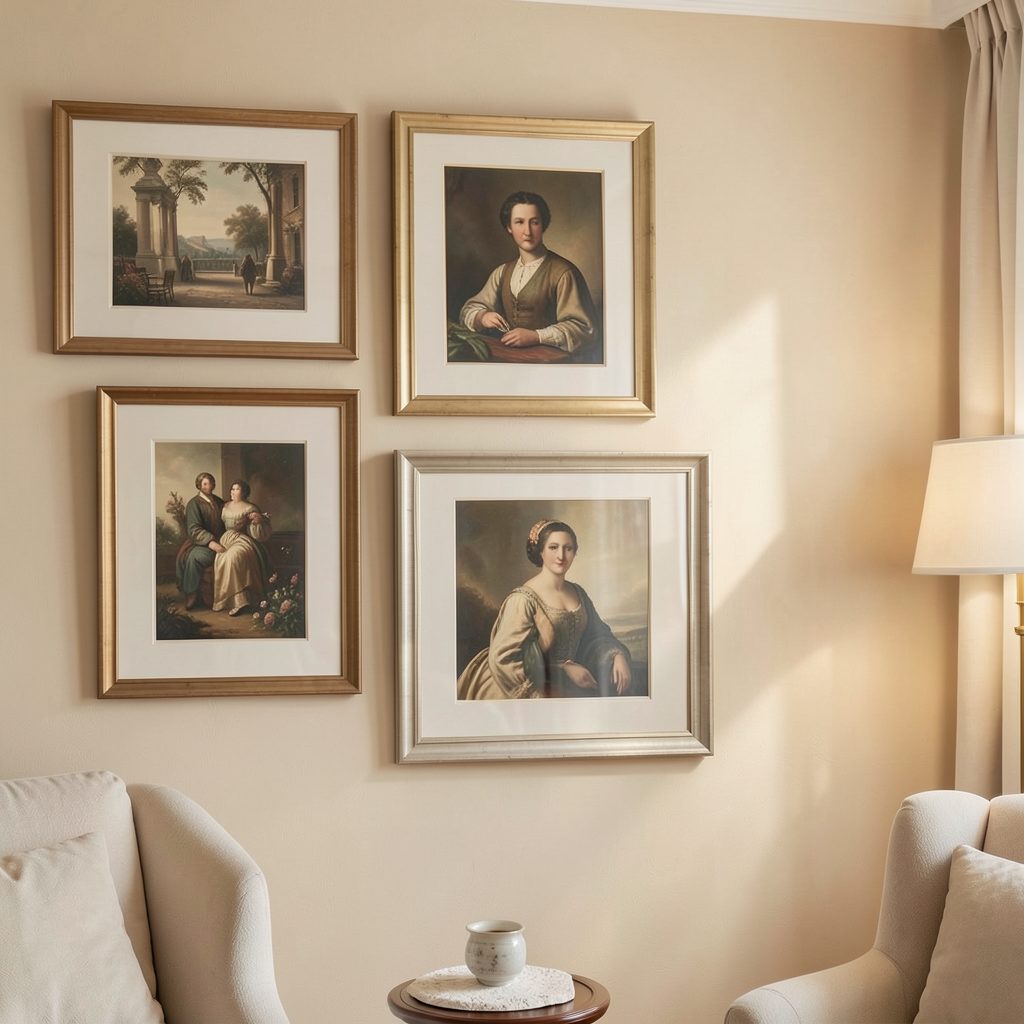
Decorating a Small Bedroom with a Slim Vertical Gallery Wall
A small bedroom can feel instantly more considered with a slim vertical gallery wall. Rather than spreading artwork across the room, a narrow column draws the eye upwards, making use of overlooked wall space while preserving valuable floor area. It is a practical approach for compact apartments, guest rooms and bedrooms where every centimetre matters.
The best arrangement balances scale, negative space and everyday function. Artwork should complement the bed, bedside table and lighting without making the room feel crowded. With the right frames and a restrained palette, even a rental bedroom can take on the polished character of a boutique Melbourne or Sydney stay.
Choose The Right Wall And Proportions
The wall beside or above the bed is usually the easiest place to create a vertical artwork arrangement. If the bed sits against a broad wall, centre the gallery column with the mattress rather than the entire room. This keeps the composition visually connected to the main furniture.
For a narrow bedroom, aim for a column between 30 and 50 centimetres wide. Three to five pieces can create enough height without overwhelming the space. A tall, slim arrangement works particularly well in newer Australian apartments, where bedrooms often have generous ceiling height but limited wall width.
Leave enough room around doors, wardrobes, air-conditioning vents and power points. In a Brisbane or Perth home, it is also worth checking how strong afternoon sun will affect prints and photographs. Direct light can fade artwork quickly, especially behind glass.
Build A Cohesive Artwork Collection
A vertical gallery wall looks calmer when the artwork shares a visual thread. This might be a black-and-white palette, soft coastal colours, botanical forms or a mixture of line drawings and small photographic prints. The individual pieces do not need to match exactly, but they should feel as though they belong together.
Try combining one slightly larger print with smaller works above and below it. A portrait-oriented centrepiece gives the arrangement structure, while a small square or landscape image prevents it from looking too rigid. Abstract art, vintage-style botanical studies and understated Australian photography all suit a relaxed bedroom setting.
If you enjoy the atmosphere of exhibitions, use small captions or artist details as part of the display. A discreet gallery labels guide can help you create museum-inspired information cards without turning the bedroom into a formal showroom. Keep the type small and the wording brief so the labels support the artwork rather than compete with it.
Select Frames That Save Visual Space
Slim frames are ideal for a compact bedroom because they create definition without adding visual weight. Black, white, pale timber and brushed metal are versatile choices. For a softer scheme, light oak frames can warm up white walls; black frames give a sharper, contemporary look against pale neutral paint.
Using the same frame finish across the whole arrangement creates a clean line, while varying the sizes adds interest. If you prefer an eclectic look, keep one element consistent, such as the mat colour or frame depth. This prevents a collection of thrifted, inherited and newly purchased pieces from appearing accidental.
Glazing also affects the result. Standard glass is economical, but acrylic is lighter and safer for a bed-adjacent display. It may be a sensible option in a rental or in homes where artwork needs to be moved regularly. Use paper templates before drilling, and check whether your strata building restricts wall fixings.
Plan The Layout Around Bedroom Living
Start by placing the largest piece at eye level when seated on the bed. Arrange the remaining artwork above and below it, keeping gaps consistent at roughly five to eight centimetres. A slightly tighter arrangement usually works better in a small room than a loose composition with too much empty wall between frames.
The bottom frame should sit high enough to avoid being knocked by pillows, lamps or bedding. If the gallery is beside the bed, align its lower edge with the bedside table or begin above the table lamp. This creates a clear relationship between the art and the furniture instead of making the frames appear to float.
Consider the bedroom’s lighting at different times of day. Warm bedside lamps can make cream paper and timber frames glow, while cool LED downlights may exaggerate blue or grey tones. In rented homes across Australia, removable picture-hanging strips can be useful, though heavier frames should always be secured according to the product instructions.
Extend The Gallery Mood Across The Room
A slim vertical gallery wall becomes more effective when repeated details appear elsewhere. Echo a frame colour in a bedside tray, use a similar tone in a cushion, or select bedding that picks up one subtle shade from the artwork. The effect should be quiet rather than perfectly coordinated.
Keep the rest of the room relatively edited. A low-profile bed, compact bedside table and wall-mounted reading light leave the gallery wall as the focal feature. Mirrors can also increase brightness, but place them away from the art if reflections create glare or make the wall feel visually busy.
The same restrained display principle works in other small rooms. If you are carrying the look into a compact ensuite, these bathroom decor ideas can help you choose moisture-conscious finishes and artwork alternatives without cluttering the space. For a more social art-led atmosphere, practical opening attire advice is useful when planning a gallery visit or launch that inspires your home collection.
Practical Choices For A Polished Display
Before hanging anything, place paper cut-outs on the wall with painter’s tape. Live with the proposed arrangement for a day, checking it from the doorway, bed and dressing area. This simple step reveals whether the composition feels too high, too dense or too close to a light switch.
- Choose a narrow column that leaves breathing room beside the bed and furniture.
- Keep the artwork palette connected through colour, subject or framing.
- Use portrait-oriented pieces to strengthen the vertical effect.
- Maintain even gaps, with slightly tighter spacing in very small rooms.
- Protect prints from harsh direct sunlight, especially in bright north-facing rooms.
- Choose lightweight glazing or secure fixings where the display is near the bed.
- Repeat one frame or artwork colour elsewhere in the bedroom.
A slim gallery wall should feel collected, not crowded. Take time to edit the final pieces, particularly if the room already contains patterned bedding, open shelving or decorative lighting. Fewer well-chosen works will usually make the bedroom feel larger and more restful.
Measure the wall, gather a few meaningful prints and test the layout before committing to hooks. With a restrained frame scheme and a thoughtful vertical arrangement, a small Australian bedroom can become an elegant, personal space that feels taller, calmer and distinctly your own.