Bathroom decor that welcomes daylight and greenery
A bathroom with generous daylight can feel like a private conservatory, especially when leafy plants, pale surfaces, and carefully chosen artwork work together. Rather than treating the room as purely functional, use its windows, reflective finishes, and natural textures to create a fresh, calming space.
The best bathroom decor ideas balance beauty with practicality. Humidity, splashes, limited floor area, and changing sunlight all affect which materials and plants will thrive. A thoughtful plan keeps the room polished without making it feel overstyled.
Natural light also gives small bathrooms an advantage. It reveals subtle color, makes greenery appear richer, and allows mirrors and glass to amplify brightness throughout the room.
Let daylight lead the layout
Begin by observing the room at different times of day. A south-facing window may bring strong, warm sunlight, while an eastern or northern exposure can create softer illumination. This will determine where to place plants, mirrors, artwork, and storage.
Keep the area around the window visually open. A slim plant stand, a narrow ledge, or a translucent blind can provide privacy without blocking valuable light. Avoid tall storage beside the glass unless the room is unusually spacious.
A large mirror opposite or adjacent to the window will bounce daylight across the bathroom. Choose a frameless design for a minimalist look, or select a slim wood or metal frame to introduce warmth and definition.
Choose plants that enjoy humidity
Bathrooms offer a naturally humid environment, but not every indoor plant will appreciate it. Ferns, calatheas, spider plants, orchids, pothos, and air plants are reliable choices when paired with suitable light levels. A bright bathroom can support more varieties than a dim room, but direct midday sun may scorch delicate leaves.
Use plants at different heights to create a layered display. A trailing pothos can soften an open shelf, a fern can fill an empty corner, and a small orchid can bring a sculptural accent to the vanity. Keep larger containers away from areas where water may pool.
Drainage matters as much as appearance. Place nursery pots inside attractive cachepots, and remove excess water after bathing if condensation collects heavily. Good ventilation prevents stagnant moisture and helps protect both leaves and surrounding surfaces.
Build a palette around natural contrast
A light bathroom does not have to be entirely white. Warm limestone, pale sage, muted clay, soft gray, and sandy beige all complement green foliage while retaining an airy quality. Use one dominant neutral, one supporting shade, and a darker accent for visual structure.
Natural materials make the space feel grounded. A teak bath mat, woven basket, stone soap dish, or rattan pendant can add texture without competing with the plants. In a minimalist bathroom, even a single wooden stool can prevent the room from appearing cold.
For a gallery-inspired atmosphere, keep decorative objects selective. A few strong pieces create more impact than a crowded collection, especially when daylight already creates movement through shadows and reflections.
Match finishes to the room’s light
The right finish changes how daylight behaves. Glossy tile reflects more brightness, while matte surfaces create a quieter and softer impression. Combine them carefully: a reflective backsplash can work beautifully with matte walls and natural wood accessories.
| Surface or feature | Effect in daylight | Best decorative pairing |
|---|---|---|
| Glossy white tile | Reflects and spreads light | Green foliage and brushed metal |
| Honed stone | Adds soft, low-glare texture | Linen tones and ceramic vessels |
| Ribbed glass | Filters light while protecting privacy | Slim black frames and trailing plants |
| Pale wood | Warms a bright, cool room | Cream textiles and botanical prints |
| Deep green paint | Creates contrast and depth | Brass details and light-colored artwork |
Use reflective finishes where they will be easy to clean, such as behind the basin or around the shower. Too many shiny surfaces can make a compact bathroom feel visually busy, while a controlled mix produces depth.
If the room receives limited daylight, avoid relying on color alone. Layer a ceiling fixture with soft wall lighting near the mirror, choosing bulbs that render skin and plant colors naturally.
Add artwork with a light touch
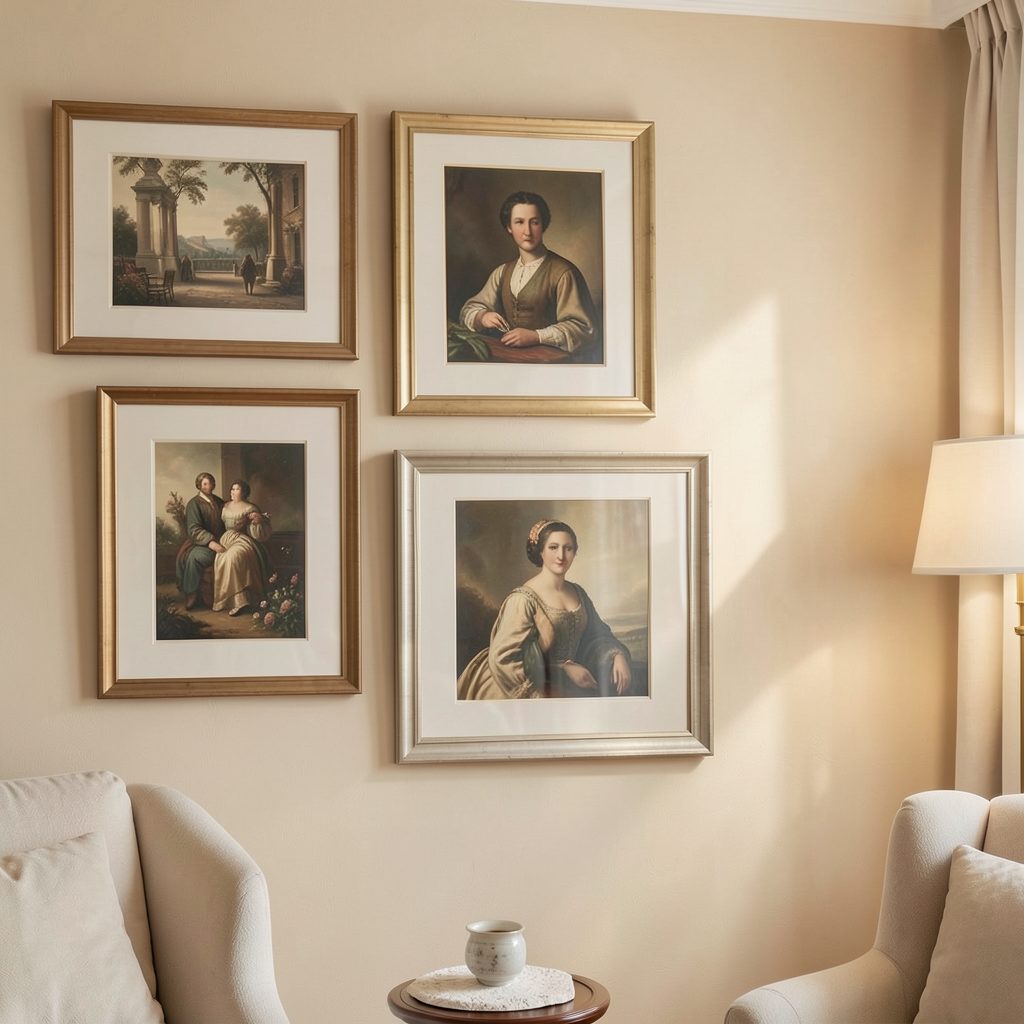
Artwork can make a bathroom feel connected to the rest of the home. Botanical illustrations, abstract landscapes, architectural sketches, and monochrome photographs suit a calm scheme without competing with the window or mirror.
Protect artwork from steam by placing it away from the shower and using sealed frames, acrylic glazing, or moisture-resistant prints. A small framed piece on a wall beside the vanity is often safer than a collection directly above the bath.
The framing style should echo the room’s finishes. Pale oak complements woven accessories, slim black frames sharpen a neutral scheme, and brushed brass can connect artwork with taps or cabinet hardware. For a polished, exhibition-like mood, take cues from gallery opening style and keep the composition edited, deliberate, and understated.
Arrange a peaceful finishing layer
Accessories should support the feeling of freshness rather than turn the bathroom into a plant showroom. Group items by function: folded towels on one shelf, skincare in a tray, and a small plant or vase on another. Repetition in color or material makes open storage look intentional.
Textiles are an easy way to refresh the space. Choose cotton or linen towels in oat, cream, olive, or stone, then repeat one of those colors in a bath mat or ceramic container. Avoid overly busy patterns if the room already contains veined stone, textured tile, or abundant foliage.
A scent can complete the atmosphere, provided it remains subtle. Eucalyptus, cedar, lavender, and green tea notes complement a botanical bathroom without overpowering it. Natural-looking dispensers and matching containers keep everyday products from interrupting the visual calm.
Keep the look fresh over time
Plants will reveal whether the room’s conditions are truly suitable. Rotate pots so growth remains even, wipe dust from broad leaves, and prune trailing stems before they overwhelm the basin or window. Replace struggling varieties rather than forcing them into an unsuitable corner.
Review the room seasonally as daylight shifts. A plant that thrives beside the glass in winter may need moving farther away in summer, while a darker corner may require supplemental lighting. Small adjustments preserve the balance between practical care and visual appeal.
For further inspiration on artwork, gallery walls, and stylish home living, explore Focus LDN's ideas and borrow the principles that suit your own space. Choose one plant, refine the light, and begin creating a bathroom that feels bright, composed, and genuinely lived in.