Vertical art ideas for small bathrooms that draw the eye up
In newer Sydney and Melbourne apartments where compact ensuites are standard, the smallest room often receives the least styling attention. Yet a single well-chosen piece can completely change how spacious the room feels. Vertical orientation is the secret weapon stylists use in tight footprints, because the eye naturally follows a tall line upward and tricks the brain into reading a higher ceiling.
A long, narrow print or a portrait canvas pulls focus skyward in a way a horizontal piece cannot. In a typical one-bedroom in Surry Hills, Carlton, or Fortitude Valley, where bathroom ceilings often hover around 2.4 metres, the difference between a wide landscape frame and a slim vertical one can be the difference between a cramped powder room and a quietly elegant retreat.
Below is a practical guide for sourcing, sizing, hanging, and styling vertical art in Australian bathrooms, including humidity-friendly frame choices and local suppliers.
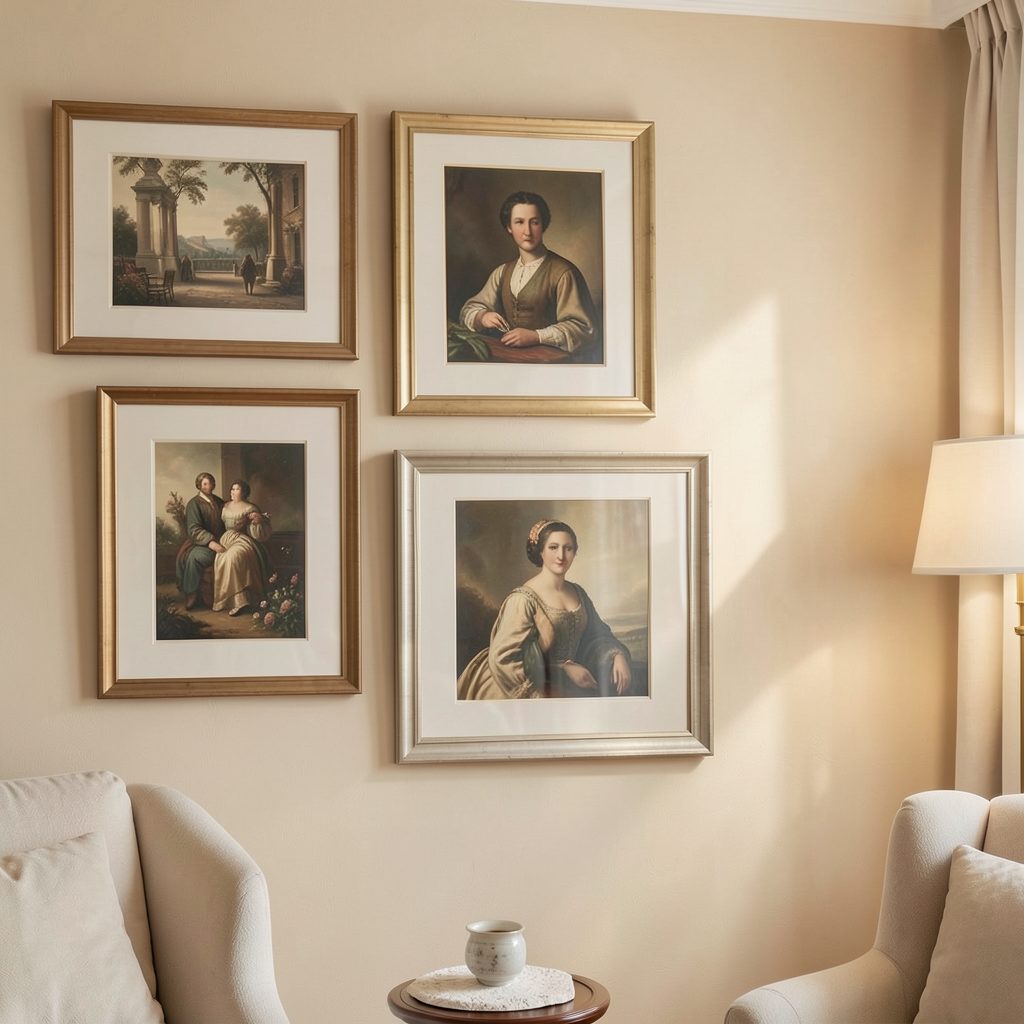
For readers assembling a wider gallery wall rather than a single piece, the same vertical logic applies across the entire arrangement, and it shapes every decision that follows, from framing to placement.
The visual logic behind vertical orientation
Vertical lines are read by the brain as motion upward. Designers have relied on this for centuries in fluted columns and panelled doors, and the same principle applies to a slim piece of art above a vanity. The narrower the artwork, the more pronounced the lift.
In Australian apartments where most ensuites measure around 1.5 by 2.5 metres, ceiling height is often the only dimension that can be visually extended. A tall framed print over the basin taps into this hidden potential, drawing the gaze away from floor-level clutter and toward the upper wall.
A horizontal piece, by contrast, encourages the eye to drift sideways and emphasises narrowness. Hold a long landscape frame against a wall, then swap it for a portrait print of the same width: the second always feels taller.
Sizing and scale for tight walls
A vertical print that is too small disappears, while one that is too wide overwhelms a narrow vanity. The artwork should sit between two-thirds and three-quarters of the width of the surface beneath it, whether that is the basin, towel rail, or freestanding bath.
Measure from floor to ceiling before buying anything, because what looks generous in a Richmond warehouse conversion with 3-metre ceilings will feel cramped in a Brisbane high-rise at 2.3 metres.
Sizing rules to remember:
- Keep artwork narrower than the vanity or basin beneath it
- Allow 15 to 20 cm of breathing room above the frame
- Sit the bottom of the frame 20 to 30 cm above the tapware
Frame and material choices for humid Australian bathrooms
Australian bathrooms swing between dry winter air in Adelaide and steamy summer mornings in Darwin, so frames need to cope with both extremes. Untreated timber and paper-heavy backings are off the table.
Powder-coated aluminium, marine-grade stainless steel, and sealed Tasmanian oak are safe bets. For glazing, acrylic or museum-grade Perspex is more forgiving than glass, particularly where steam collects quickly after a shower. Local framers in Collingwood, Paddington, and Newstead regularly build sealed frames for this purpose, and Bunnings and IKEA Richmond stock moisture-resistant options at accessible prices.
Skip the matting if the piece will sit close to a shower, because cardboard mats wick moisture even when sealed. A float-mounted print in a slim profile keeps the look clean and the artwork safe.
Hanging heights and strategic placement
The classic mistake is hanging art too high. In a bathroom, where people are usually seated or looking down into a mirror, eye line sits lower than in a living room. Aim for the centre of the frame to sit at seated eye level, around 145 to 155 cm from the floor.
Above a vanity, the bottom edge should clear the tapware by a comfortable margin to keep the piece dry. Above a towel rail, position it so the rail does not visually cut through the artwork, a common issue in slim galley bathrooms. When piecing together a wider arrangement, look up how to arrange 7 pieces of art in a vertical cluster without crowding the wall.
In powder rooms with no natural light, position the artwork opposite the door so it greets visitors, and keep the frame slim so it does not crowd the threshold.
Pairing with mirrors, lighting, and indoor plants
Vertical art works best when other elements support the upward pull. A tall round or arched mirror above the vanity reinforces the same directional movement, particularly if its bottom edge aligns with the top of the framed print. The combination creates a layered focal point that anchors the room.
Warm LED picture lights mounted above the frame wash the wall with soft light and emphasise texture. Indoor plants like Boston ferns, peace lilies, or trailing string-of-pearls on a high shelf bring greenery into the upper third of the room, completing the eye-line journey from floor to ceiling.
Avoid hanging dark art directly opposite a window, because backlight flattens the piece into a shadow. Rotate seasonal works to refresh the room through Melbourne's grey winters and Sydney's brighter summers.
Coordinating with Australian tile and colour trends
Australia's love affair with terrazzo, kit-kat tiles, and soft coastal palettes means bathroom walls are often busy enough on their own. Cool eucalyptus greens and deep ocean blues echo the popular tones found in renovated Queenslanders and inner-Melbourne terraces, while warm terracotta and ochre pair beautifully with the sandy neutrals dominating Perth renovations.
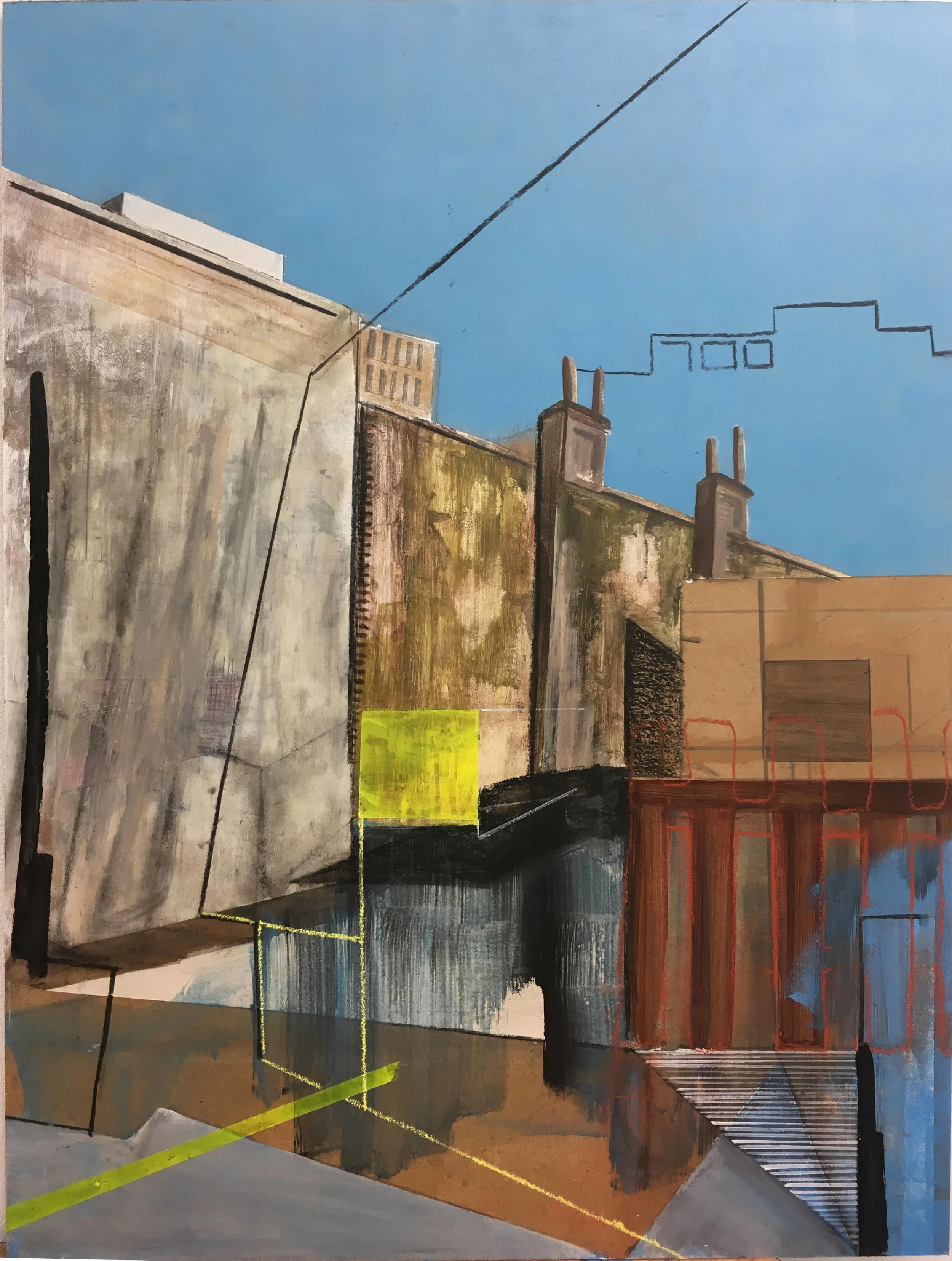
If tiles are patterned, choose a calmer print with one accent colour drawn from the pattern. If tiles are plain, the artwork can carry the visual interest, particularly a botanical study or abstract in muted ochre, sage, or rust. Framed coastal photography from Byron Bay or Margaret River scenes tends to read beautifully in local bathrooms.
| Artwork type | Humidity suitability | Best with | Typical cost |
|---|---|---|---|
| Framed print with acrylic | High with sealing | Patterned tiles | $$ |
| Stretched canvas | Very high | Plain walls | $ |
| Metal or aluminium print | Excellent | Modern bathrooms | $$$ |
| Framed photography | Medium with care | Coastal palettes | $$ |
The right type depends as much on the wall finish as on personal taste, and a quick sample test against existing tile is worth doing before committing to a frame.
Common mistakes and easy fixes
Bathroom art fails for predictable reasons. Cramming a large horizontal frame into a narrow wall, choosing untreated MDF, or skipping acrylic glazing are the usual culprits, and they tend to show up within the first humid summer.
Pitfalls to steer clear of:
- Hanging art above the splash zone without acrylic glazing
- Mixing three or more frame finishes in a small space
- Choosing a busy composition that competes with patterned tiles
- Forgetting to seal the back of the frame against moisture creep
Most of these issues are easy to fix in an afternoon, and the right label or backing can extend the life of a small work by years. The gallery labels guide walks through the protective details worth considering for any piece hung in a steamy room.
Pick one tall piece, frame it in a material that handles humidity, hang it at seated eye level, and let it do the lifting. Subscribe to Focus LDN for weekly inspiration on apartment decorating, gallery walls, and quietly stylish homes across Australia and beyond.