Temporary gallery wall ideas for rental apartments
Renting in Australia has its perks: prime locations in Sydney or Melbourne, low-maintenance living, and the freedom to relocate when a lease ends. But turning a blank wall into a personal art display can feel impossible when your tenancy agreement forbids nails, drilling, or paint. The good news is that creating a stylish gallery wall in a rental is entirely achievable with the right approach. From removable hanging strips to clever freestanding displays, you can curate a wall that looks intentional and refined without risking your bond.
The key lies in treating every wall as a temporary canvas. Renters across Brisbane, Perth, and Adelaide are increasingly looking for decor solutions that leave no trace. Whether you are styling a studio in Surry Hills or a one-bedroom in Fitzroy, the same principles apply: plan the layout, choose lightweight frames, and invest in adhesive products that hold firm but peel away cleanly.
Navigating Australian lease rules before you start
Before buying a single hook, read your residential tenancy agreement carefully. In NSW, the Residential Tenancies Act 2010 requires tenants to leave the property in the same condition as the start of the lease, excluding fair wear and tear. Victorian renters operate under similar conditions through the Residential Tenancies Act 1997, with bond deductions possible for unrepaired damage. Even small nail holes can lead to disputes during the final inspection, especially in newer apartments with freshly painted walls.
Most leases in major cities like Sydney and Melbourne explicitly prohibit screws, anchors, and drilling into brick or concrete. However, many landlords and property managers are becoming more accepting of removable products, particularly as they see how popular gallery wall styling has become. A quick email to your real estate agent confirming that adhesive strips are acceptable can save you hundreds in potential painting costs when you move out.
Damage-free hanging solutions that actually work
The rental decorating market in Australia has grown significantly, and Bunnings Warehouse now stocks an entire aisle dedicated to temporary hanging products. 3M Command Strips remain the most popular choice for lightweight frames, holding up to several kilograms without leaving residue when removed correctly. Picture hanging strips work best on smooth, painted surfaces, so test a small area first if your walls have a textured finish.
For heavier pieces, consider adhesive hooks rated for higher weights, or invest in a freestanding picture rail system that leans against the wall. Temporary tension rods can also work in older apartments with decorative mouldings, allowing you to hang artwork with thin wire without touching the walls themselves. Exploring different art display techniques can help you find the right match for your wall type.
Another option gaining traction in inner-city apartments is the use of removable wallpaper as a backdrop. Unlike traditional wallpaper, modern peel-and-stick varieties come off cleanly when warmed slightly with a hairdryer, making them ideal for creating a feature wall behind your gallery arrangement.
Choosing frames and art that suit a rental
Frame selection plays a huge role in how professional your temporary gallery wall looks. Opt for consistent frame widths in similar finishes to create cohesion, even when the artwork inside varies in style. Lightweight materials such as thin timber or composite frames reduce the strain on adhesive strips and minimise the risk of pieces falling.
When sourcing art, Australian weekend markets are treasure troves for affordable original pieces. South Melbourne Market and Paddy's Markets in Sydney both host local artists selling small-format works, prints, and photography that fit standard frame sizes. This approach also supports the local creative community, which is a meaningful bonus for renters wanting to feel connected to their new neighbourhood.
Photographs printed on quality matte paper, vintage botanical prints, or even framed fabric swatches can all contribute to a layered, collected look. The goal is variety in subject matter paired with consistency in presentation.
Planning the layout like a curated exhibition
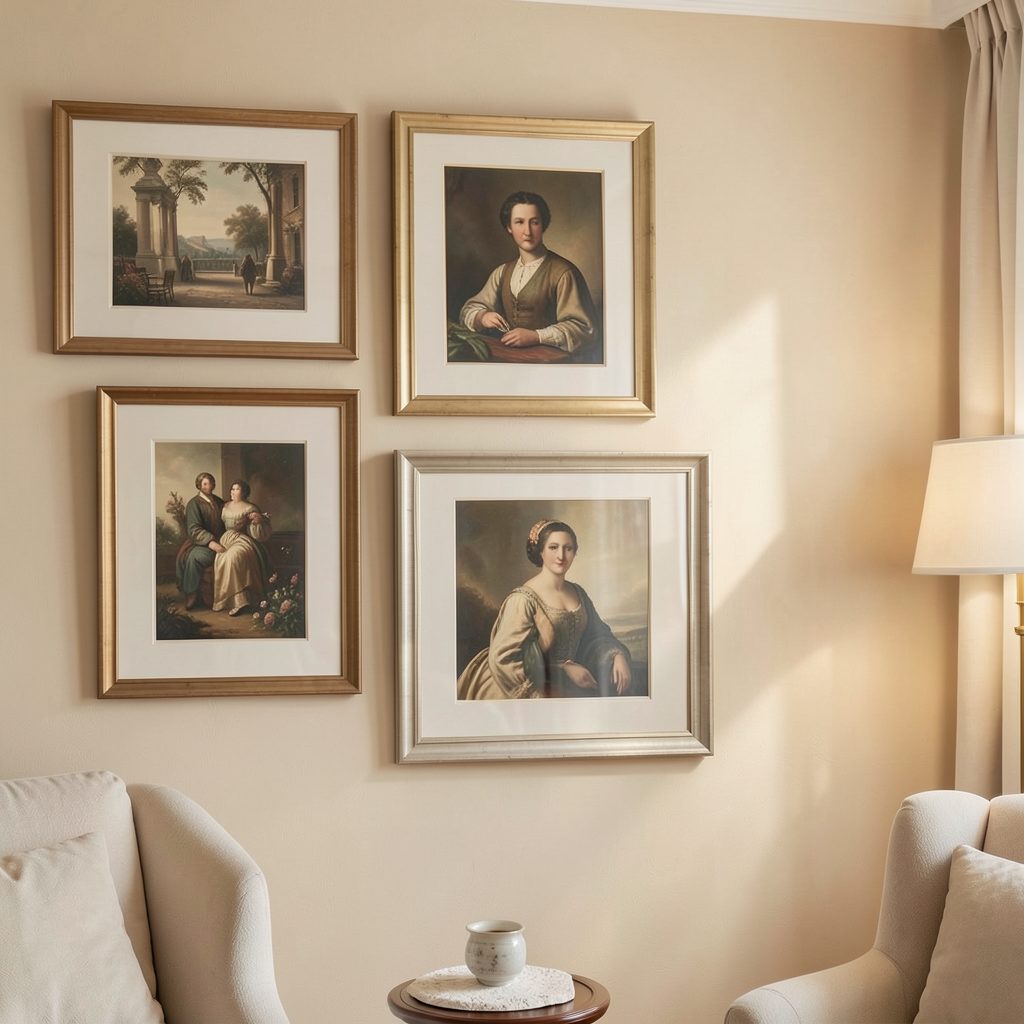
A haphazard arrangement can make even the most beautiful artwork look messy. Start by laying your pieces out on the floor, experimenting with spacing until the composition feels balanced. Traditional salon-style hangs, where frames are clustered closely together from edge to edge, work particularly well in rentals because they draw the eye inward and make a room feel intentionally designed.
Paper templates cut to the exact size of each frame can be taped to the wall with washi tape, allowing you to visualise the final arrangement without committing. This method is especially useful in compact apartments where wall space is limited, such as a narrow hallway in a Bondi unit or a small entryway in a Brunswick terrace.
Spacing matters: aim for five to eight centimetres between frames for a tight gallery feel, or ten to fifteen centimetres for a more relaxed, modern look. Centring the arrangement at eye level, around 145 to 150 centimetres from the floor, creates a comfortable viewing height for most adults.
Working with tricky wall surfaces
Not every rental comes with smooth, painted plasterboard. Many inner-Sydney apartments, particularly in converted warehouses and older buildings, feature exposed brick or concrete walls that rule out adhesive products entirely. In these cases, leaning artwork on floating shelves or deep window ledges can replicate the gallery effect without attaching anything to the wall.
Floor-to-ceiling bookshelves provide another opportunity, allowing you to style framed pieces alongside books and objects for a layered display. This works beautifully in Melbourne's heritage apartments, where high ceilings often leave generous wall space above existing joinery.
For renters with decorative cornices or existing picture rails, traditional S-hooks and wire can be used without causing damage. These features are common in Victorian and Edwardian homes around Adelaide and inner-Melbourne suburbs, offering a built-in solution for hanging artwork in a temporary way.
Making the space feel like home
The final touch is styling around your gallery wall to tie the room together. Soft furnishings in complementary tones, a well-placed floor lamp, and a comfortable armchair nearby can transform the area into a quiet reading nook or conversation zone. Plants work particularly well in Australian homes, where natural light is abundant and indoor varieties thrive year-round.
Personal touches such as a favourite ceramics collection, a vintage mirror, or a small sculpture can add depth and personality to the arrangement. These elements help the gallery feel curated rather than staged, which is exactly the impression you want to create when hosting friends or simply unwinding after work.
Once your display is complete, step back and view it from different points in the room. A well-placed gallery wall should feel balanced from the sofa, the dining table, and the entryway, drawing the eye through the space and creating a sense of flow throughout the apartment.
If you want to take your rental decorating further, browse gallery wall inspiration for ideas that suit your space and budget. Subscribe to the Focus LDN newsletter for monthly styling tips, new product finds, and behind-the-scenes looks at how real renters style their walls across Australia's biggest cities.