Art display techniques for sloped ceilings
Sloped ceilings give a room an architectural rhythm that flat walls rarely provide. They can make bedrooms feel tucked away, add drama to attic spaces, and create unusual sightlines for artwork. They can also make a familiar decorating task surprisingly difficult: deciding where a frame should sit, which direction it should follow, and how to keep the room feeling calm.
The best approach treats the ceiling angle as part of the composition rather than an obstacle. Artwork can echo the roofline, create a deliberate contrast, or occupy a vertical wall where it provides visual balance. Scale, lighting, hanging hardware, and the relationship between the art and nearby furniture all matter.
For more ideas on curated interiors, Focus LDN offers practical inspiration for gallery walls, refined rooms, and thoughtful artwork display. The same principles work in compact lofts, converted attics, stairwells, and rooms with a single angled section.
Read the architecture before choosing artwork
Begin by identifying every usable plane in the room. A sloped ceiling may meet a full-height wall, a half-height knee wall, or a narrow strip beneath a skylight. These surfaces create different opportunities. A vertical wall usually suits a statement piece or a conventional gallery arrangement, while the incline may work better with a restrained line of smaller works.
Measure the height, width, and angle of each area before buying frames. Leave enough clearance above beds, desks, sofas, and cabinets so the artwork feels connected to the furniture without appearing crowded. In an attic bedroom, a low knee wall may be more suitable for leaning framed prints than for drilled wall mounting.
Observe the room from its main viewpoints as well. A piece that looks balanced from the doorway may feel too low when seen from the bed. Mark possible positions with paper templates or low-tack tape, then live with them for a day before making holes.
Decide whether to follow or oppose the slope
Matching the roofline creates a quiet, integrated effect. A row of similarly sized frames can follow the incline with even spacing, making the artwork feel designed for the room. This method works especially well with botanical prints, architectural drawings, or monochrome photography where the arrangement is more important than the individual image.
Opposing the slope can create stronger visual tension. A large vertical artwork on a straight wall draws the eye away from the angled ceiling and gives the room a stable anchor. This is often the most effective option in a living room or bedroom where the slanted plane already provides plenty of movement.
Avoid forcing every frame into the same angle. If the ceiling changes direction or includes dormer windows, a rigid arrangement may look awkward. Let the dominant architectural line guide the display, while allowing one contrasting piece to establish a focal point.
Choose the right hanging method
For heavy frames, use fixings designed for the wall material rather than relying on a single nail. Plasterboard, brick, timber, and lath-and-plaster surfaces each require different anchors. On a steep incline, security is particularly important because gravity pulls the frame forward as well as downward.
Picture rails offer a flexible solution when the structure allows them. A slim rail installed along a straight wall lets you adjust height and spacing without repeated drilling. Hanging wires can also be shortened to keep frames close to the wall, reducing visual gaps and preventing movement.
Leaning art is useful where the ceiling meets a low wall. Layer two or three pieces on a deep shelf or cabinet, placing the largest work behind the smaller ones. Add discreet grip pads beneath the frames to prevent sliding, especially in rooms with polished surfaces or frequent foot traffic.
Build a gallery wall that feels intentional
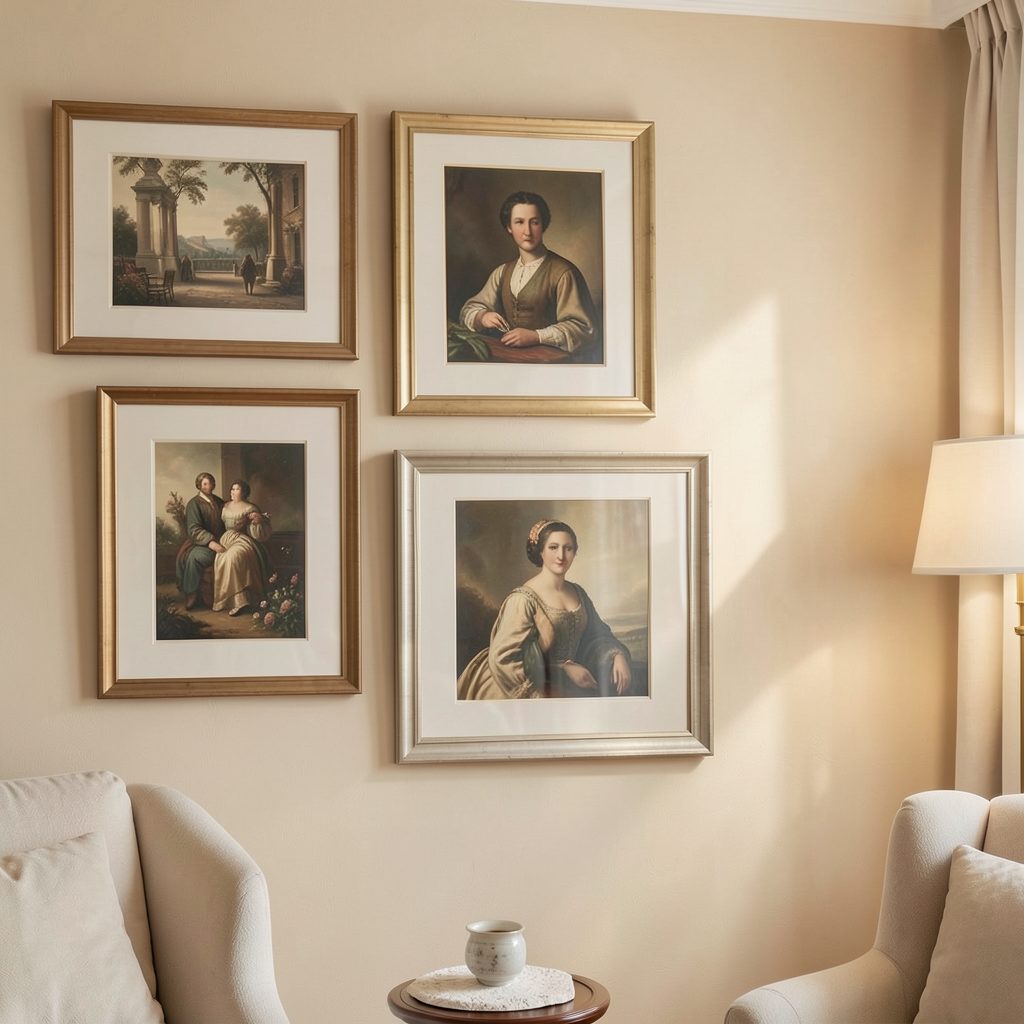
A gallery wall beneath a slope should have a clear boundary. A rectangular grouping on a straight wall generally feels more orderly than attempting to recreate the exact roof angle with every edge. Keep the outer edges relatively consistent, then use varied frame sizes inside the shape to add character.
For a more architectural look, arrange frames along a rising baseline. Keep the lower edges aligned while allowing the upper edges to respond to the slope. This creates movement without making the entire display appear tilted. Use a central artwork with smaller pieces stepping outward toward the corners.
Frame consistency helps prevent an angled arrangement from becoming visually busy. Choose one dominant finish, such as oak, black, or brushed metal, and vary the matting or artwork instead. Narrow frames often suit minimalist interiors, while deeper profiles can give a small collection greater presence.
Compare display approaches
The most suitable technique depends on the wall angle, the room’s function, and how much visual energy the space can handle.
| Display approach | Best location | Visual effect | Main consideration |
|---|---|---|---|
| Vertical statement piece | Full-height wall | Stable and dramatic | Keep it centred over furniture |
| Frames following the slope | Long angled wall | Integrated and architectural | Maintain even spacing |
| Aligned lower edges | Wall beneath a roofline | Ordered with gentle movement | Use a clear baseline |
| Leaning artwork | Knee wall or shelf | Casual and flexible | Secure frames against slipping |
| Picture rail display | Straight wall near the slope | Adaptable and refined | Confirm the wall can support the rail |
| Small clustered works | Dormer or narrow section | Intimate and layered | Avoid overcrowding the available plane |
Use scale and negative space carefully
Small artwork can disappear beneath a high angled ceiling unless it is grouped or paired with substantial furniture. A single modest print may look stranded on a broad gable wall, while a pair of medium-sized works can establish enough visual weight without overwhelming the room.
Large pieces need breathing room. Leave generous space around a statement canvas so the slope remains visible and the artwork can function as a focal point. In a bedroom, position the centre of the composition at a comfortable viewing height from the bed rather than automatically centring it on the wall.
Negative space is especially valuable in attic rooms, where beams, windows, and changing ceiling heights already create visual complexity. A quieter arrangement can make the architecture feel intentional. If the room contains patterned bedding or strong colour, choose artwork with a simpler palette and fewer competing shapes.
Make lighting part of the display
Sloped ceilings often create unusual shadows, particularly near dormer windows and exposed beams. Test the artwork at different times of day before selecting its final position. Direct sunlight may fade delicate prints, while a deep overhang can leave a wall looking dull after sunset.
Adjustable picture lights, track lighting, and directional wall fittings can highlight artwork without illuminating the entire ceiling. Position lights high enough to wash the surface evenly, but avoid placing them so close that frames cast hard shadows. Anti-glare glazing is useful for pieces displayed opposite windows or beneath strong spotlights.
When planning a single statement piece, the guidance on hanging one artwork can help refine height, proportion, and the relationship between the frame and surrounding space. These details become even more important when the ceiling angle naturally pulls attention upward.
Keep the arrangement practical
A beautiful display still needs to work around daily life. Do not place fragile frames where they can be knocked by wardrobe doors, bedside lamps, or passing shoulders. Check that artwork will not interfere with ventilation, skylight operation, curtains, or access to storage.
Use these practical rules when finalising the arrangement:
- Choose secure wall anchors rated for the frame’s weight and wall type.
- Keep artwork clear of damp areas, heat sources, and direct sunlight where possible.
- Use paper templates to test scale, spacing, and sightlines before drilling.
- Add felt pads or museum wax to stop leaning frames from shifting.
- Photograph the arrangement in daylight and evening light before committing to it.
A sloped ceiling does not require complicated decoration. One carefully placed canvas, a measured row of prints, or a relaxed leaning display can make the architecture feel considered. Start with the strongest wall, test the composition with temporary templates, and let the room’s proportions determine how much artwork it needs. Explore more display ideas through Focus LDN and turn the most distinctive angle in your home into its most memorable feature.