Creating a Gallery Wall in a Home Office Behind Your Desk
A gallery wall behind a desk can give a home office the presence of a considered studio without making the room feel busy. Artwork creates a visual backdrop for video calls, adds colour to a practical workspace and helps a desk feel integrated with the rest of the home.
The most successful arrangements balance composition with concentration. A wall filled with unrelated pieces may become distracting, while a carefully edited collection can make the room feel calm and personal. The key is to work with the width of the desk, the height of your chair and the natural light already in the room.
Australian homes often need a flexible approach. A compact apartment in Sydney may have limited wall space, a Melbourne terrace may receive changing southern light, and a Brisbane study may need materials that cope with warmth and humidity. Planning around these local conditions will help your artwork remain attractive and secure.
Start With The Desk And Wall
Begin by measuring the desk, the available wall and the distance between the desktop and ceiling. A gallery arrangement usually looks most connected when it spans around two-thirds to three-quarters of the desk width. If the desk is 140 centimetres wide, an artwork grouping between 95 and 110 centimetres wide will generally feel proportionate.
Leave enough breathing room above the monitor, lamp or pinboard. The lowest frame should sit high enough to avoid knocks when you reach across the desk, while the upper edge should not crowd the ceiling. In a smaller apartment, a vertical arrangement can use the wall efficiently without making the workstation feel enclosed.
Consider what appears on camera as well. A few larger pieces often read more clearly during video meetings than many tiny artworks. Keep the strongest image near the centre or slightly to one side, especially if a monitor occupies the middle of the desk.
Build A Cohesive Artwork Collection
Choose a visual thread before selecting individual pieces. This might be a restrained palette of black, cream and ochre, a theme of Australian landscapes, or a mixture of photography, line drawings and abstract prints. Repeating one colour through several works makes an eclectic collection feel intentional.
Scale matters more than matching every frame. Pair a large print with two or three smaller works, then add a narrow piece to create movement. For a minimalist office, generous gaps and simple borders can make the arrangement feel like a small private exhibition. For a warmer look, timber frames and paper textures soften the harder lines of a desk and shelving.
Useful starting points for a home office collection include:
- One statement print with two supporting works
- A mix of framed art and a small textile piece
- Black-and-white photography balanced with one colourful image
- Personal sketches, postcards or travel mementos
Choose Frames That Suit The Room
Frames should connect the art to the furniture, walls and lighting rather than compete with the images. Black frames suit contemporary desks and white walls, while oak or ash can complement timber furniture. In a rental, lightweight acrylic glazing may be practical because it reduces the load on hanging hardware.
The Australian market offers plenty of accessible options, from flat-pack frames at IKEA and Kmart to custom work from independent framers in Sydney, Melbourne, Adelaide and Perth. Local framing shops are particularly useful for unusual print sizes, conservation mounts and glazing that reduces reflections on bright north-facing walls.
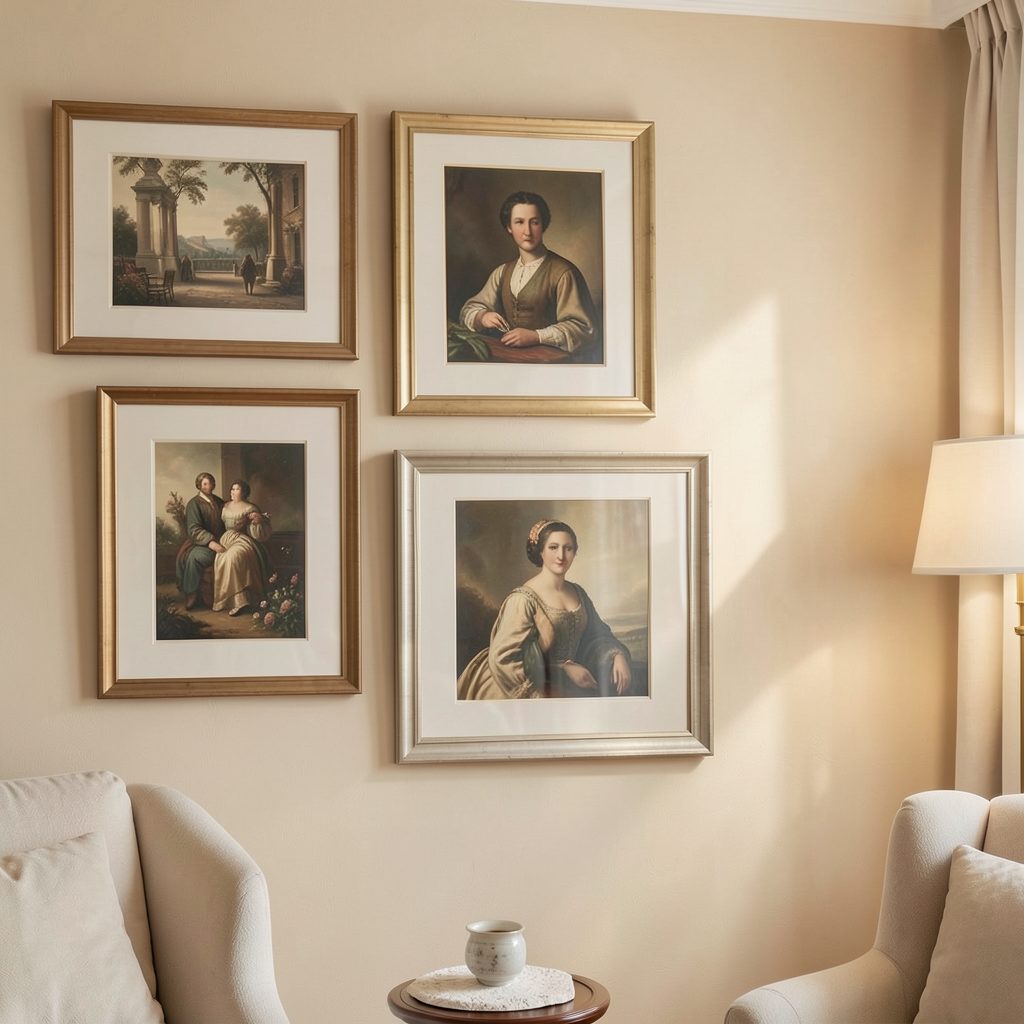
For a polished gallery-style result, use consistent outer dimensions even when the artwork varies. Matching frame widths create order; varied mounts add subtle personality. If you are unsure how different images can work together, these styling principles can help you edit the collection before buying more pieces.
Map The Layout Before Hanging
Avoid making decisions directly on the wall. Place the frames on the floor, using newspaper or paper cut-outs in the same sizes. Photograph several versions from the position where you normally sit, then assess the balance from both the desk and the doorway.
Keep the gaps consistent, usually between five and ten centimetres. Tighter spacing can suit a compact salon-style display, while wider gaps create a quieter, more contemporary effect. Aligning the central axis with the desk is a reliable approach, although an offset composition can work when a bookshelf, window or floor lamp already anchors one side.
A practical hanging checklist keeps the installation precise:
- Mark the centre of the desk and the artwork grouping
- Check every frame with a spirit level
- Use wall plugs suited to plasterboard, brick or concrete
- Keep cables, monitor arms and desk accessories clear
For heavier frames, use appropriate hooks or fixings rather than relying on adhesive strips alone. Australian homes vary widely in construction, from plasterboard in newer apartments to brick in older terraces. If you are renting, removable hooks may be suitable for lightweight pieces, but check the product weight rating and your tenancy agreement first.
Add Function Without Losing Calm
A gallery wall should support work rather than overwhelm it. Keep the busiest images away from the area directly behind your monitor, where they can create visual noise. Matte paper, low-glare glazing and muted colours are helpful when the desk faces a window or receives strong afternoon sun.
Balance decorative pieces with useful office elements. A narrow shelf can hold a small sculpture, while a pinboard framed in the same timber as the artwork can manage notes without breaking the composition. In a Brisbane or Gold Coast home office, avoid placing delicate paper art directly beside an open window where moisture and dust may affect it. In dry inland areas, occasional dusting with a soft brush will protect textured surfaces.
The final edit is often the most valuable step. Remove one piece if the arrangement feels crowded, lower the visual contrast if the space feels restless, and leave enough empty wall to let the collection breathe. A considered display can make even a modest desk feel like a deliberate part of the home.
Explore more ideas for arranging artwork through this gallery wall guide, then look for prints from Australian artists, local gallery openings or independent online makers to give the office a stronger sense of place. Subscribe to Focus LDN for practical decorating inspiration, display techniques and fresh ideas for stylish home living.