How To Create A Gallery Wall With A Unifying Theme
A gallery wall becomes far more polished when the artworks share a visual idea. Flowers, faces, botanical forms and expressive portraits can turn a loose collection of prints into a considered focal point, even when each piece comes from a different artist or period.
The trick is to create connection without making every frame identical. A repeated subject, colour family, line quality or mood gives the arrangement rhythm, while variations in scale and composition keep it from looking like a showroom display.
Australian homes offer plenty of opportunities for this approach. A floral arrangement can soften a bright apartment in Melbourne, while a face-focused display can bring warmth to a white-rendered coastal home in Sydney or a character-filled Queenslander. With a little planning, the wall can feel personal, balanced and distinctly yours.
Choose A Theme With Room To Vary
Start with a subject that genuinely suits the room and your existing decor. Flowers might include still-life paintings, pressed botanical studies, abstract petals and garden photography. A faces theme could combine line drawings, vintage portraits, sculptural profiles and contemporary photographs. The theme should be broad enough to support different styles rather than forcing every artwork into the same category.
Think of the theme as a visual thread rather than a strict rule. For example, a botanical gallery wall may use green, ochre and soft pink as its palette, while a portrait wall may rely on black-and-white imagery with small touches of rust or cobalt. Browsing this art selection guide can help you compare styles before committing to a collection.
Build A Cohesive Colour Palette
Colour is often the simplest way to unify artwork from different sources. Select two or three repeating tones and allow neutral shades to fill the gaps. A flower print with terracotta petals might sit comfortably beside a cream abstract, a charcoal sketch and a muted green photograph.
Consider the colours already present in your Australian interior. Pale timber, linen upholstery and rattan suit earthy botanical shades, while a contemporary apartment with polished concrete may benefit from sharper black, white and ochre. In rooms exposed to strong afternoon sun, avoid placing delicate works where glare or fading will be a constant concern.
Frames can reinforce the palette without matching perfectly. A mix of timber, white and slim black frames often feels relaxed and modern. For a more collected look, repeat one frame finish around the outer edges and use a contrasting style in the centre to create a visual anchor.
Plan The Layout Before Hanging
Measure the wall and arrange the artworks on the floor first. Begin with the largest piece, then place smaller works around it while keeping the gaps fairly consistent. A spacing of five to eight centimetres usually looks comfortable, though larger art can support wider gaps in a spacious room.
Use paper templates if the wall is narrow, the collection is valuable or you are working in a rental. Mark the hanging points with low-tack tape and check the arrangement from the doorway, sofa and nearby passage. A useful arranging artwork reference can help you judge balance, negative space and the relationship between portrait and landscape formats.
Australian apartment walls may contain plasterboard, brick or concrete, so choose fixings for the surface rather than relying on one universal hook. In a rental, removable hanging strips can work for lightweight prints, but heavier framed pieces need a secure method approved for the wall type.
Make The Theme Suit The Room
A floral collection works beautifully in bedrooms, dining areas and hallways because organic shapes make hard architectural lines feel softer. Keep the mood aligned with the space: faded garden studies create a quiet bedroom, while vivid poppies or oversized abstract blooms can energise a dining nook.
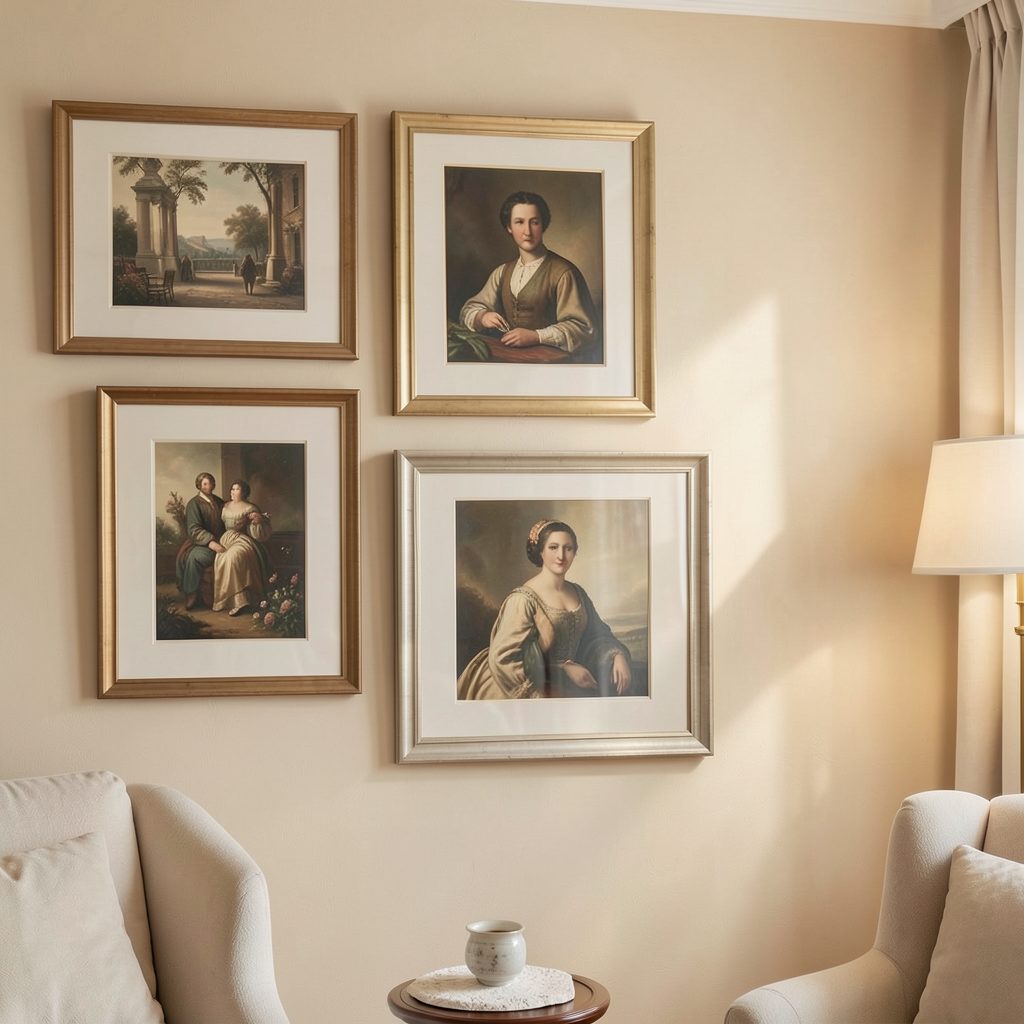
Faces bring a more intimate quality and are particularly effective in living rooms, studies and entryways. Mix direct gazes with turned profiles so the arrangement feels animated rather than repetitive. Avoid placing every face at exactly the same eye level; a varied composition gives the wall the character of a small salon display.
Scale matters as much as subject. A large portrait or botanical canvas can hold the centre, while smaller drawings create movement around it. In a compact terrace or apartment, a vertical arrangement may make better use of a narrow wall than a wide grid.
Add Personality Without Losing Balance
Personal pieces make a themed wall feel lived-in. Include a holiday photograph, a child’s drawing, a found postcard or a small artwork purchased from a local maker. A print from a Melbourne market or a framed image collected after visiting the Art Gallery of New South Wales can sit naturally beside more refined pieces.
Think about lighting before the final installation. Picture lights, adjustable wall spots and warm lamps can reveal texture at night, while sheer curtains help protect paper works from Australia’s intense daylight. Keep glass clean and use archival mounts for works that matter, especially in humid coastal areas where paper can react to moisture.
If your collection grows, you can treat the wall as an evolving display rather than a finished project. Australian art fairs, independent galleries and online print shops offer different price points, and buying gradually makes it easier to maintain a clear theme. For those exploring the gallery world more deeply, start an art gallery offers useful context around presenting and collecting work.
Practical Styling Checklist
- Choose one central artwork before filling the surrounding space.
- Repeat at least one colour, material or subject across the collection.
- Keep frame gaps consistent, even when frame styles vary.
- Test the layout with paper templates before drilling into the wall.
- Leave breathing room around the arrangement so it reads as one display.
A successful gallery wall should feel collected rather than manufactured. Let the flowers differ in shape, let the faces carry different expressions and allow a few quieter pieces to balance the strongest images. The unifying theme will do its work through repetition, while the individual artworks preserve the personality of the room.
Gather a small group of pieces, lay them out in your home and photograph a few possible arrangements before hanging anything. Subscribe to Focus LDN for considered apartment decorating ideas, artwork display inspiration and fresh ways to make your walls feel like part of your story.