Choosing art for a spare room that works as a meditation space
A spare room can become a place to pause without losing its flexibility. The key is to choose art that settles the room rather than demands attention, while allowing the space to return to work, guest or exercise duties when needed.
For Australian homes, that often means balancing compact rooms, strong summer light and the mix of original works and prints available locally. A calm artwork can still feel personal; it simply needs to support stillness instead of competing with it.
Read the room before choosing art
Start by listing what happens in the room each week. Many households use a spare bedroom for video calls, a guest bed, exercise equipment or storage, so the visual scheme must tolerate those changing demands. A serene single image or compact grouping is usually easier to live with than a dense salon wall.
Choose the emotional note before the style. If you want to slow down after work, favour spacious compositions, natural subjects or restrained abstraction. If you also work there, avoid placing a visually busy piece directly behind your chair. Test the setting with a temporary print before committing to a permanent display.
Build a quiet visual palette
Let the artwork establish the room’s main colours, then repeat only one or two in cushions, throws or timber furniture. Warm clay, misty blue, olive and charcoal create a settled backdrop without making every object a matching exercise. Keep smaller items visually quiet so the wall remains the focal point.
Texture can soften hard surfaces and help absorb echo in a compact apartment. For an unused corner, soft rug layering can make the floor feel warmer while giving the chair a clear sense of place. Linen, wool and matte-finished frames reinforce that sense of ease.
Select art that supports inward attention
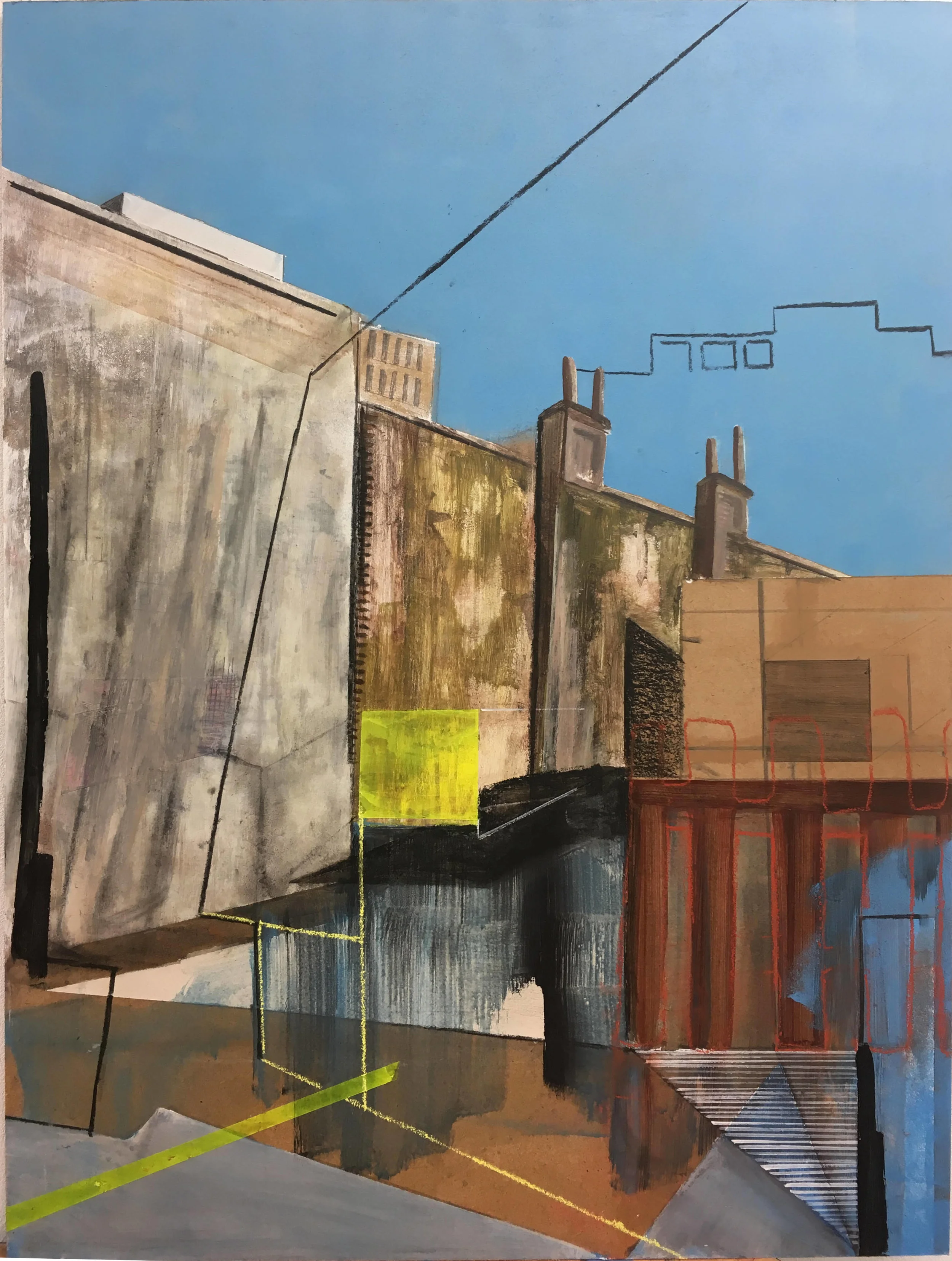
Meditative art does not have to depict meditation. A misty landscape, a generous field of colour or an abstract study of rhythm can provide a visual pause. Look for clear areas of rest, balanced proportions and a limited palette; intricate patterns or high-contrast faces may keep pulling your attention back to the wall.
Consider the work you can revisit rather than the work that impresses visitors for ten seconds. Personal responses matter: a photograph of a familiar coastline or an image connected to a meaningful place can settle the mind. View your shortlisted pieces in the room at morning and evening, checking how changing light alters their mood.
Match the display to the room
Begin with the furniture. A low meditation chair, floor cushion or small bench gives the artwork a viewing distance and helps you decide its scale. Hang the centre of a framed piece roughly 140–160 centimetres above the finished floor, adjusting for the seat and your own eye line. The goal is an unhurried glance, not museum formality.
For sloping ceilings or recessed nooks, styling a dormer offers useful ways to work around awkward angles. Put the main piece on the clearest vertical wall and use the nook for a small work or object. Avoid a low display above a meditation seat, where it would dominate the view.
Use one wall as a focal point
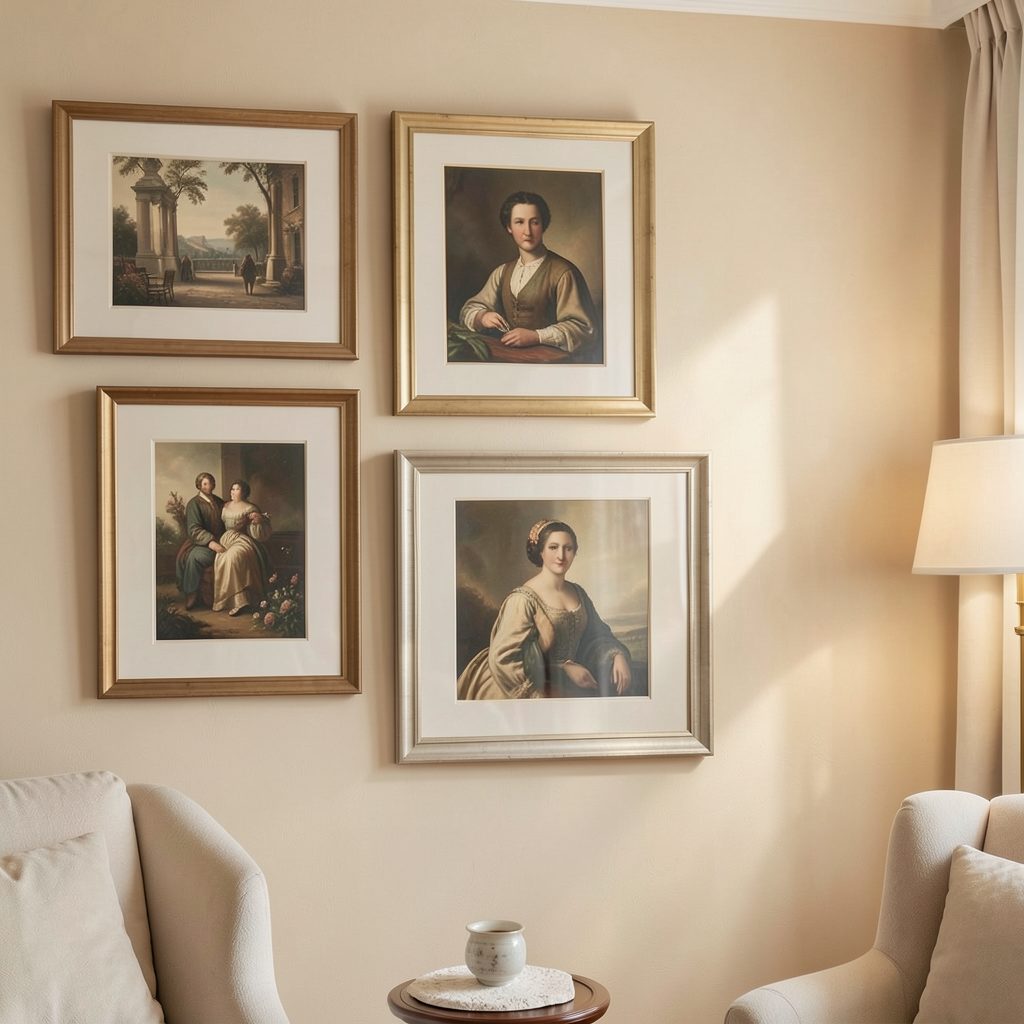
A spare room often has more usable surfaces than it has uninterrupted attention, so designate one wall for display. A single substantial work can make a confident statement, while three coordinated pieces can create a slower rhythm. Repeated mats, similar frames and generous gaps make a grouping feel intentional.
If you are arranging a broader collection, starting an art gallery can help you plan a coherent layout before the frames arrive. Keep the lowest edge of the arrangement visually related to the furniture rather than floating at an arbitrary height, and leave breathing room around each work.
Account for Australian light and sound
Australian sunlight can be hard on art, particularly in Brisbane’s bright summers and rooms with north-facing windows. Keep paper-based works and textiles out of direct rays, and consider UV-filtering glazing or acrylic for vulnerable pieces. Dimmable warm LEDs around 2700–3000K make evening practice gentler than cool overhead lighting.
Sound is as important as the picture. Compact city apartments in Sydney and Melbourne can carry traffic and neighbours’ voices, while many Australian homes now combine a spare room with work calls. Layering textiles helps, but acoustic panels or a closed door may be more effective than decoration. Check your lease and body corporate rules before drilling, and use suitable fixings for the wall.
Choose a trusted Australian seller
The local market offers original paintings, limited editions, photographs and artist prints through independent galleries, studio visits and online sellers in Melbourne, Sydney and Brisbane. Compare paper quality, edition details, framing options and delivery protection. A print also lets you test a composition at near-final scale before commissioning an original work.
Consumer protection matters when you buy online. Under the Australian Consumer Law, goods must be of acceptable quality and match their description; a print that arrives creased or differs materially from the listing may justify a repair, replacement or refund. Keep your order details and photographs, and use an established seller rather than an informal social-media listing.
Make your first move today: choose one piece you would enjoy seeing every day, and give it enough space to be noticed without being consumed. Subscribe to Focus LDN’s email for considered advice on gallery walls, frames and thoughtful room refreshes, and make your spare room a place you genuinely want to return to.