Choosing art for a room that doubles as a home office
A room that serves as both a study and a living space needs artwork that can shift with the day. During working hours, the walls should support concentration and reduce visual noise. After hours, they can bring warmth, personality and a sense of retreat.
The best art choices are guided by the room’s proportions, natural light and daily habits. A large print above a desk may create a strong focal point, while a small collection of works can make a spare wall feel considered without turning the space into a formal gallery.
Australian homes often receive intense sunlight, particularly in north-facing rooms and apartments with wide glazed doors. Sydney balconies, Melbourne terraces and compact Brisbane workspaces each create different conditions for colour, scale and preservation.
Treat the room as a living composition rather than a backdrop for the desk. Artwork, furniture, lighting and storage should share a visual language, while still allowing the space to feel relaxed when the laptop is closed.
Start with the room’s working rhythm
Begin by observing how the room is used throughout the week. If the desk sits in a bedroom, choose art that feels restful at night and focused during the day. In a dining area converted into a workstation, artwork can help define the office zone without making the entire room feel corporate.
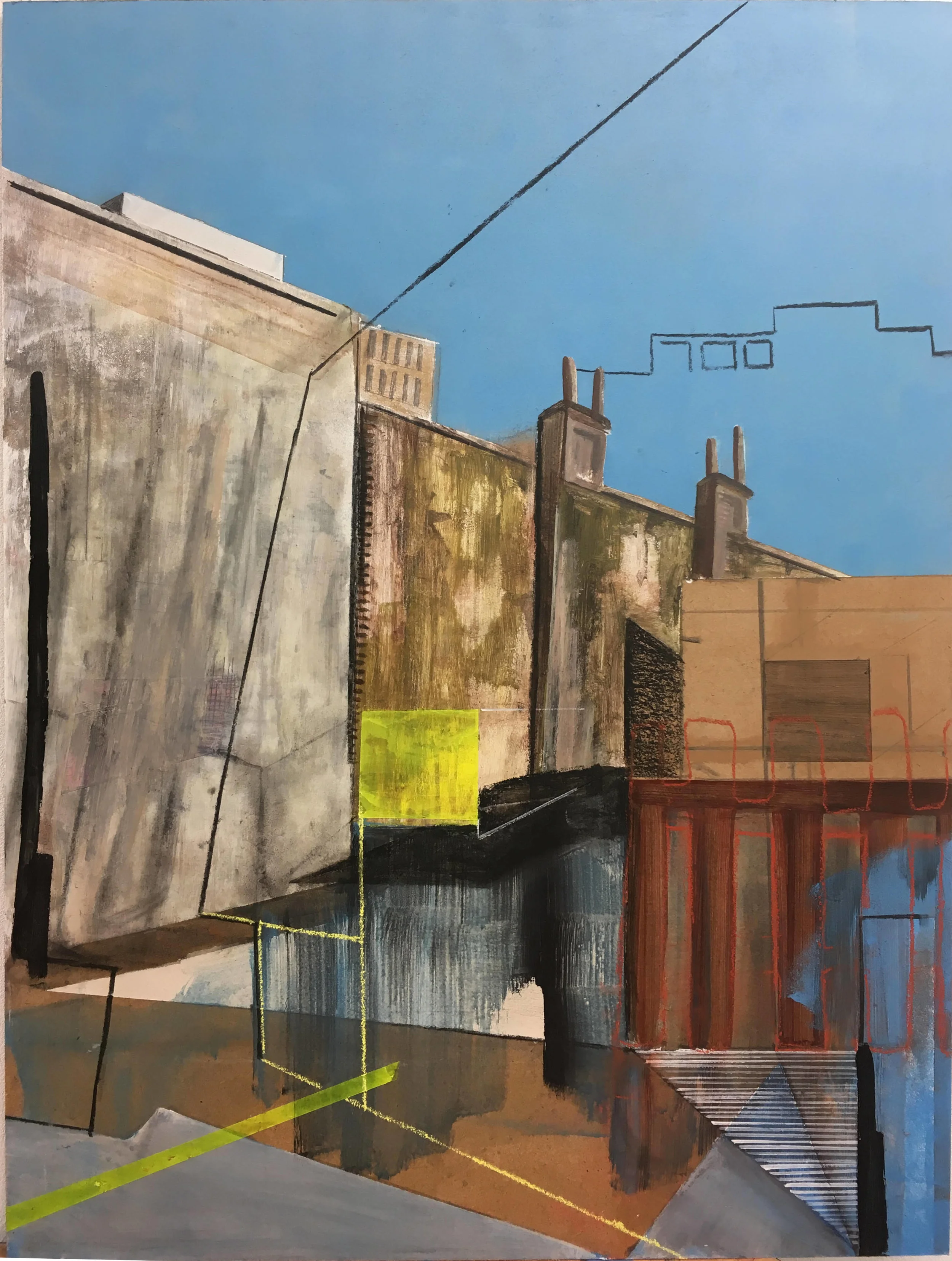
Consider what appears behind you during video calls and what falls within your peripheral vision while working. A simple abstract, photographic print or restrained botanical composition is usually easier to live with than a busy image positioned directly opposite the desk.
Measure the wall before buying anything. In a small Melbourne apartment, one generously sized work may look more polished than several undersized pieces. In a larger Queensland home, a pair of prints can balance a broad desk while leaving enough negative space around the display.
Match artwork to changing light
Natural light can alter the appearance of colour from morning to late afternoon. Warm-toned works may glow in western light, while cooler blue and green pieces can help soften a bright north-facing office. Test paper samples or temporary printouts on the wall before committing to a palette.
UV exposure is a practical concern in Australia. Keep valuable originals away from direct sun, use glazing with UV protection and consider archival-quality paper for works that will hang near windows. Roller blinds or sheer curtains can protect art while preserving daylight for work.
Wall colour has a strong effect on perceived contrast. Before choosing frames or prints, explore these best wall colours for a background that supports both artwork and video-call lighting. Soft off-whites, muted greens and warm greys tend to work well in adaptable rooms.
Build a calm visual hierarchy
A home office benefits from one clear visual anchor. This could be a large artwork above a credenza, a sculptural piece beside the desk or a symmetrical arrangement behind the chair. Once that anchor is established, supporting pieces should echo its colours, shapes or sense of scale.
Avoid placing every interesting object at eye level. Varying heights creates movement, but too many competing focal points can make a working room feel unsettled. A framed print near a shelf, a small work leaning against the wall and one larger piece can provide enough variation without clutter.
Colour should relate to the room rather than match every item exactly. Pull a muted terracotta from a rug, a charcoal tone from the desk lamp or a soft blue from an upholstered chair. These subtle links create cohesion and make collected artwork feel intentional.
Choose frames for function and style
Frames influence how formal or relaxed a room feels. Light timber suits coastal interiors and pale Australian hardwood furniture, while black frames bring definition to minimalist spaces. Brass and aged metal can add warmth, though highly reflective finishes may create glare during online meetings.
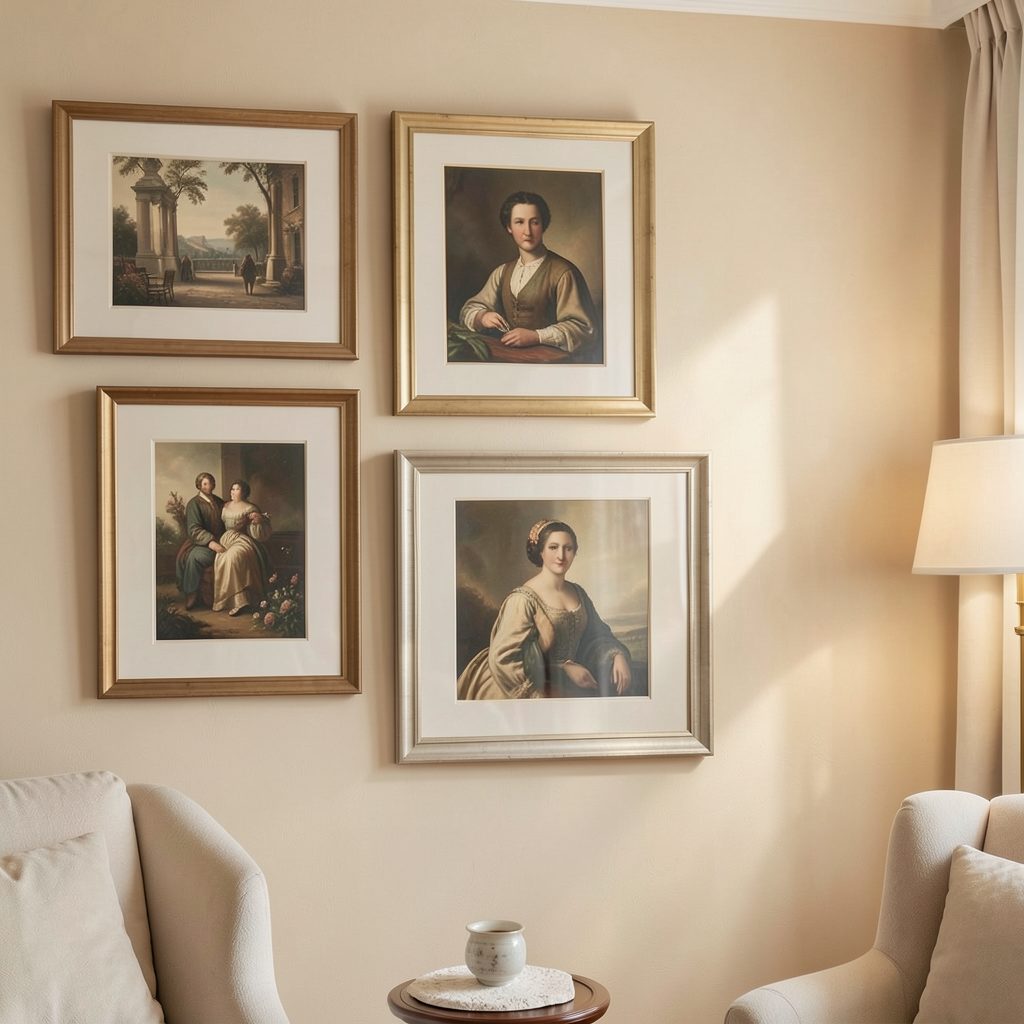
For a mixed collection, repeat one framing detail to keep the wall unified. You might use the same frame colour with different mounts, or choose varied frames that share a consistent border width. A generous white mount can give smaller works greater presence and protect them from touching the glazing.
Consider the practical demands of a working household. Acrylic glazing is lighter than glass and useful for renters or tall gallery walls, while secure hooks are important in areas prone to movement. Local framing shops can often advise on archival mounting and source materials suited to Australian conditions.
Make a gallery wall work hard
A gallery wall can separate the office from the rest of the room without a bulky divider. Arrange the collection within an imagined rectangle above the desk or along the wall beside it. Start with the largest work, then place smaller pieces around it while keeping gaps visually consistent.
Lay the frames on the floor first and photograph the arrangement. This is especially helpful when working with rental properties in Sydney or Canberra, where excessive wall holes may be discouraged. Removable hanging systems can provide flexibility, but check their weight limits and follow the manufacturer’s instructions.
Mixing mediums can make the display feel personal. Pair a photographic print with a line drawing, a small painting with a textile work or a graphic poster with a pressed botanical. Keep one shared quality—such as a restrained palette, repeated frame finish or similar subject matter—to prevent the arrangement becoming distracting.
Keep the display adaptable
Art should be easy to live with as your work patterns change. If the room may become a nursery, guest room or full-time office later, avoid securing every wall around one fixed layout. Modular shelves, picture ledges and leaning frames allow the collection to evolve without major redecoration.
A small rotation can refresh the room at the start of each season. Store spare prints flat and out of sunlight, then swap them when the space begins to feel visually stale. This works well in Australian climates, where bright summers and darker winter interiors can call for different levels of colour and contrast.
For a quieter overall effect, use the principles in this minimalist gallery approach to edit the collection and give each piece enough breathing room. The goal is a room that feels complete, not crowded.
Choose one piece that gives the room character, position it thoughtfully and build around it with care. Visit local galleries, independent printmakers and Australian artists’ online shops to find work with a genuine connection to your home. Subscribe to Focus LDN for more practical ideas on framing, gallery walls and stylish everyday interiors.