Minimalist Bedroom Ideas For A More Stylish Space
A minimalist bedroom is less about owning very little and more about giving every piece of furniture, artwork, and textile a clear purpose. When the room is edited carefully, the space feels calmer, larger, and easier to live in without becoming cold or impersonal.
The most successful pared-back bedrooms combine practical storage with a restrained palette, soft lighting, and a few memorable decorative details. A simple bed, well-chosen artwork, and tactile fabrics can create more impact than a room crowded with accessories.
Minimalism also creates a strong setting for personal style. Instead of competing with excessive furniture or busy patterns, a limited selection of objects becomes easier to appreciate, from a sculptural lamp to a small gallery wall above the bedside table.
Start With A Calm Visual Plan
Begin by deciding how you want the bedroom to feel. Soft and restful interiors often benefit from warm whites, muted taupe, clay, sage, or pale grey. These shades create a flexible background for natural wood, black accents, linen bedding, and framed artwork.
Before buying anything new, assess the room’s walking paths and natural light. Keep the area around the bed open, particularly between the door, wardrobe, and window. Clear circulation makes even a compact bedroom feel more spacious and gives each remaining item room to breathe.
Choose one visual focus rather than several competing features. This could be an upholstered headboard, a large piece of art, an architectural pendant, or a beautifully dressed bed. A defined focal point prevents minimalist decorating from looking unfinished.
Choose Furniture With Purpose
A bed should anchor the room, so select a design that suits its proportions. A low platform bed can reinforce a modern, streamlined look, while a simple timber frame adds warmth. Avoid oversized headboards or ornate details if the goal is a quiet, gallery-inspired interior.
Bedside furniture should earn its place. A narrow floating shelf, compact pedestal, or single drawer may provide enough space for a book, reading light, and glass of water. Matching nightstands are useful for symmetry, but deliberately mismatched pieces can add character when their scale and finish feel balanced.
| Bedroom Element | Minimalist Choice | Style Benefit |
|---|---|---|
| Bed | Low frame in wood or upholstered fabric | Creates a calm, grounded centre |
| Bedside storage | Floating shelf or slim drawer | Preserves floor space |
| Wardrobe | Plain fronts with discreet handles | Keeps visual lines clean |
| Seating | One compact bench or stool | Adds function without clutter |
| Lighting | Wall-mounted or pendant fixture | Reduces surface congestion |
A dresser, chair, or bench should support a daily habit rather than fill an empty corner. If a piece is rarely used, remove it. Fewer functional objects make cleaning easier and give the room a more deliberate character.
Build Warmth Through Texture
A neutral bedroom needs variation in texture to avoid feeling flat. Layer washed linen, cotton percale, wool, boucle, or lightly quilted fabrics across the bed. Keep the colours related, then allow texture to provide the contrast.
Floor coverings are especially useful in a minimalist scheme because they soften hard surfaces without adding visual noise. A flatweave rug beneath the lower two-thirds of the bed can define the sleeping area, while a small runner beside the bed adds comfort in a narrow room. These layered rug ideas can help balance warmth, proportion, and practicality.
Window treatments should filter light without dominating the room. Full-length linen curtains create softness and height, while simple roller blinds work well where space is limited. Choose hardware in a finish that quietly relates to existing details, such as a black lamp, brass handle, or timber frame.
Display Artwork With Restraint
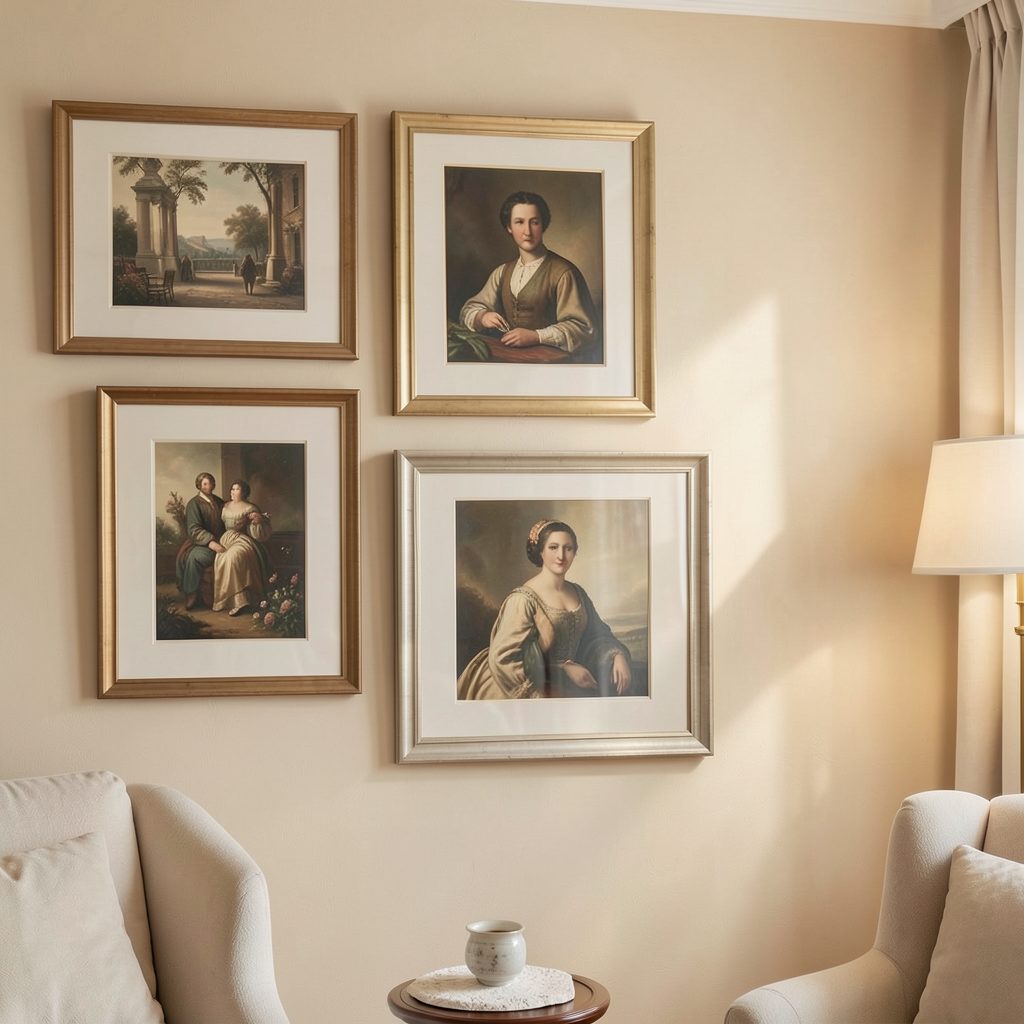
Artwork gives a minimalist bedroom personality, but restraint is essential. One large print above the bed can create a strong focal point, while two or three smaller works arranged with generous spacing may feel more relaxed. Avoid filling every available wall simply because it is empty.
A gallery wall can work beautifully when its structure is controlled. Use a limited frame palette, consistent margins, and artwork that shares a colour relationship. Black, oak, or slim metallic frames can each establish a different mood, but mixing too many finishes may make the display feel fragmented.
For a more architectural approach, consider tactile wall details alongside framed pieces. A subtle textural feature, such as brick engraving, can introduce depth and craftsmanship without relying on a collection of decorative objects. Keep surrounding surfaces quiet so the detail remains legible.
Keep Storage Quiet And Accessible
Clutter usually returns when storage is difficult to use. Prioritise solutions that make everyday items easy to put away: under-bed drawers for seasonal bedding, a wardrobe with internal organisers, and a small tray for jewellery or personal essentials.
Closed storage helps preserve a calm visual field, especially in bedrooms with open shelving. If shelves are necessary, edit them carefully and leave visible gaps between books, ceramics, and folded textiles. A single plant or framed photograph can be more effective than a crowded arrangement.
Use the walls when floor space is limited. Wall-mounted sconces, hooks behind the door, and a floating shelf can replace bulky furniture. Keep cables concealed wherever possible, since loose wires can undermine the clean lines that make a minimalist interior feel polished.
Refine The Room With These Choices
The final stage is an edit rather than a shopping exercise. Stand at the bedroom entrance and notice what draws the eye first, then remove or relocate anything that interrupts the intended focal point. This simple test often reveals excess furniture, competing colours, or artwork hung at the wrong height.
A restrained bedroom should still feel personal. Include a few objects with meaning, such as a favourite print, a handmade vase, or a travel photograph. The aim is to create visual calm while retaining evidence of the person who lives there.
- Keep the palette to three or four closely related colours.
- Leave open space around the bed and main artwork.
- Choose storage that conceals routine clutter.
- Repeat one or two materials, such as oak, linen, or brushed metal.
- Review decorative items seasonally and remove anything that no longer serves the room.
Good lighting completes the atmosphere. Combine a soft central fixture with bedside or wall-mounted lights, then add warm bulbs that make textiles and artwork appear inviting at night. With furniture reduced, materials softened, and every detail considered, the bedroom becomes a composed retreat rather than a sparse room.
Begin with one clear surface, remove what is unnecessary, and give the best pieces more space to be seen. A calmer bedroom can take shape through small, intentional changes that make everyday living feel more comfortable and visually refined.