Artwork Ideas for Above a Bed in a Room with Low Ceilings
A low ceiling can make a bedroom feel cosy, but artwork placed above the bed needs careful handling. The aim is to create a strong focal point without making the wall feel crowded or visually lowering the room. Proportion, spacing and a restrained colour palette matter more than the size of your collection.
Whether you live in a compact Melbourne apartment, a Sydney terrace or a newer Brisbane townhouse, the same principles apply. Choose pieces that relate to the bed’s width, leave enough breathing room around the frame and use the wall as a calm extension of the room rather than filling every available centimetre.
Choose A Wide, Low-Profile Arrangement
A horizontal artwork is often the simplest solution for a bedroom with a low ceiling. A single panoramic print, a textile wall hanging or a wide abstract painting draws the eye across the wall instead of directing it upwards. Choose a piece that is around two-thirds to three-quarters the width of the bed for a balanced result.
For a queen bed, a work between 100 and 140 centimetres wide will usually feel substantial without overwhelming the room. A king bed can handle a wider composition, although two or three aligned works may look more considered than one oversized frame. Keep the lower edge approximately 15 to 25 centimetres above the headboard, adjusting the gap if the headboard is tall.
A restrained collection of art display techniques can help you judge spacing before making holes in the wall. Cut paper templates to the size of each frame and use removable tape to test the arrangement from the doorway and from the bed.
Use Vertical Pieces In A Calm Group
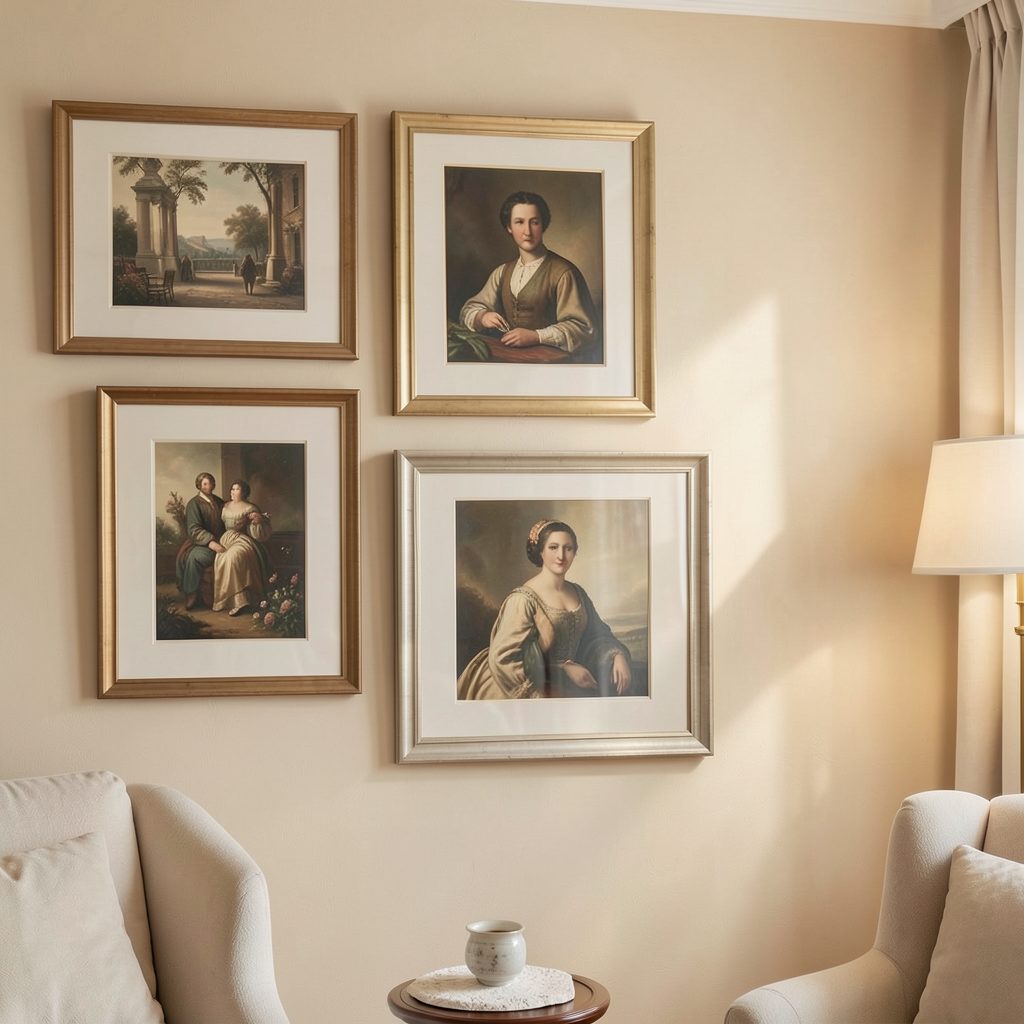
You do not need to avoid vertical art completely. A pair of narrow prints, arranged side by side, can create a little height while maintaining a broad overall shape. This works particularly well above a low timber headboard, where the gaps between pieces add rhythm without making the ceiling feel closer.
Keep the top edges aligned for a polished gallery effect, or use two similar works with a slight difference in height for a softer, more collected look. In a rental, lean lightweight framed prints on a picture ledge fixed securely to the wall, subject to your landlord’s rules. Australian rental homes often have strict expectations about wall damage, so removable hanging systems can be useful for lighter pieces.
Arrangements That Suit Low Ceilings
- One wide landscape print centred above the bed
- Two matching botanical studies with a narrow gap
- Three small works in a horizontal row
- A fabric wall hanging with a soft, irregular edge
Let The Frame Support The Room
The frame should make the artwork feel intentional, not compete with it. Slim oak, ash or pale timber frames suit Scandinavian and coastal bedrooms, while black frames bring definition to white walls and crisp linen. In a darker room, a warm timber finish can prevent the arrangement from feeling too stark.
Australian homes often receive strong afternoon light, especially in north- or west-facing bedrooms. Protect valuable prints from direct sun with UV-filtering acrylic or glass, and avoid placing delicate works where condensation or intense heat can affect them. A local framer can also advise on glazing for humid conditions, which is especially worthwhile in coastal Queensland or northern New South Wales.
Mat boards are useful when you want to give a small artwork more presence. A generous white or warm-neutral border creates visual space around the image, making the whole piece feel lighter on a low wall. Avoid overly ornate frames unless the rest of the room has a similarly decorative character.
Build A Palette Around Bedding
Artwork above a bed looks most cohesive when at least one colour is repeated elsewhere in the room. This does not mean matching the print exactly to the doona cover. A muted rust tone can relate to a wool throw, while a blue-grey mark might echo curtains or a ceramic lamp.
For a minimalist bedroom, try sand, chalk, charcoal, eucalyptus green or faded terracotta. These shades feel at home in Australian interiors and work well with natural timber, boucle upholstery and relaxed linen. In a Melbourne apartment with limited daylight, warmer neutrals can keep the wall from looking cold; in a bright Perth or Adelaide room, dusty greens and clay tones can soften the glare.
Colours That Create A Restful Focal Point
- Warm white with soft black linework
- Eucalyptus, olive and muted sage
- Terracotta balanced with cream
- Navy or blue-grey with natural timber
Consider Texture Instead Of More Frames
A woven wall piece, quilt, basket composition or small sculptural object can bring depth to the area above the bed without creating a busy gallery wall. Texture is particularly effective where the bedding is plain, because it adds interest through shadow and material rather than strong contrast.
A handmade textile from a local maker can give the room a distinctly Australian character while remaining subtle. Look for natural wool, cotton or linen, and check that the hanging method is secure. Heavy objects should be fixed into suitable wall supports, especially above a bed, and anything with sharp edges or fragile components deserves extra caution.
For a very low ceiling, keep textured pieces relatively flat. A large macramé hanging with long vertical strands may exaggerate the height problem, while a broad woven panel with a compact profile will feel more grounded.
Make The Display Safe And Easy To Live With
The best artwork ideas for above a bed are practical as well as attractive. Avoid leaning heavy frames on a headboard, where vibration or an accidental knock could send them forward. Use appropriate anchors for plasterboard, brick or concrete, and follow the weight limits supplied with the hanging hardware.
Leave enough clearance for reading lamps, ceiling fans and bedside shelves. In Australian homes, ceiling fans are common in warmer regions, and their movement can make loosely mounted pieces risky. Check that the artwork will not catch on bedding or obstruct access to switches before committing to the final position.
If you are styling a child’s room or a guest bedroom, choose acrylic glazing instead of glass where possible. The lighter weight is easier to handle, and the surface is less hazardous if a frame falls. A simple, well-secured composition will look better over time than an ambitious arrangement that needs constant adjustment.
Mix Local Art With A Personal Story
A bedroom benefits from artwork that feels connected to the people who live there. Consider a small print from a gallery in Fitzroy, a photograph of the Great Ocean Road, an abstract inspired by Sydney Harbour or a work sourced during a trip through the Northern Territory. The reference can be direct or understated; personal meaning gives a restrained room warmth.
Collectors who enjoy visiting exhibitions can balance a contemporary Australian print with a vintage work or an inexpensive poster. Keep the presentation consistent if the images vary widely, using the same frame colour or mat width to unite them. The result can feel like a considered collection rather than a collection of unrelated purchases.
For more ideas about gallery-style interiors, Focus LDN explores artwork, framing and home decoration with a practical eye. When you are ready to develop your collecting habit, start an art gallery offers a useful direction for thinking about artists, presentation and the experience of viewing work at home.
Choose one arrangement, mock it up with paper templates and live with the composition for a day before hanging it permanently. Then select the right hardware, install each piece securely and let the artwork above your bed become the quiet anchor that gives the whole bedroom its character.