Artwork for the Wall Between Two Closet Doors in a Bedroom
Artwork for the wall between two closet doors can make an awkward vertical gap feel deliberate, especially in an Australian apartment where every centimetre counts. The best arrangement respects how the doors move, suits the proportions of the wall and brings personality to a room that is otherwise practical.
That narrow strip should not be treated as leftover space. A single tall print, a small set of coordinated pieces or a carefully composed gallery wall can create a focal point while still leaving the room calm enough for sleep. The trick is to plan around the joinery first and the artwork second.
Measure the Usable Wall
Measure the opening, then check which door operates first; the usable width may be smaller than the wall suggests. Note the skirting, handles, tracks and any architrave, and open each door fully to check whether a frame would strike it.
In many Australian apartments, especially around Melbourne and Sydney, paired sliding robe doors sit slightly proud of the wall. The real mounting zone can therefore be much narrower than the gap between the door fronts suggests.
Sketch the dimensions and mark the door swing with masking tape. This quick test prevents choosing a beautiful frame that stops a wardrobe from closing. In a rental, ask the agent before fixing anything and agree on whether removable hanging hardware is acceptable.
Choose a Composition That Fits
Choose the arrangement to suit the shape of the gap. A slim vertical artwork works in a narrow recess, while a horizontal pair can feel low and compressed. As a starting point, let the grouping occupy about two-thirds to three-quarters of the usable width, leaving a consistent visual border.
For a very narrow zone, one portrait-style work is usually stronger than several small frames. Wider gaps can hold two works with a deliberate gap or a stacked arrangement, while a three-piece composition creates rhythm without becoming a busy salon wall.
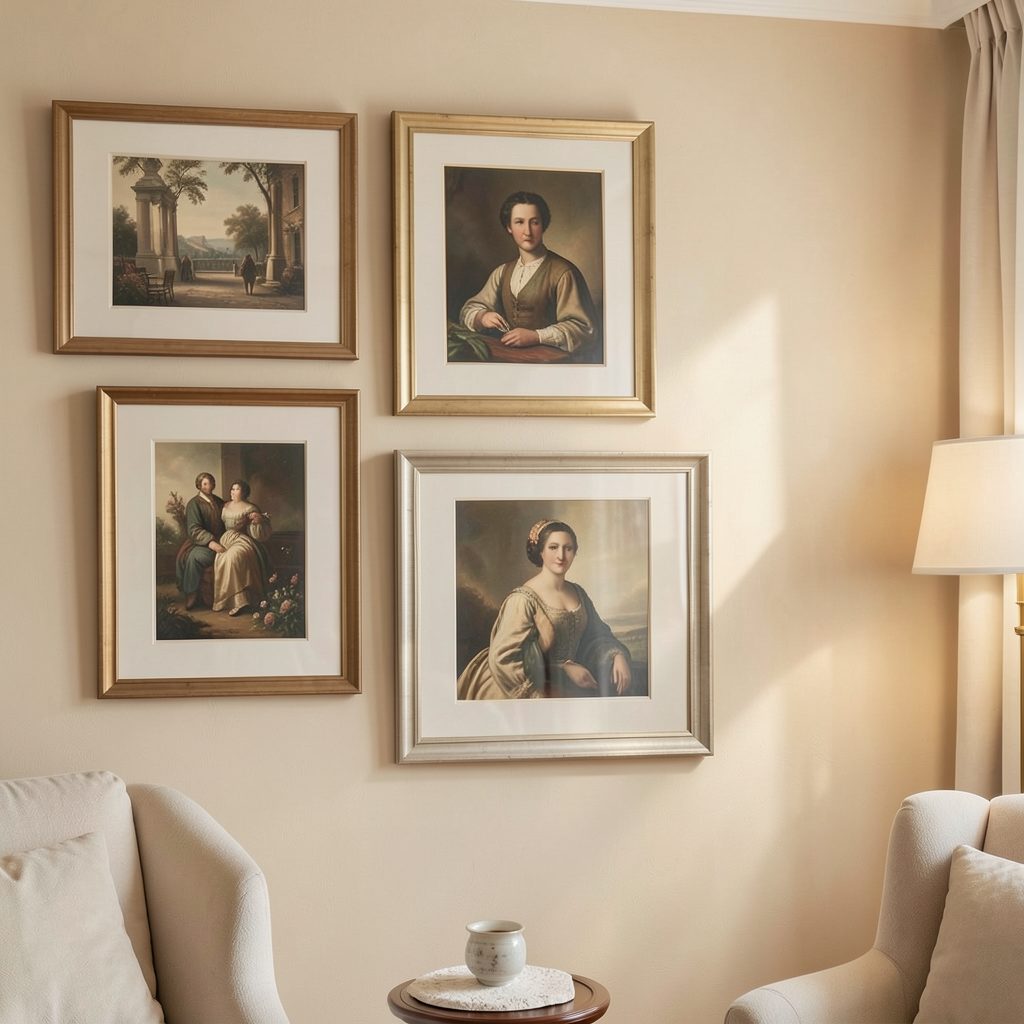
Aim for the centre of the grouping to sit around 145 to 160 centimetres above the floor unless the bed or another large object sets a different line. Even spacing matters more than perfect symmetry, and every piece should relate through colour, subject or framing. The practical display ideas show how scale and spacing can be tested before committing to a set.
Match the Artwork to the Bedroom
Let the bedroom palette lead the selection. Pull one or two colours from the bedding, curtains or timber tones and repeat them in the art. A restrained print with generous pale space can soften a compact room, while a richer image can energise an otherwise plain wall.
Because this position sits close to storage, avoid a composition that competes with the robe doors. Soft botanical studies, abstract colour fields, quiet coastal photography or spare line drawings suit restful spaces. The artwork should feel collected rather than as though it has been squeezed into the gap.
In a mixed-era home, let the frame bridge old and new. Timber profiles complement the character of a traditional terrace, simple black frames sharpen a white apartment, and pale frames can disappear into a panelled wall. Black is a style choice, not a rule.
Select Frames for Australian Conditions
Most standard frames in Australia use A-series paper sizes, so A3 and A4 are convenient for small bedrooms. Measure the visible opening rather than the outside frame, then compare the artwork area with the paper size before buying. Officeworks and JB Hi-Fi are useful for basic frames, while independent framers can tailor a piece precisely.
Consider the room’s light before choosing glazing. Standard glazing suits a shaded wall, but UV-filtering glass or acrylic makes sense where strong sun reaches an east-facing bedroom. In humid coastal areas, stable mounts and sound backing help protect paper over time.
A mat can give a modest print more presence and stop the image from touching the frame. Choose a warm white, stone or pale grey mount that echoes the room rather than a bright white that looks clinical. For a minimal gallery effect, use matching profiles and consistent mat widths.
Hang with the Doors in Mind
For masonry or stud walls, use suitable anchors; for plasterboard, insert appropriate toggles or use a properly rated hanging system. Do not assume a standard picture hook will hold a heavy custom frame in Australian rental property.
Mark the centre of the intended grouping on the wall, then work outwards from that point. Use a level and a pencil to mark each wire or hanger. A laser level is helpful in a narrow space, but a small spirit level and a careful straight line work just as well.
Allow the artwork to clear the doors and handles in every position. If hinged doors open across the display, move the group higher or reconsider the format. If sliding doors cover the wall entirely during use, the artwork may be better placed on an adjacent return wall.
Source Art with an Australian Eye
Local work can give the narrow wall more character than generic wall art. Look at independent galleries around Surry Hills and Newtown in Sydney, Collingwood in Melbourne, or Fortitude Valley in Brisbane, and ask whether artists working in the room’s palette are available in the size you need.
Open studios, weekend design markets and community art prizes are also useful sources for smaller prints. Check the dimensions, edition, artist details and return policy before purchase, and confirm that the price is quoted in Australian dollars including GST.
Framing adds materially to the final cost, so compare the complete package rather than the print alone. Custom framing is readily available across Australian capital cities, but a ready-made A-series frame can be an affordable choice when the proportions are right. These gallery at home ideas show how to combine affordable and commissioned pieces without creating visual clutter.
Create Your Finished Bedroom Wall
Hang the arrangement before the final styling and check it with natural light, bedside lamps and the curtains used most often. Step back from the doorway, then sit on the bed; the composition should hold attention without dominating either view.
Subscribe to Focus LDN for practical gallery-wall ideas, bedroom decorating guidance and fresh ways to bring art into the home. Keep the measurements and palette notes for future refreshes, and share the finished arrangement with someone planning their own bedroom update.