Art Placement for Rooms with Windows on Two Adjacent Walls
A room with windows on two adjacent walls can feel airy, generous and beautifully connected to the outdoors. It can also leave surprisingly little uninterrupted wall space for paintings, prints and photographs. The key is to treat the windows as part of the composition rather than obstacles around it.
Good placement depends on light direction, furniture scale, sightlines and the visual weight of your frames. In Australian homes, where strong sun and bright outdoor conditions can dominate a room, thoughtful positioning also helps protect artwork while keeping the space calm and balanced.
Read The Natural Light First
Begin by observing the room at different times of day. A north-facing window in Sydney or Melbourne may bring strong, consistent light, while west-facing glass can create intense afternoon glare and heat. In Queensland, bright sunlight and higher humidity make protection especially important for works on paper, textiles and photographs.
Avoid placing valuable or light-sensitive art directly opposite a window if reflections make the surface difficult to see. Glass can bounce the view back into the room, particularly in minimalist interiors with pale walls. Shift the artwork slightly off-axis, or choose museum-quality anti-reflective glazing where the piece justifies the investment.
Map The Usable Wall Space
Measure the solid wall areas beside and beyond the windows, including the distance from each corner to the architrave. Record the height of the window sill, the location of power points and the position of ceiling lights. This simple map prevents a frame from appearing squeezed into a narrow leftover strip.
Furniture should guide the lower edge of the arrangement. A large artwork above a sofa generally looks grounded when its centre sits around eye level, while a small work above a bedside table can be positioned lower. Keep a consistent visual relationship between the art and the furniture rather than automatically aligning every frame to the same height.
Create A Focal Wall
When two walls meet at a corner, select one as the primary display surface. It might be the wall visible first from the hallway, the one behind the sofa or the quieter wall opposite the main window. Give this area the largest work or the most coherent collection, then allow the second wall to remain lighter.
A vertical painting can emphasise ceiling height without competing with the horizontal spread of the windows. A pair of similarly sized works can also frame a corner effectively, provided each piece has enough breathing room from the window trim. If the room is used for entertaining, a little research into gallery opening attire can even inspire a polished, artful mood for the surrounding decor.
Build A Gallery Wall With Breathing Room
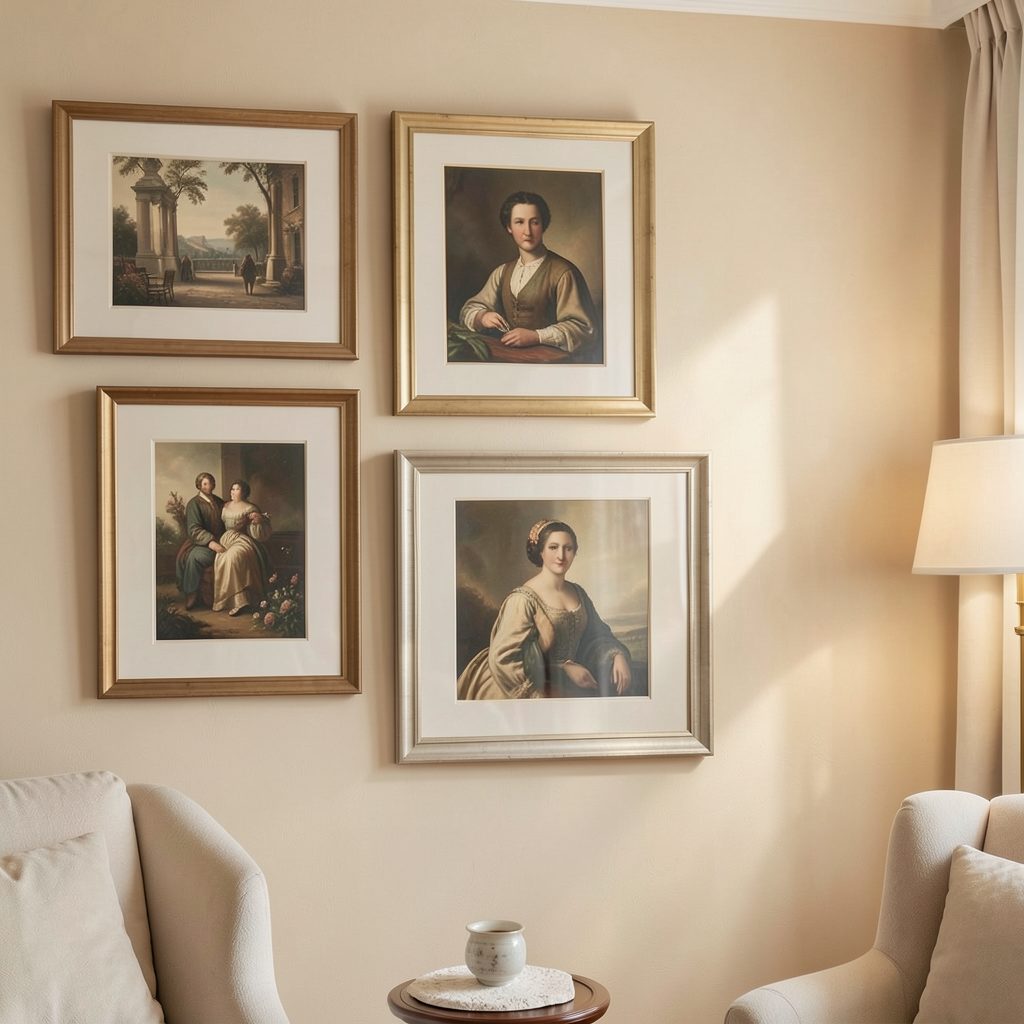
A gallery wall works best when it is planned as one shape. Lay the frames on the floor first, using painter’s tape to mark the window edges and furniture footprint. Keep the outer boundary compact enough to read as a single arrangement, and avoid allowing one frame to drift too close to the corner.
Mixed frames can suit the relaxed character of Australian coastal or mid-century homes, while matching black, oak or white frames create a more restrained gallery-style interior. A useful spacing range is roughly five to ten centimetres between pieces, adjusted according to frame width and artwork scale. For further guidance on grouping pieces, this guide to arranging six artworks offers a practical starting point.
Manage Glare, Heat And Fading
Direct sunlight can fade pigments, yellow paper and weaken textiles over time. Keep irreplaceable pieces away from harsh rays, especially in rooms with western exposure. UV-filtering acrylic or glass is worthwhile for works displayed near bright windows, although it will not prevent all fading or heat damage.
Window coverings add flexibility. Sheer curtains soften glare without making the room dark, while lined curtains or roller blinds provide stronger protection during summer afternoons. In rental properties, check the agreement before installing tracks or drilling into walls; Australian tenancy rules differ between states, and removable fittings may still need approval.
Use The Corner As A Design Feature
The junction between the two window walls does not have to be empty. A narrow vertical print, a sculptural wall object or a small framed work can make the corner feel intentional. Leave enough space around it so the display does not compete with curtain folds, handles or the architecture of the windows.
For a softer effect, place a tall plant, slim floor lamp or curved chair in the corner and keep the artwork on the adjacent wall. This creates a layered view from the room without forcing frames into every available surface. Choose plants suited to the indoor conditions, since reflected heat near Queensland glass can quickly dry out delicate foliage.
Keep The Arrangement Practical
Art placement should survive ordinary routines: opening curtains, cleaning glass, moving a dining chair and carrying shopping through the room. In compact apartments, especially in inner Melbourne or Sydney, protect corners and circulation paths by keeping projecting frames away from door swings and narrow walkways.
Use secure picture hooks for heavier works, and select fixings appropriate to plasterboard, brick or masonry. Renters can consider lightweight frames and approved adhesive systems, but always follow the product’s weight limits. A balanced display is valuable only when it remains safe, stable and easy to live with.
Recommendations For A Polished Display
- Choose one dominant wall and keep the adjoining window wall visually quieter.
- Test artwork in morning, midday and afternoon light before committing to hooks.
- Leave a clear margin around window trim, corners, curtain tracks and furniture.
- Use UV-filtering glazing or window coverings for valuable and light-sensitive pieces.
- Match frame finishes to the room’s flooring, hardware or existing furniture for cohesion.
Step back from the room after each adjustment and view the arrangement from the entry, sofa and main seating position. Small changes in height or spacing can make the difference between a display that feels accidental and one that feels composed.
A well-planned arrangement will let the windows remain a source of light while giving the artwork its own presence. Explore more gallery-wall ideas and practical decorating guidance through Focus LDN’s email updates, and turn the most challenging wall in the room into a considered feature.