Art Placement for a Room with Baseboard Heating
Baseboard heating creates a narrow but important planning zone around the lower edge of a wall. Artwork placed too close to the heat source can suffer from dry air, temperature changes and restricted airflow, while an overly cautious layout may leave the room feeling unfinished.
The right approach combines heat management with the visual principles used in gallery walls: clear sightlines, balanced spacing, suitable frames and a deliberate relationship between furniture and art. This is especially useful in bedrooms, hallways and compact apartments where every centimetre has a job.
In Australia, baseboard or skirting-level heating is less common than split-system air conditioning, but it appears in some older buildings, renovated apartments and homes with electric or hydronic systems. Whether you are styling a Melbourne flat or updating a cool-climate room in Tasmania, safe placement should come before the final picture grouping.
Check The Heating Zone First
Begin by identifying exactly where the heater starts and finishes. Measure the height, depth and width of the unit, then note any vents, thermostats, pipes or removable panels. A heater that looks discreet may still need unobstructed airflow along its entire length.
Keep framed work above the warm-air path rather than directly over the outlet. As a practical starting point, leave at least 150–300 mm between the top of the heater and the bottom of a frame, then check the manufacturer’s instructions. Hydronic systems may run at lower temperatures than electric units, so the correct clearance can vary.
Avoid leaning canvases, framed prints or decorative objects against the wall in front of a heater. This can trap warmth, mark the paintwork and create an unstable display. In rental properties, it may also interfere with fixtures that the landlord or strata manager must maintain.
Choose Heat-Resistant Artwork And Frames
Paper, photographs and works on board respond to changes in heat and humidity. Place your most delicate pieces farther from the heating zone, particularly original watercolours, antique prints and photographs with sensitive emulsions. A canvas stretched tightly over a timber frame can also become distorted if exposed to repeated drying.
Acrylic glazing is often a practical option for family homes because it is lighter and less likely to shatter than glass. UV-filtering acrylic or glass offers additional protection for works displayed in bright rooms, although it does not remove the need for a safe distance from heat.
Timber frames suit warm, relaxed interiors, while powder-coated metal frames create a sharper gallery effect. For a cohesive room, repeat one frame finish across several pieces and introduce variety through size, matting or artwork subject rather than using a different material for every work.
Set The Main Line At Eye Level
The centre of a single artwork usually looks best around 145–155 cm from the floor, adjusted for the household and the furniture beneath it. In a room with a low heater, this may mean choosing a taller frame or shifting the artwork slightly higher while keeping the composition visually connected to nearby furniture.
When hanging art above a sofa, bedhead or console, allow roughly 150–250 mm between the furniture and the frame. The furniture should appear to support the artwork without pushing it into the heater’s warm-air stream. A narrow console can be especially useful because it establishes a clear horizontal boundary.
For a hallway, focus on a comfortable walking view rather than a strict gallery measurement. A useful hallway decorating guide can help you coordinate art with lighting, runners and entry furniture while keeping circulation clear.
Build A Gallery Wall Away From The Baseboard
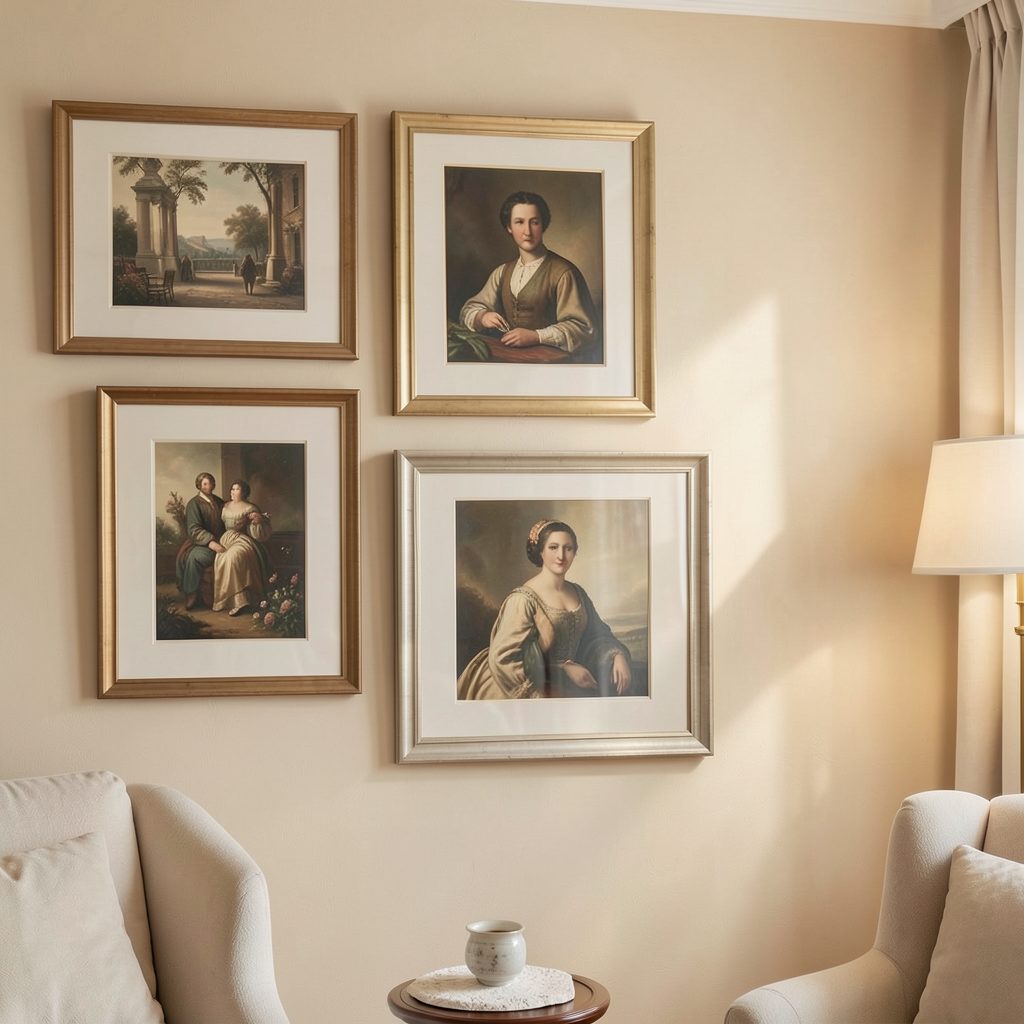
A gallery wall should be treated as one visual shape. Start by arranging the pieces on the floor, using paper templates on the wall if necessary. Keep the lower edge of the composition above the heating area, and avoid allowing one frame to dip lower than the safe clearance simply to fill a gap.
A consistent outer boundary will make the arrangement appear intentional. Try a rectangular grid for a minimalist interior, a central-axis layout for a bedroom, or a looser salon arrangement in a living room with generous wall space. Keep gaps between frames around 50–100 mm, depending on the size of the works.
If the heater occupies most of the wall, move the gallery to an adjacent surface rather than forcing it into a narrow strip. Artwork can relate to the heater wall through colour, frame finish or subject matter without sitting directly above it.
Match Placement To The Room
Bedrooms benefit from quieter arrangements: two symmetrical prints above bedside tables, a single oversized work opposite the bed or a small collection on a side wall. Keep artwork away from curtains that may drift over the heater and avoid placing paper pieces beside a radiator-controlled window where condensation can affect them.
In bathrooms, use sealed frames and moisture-resistant prints, and keep art well away from heated towel rails. A powder room may tolerate a more decorative arrangement, but ventilation remains important. In living rooms, place larger works where they can be viewed from the main seating position without glare from windows or television screens.
Australian homes often have strong northern light, particularly in Sydney, Brisbane and Perth. Direct sun can fade artwork faster than moderate background heat, so use blinds, UV glazing and careful wall selection together. In Melbourne apartments, where heating may run for long winter periods, a digital thermometer can help identify unusually warm spots.
Hang Securely And Respect Local Rules
Use fixings suited to the wall: masonry anchors for brick, appropriate hollow-wall fixings for plasterboard and two-point hanging hardware for wide or heavy frames. In earthquake-prone areas such as parts of Victoria and South Australia, security fittings and anti-tip measures are sensible for larger pieces, especially above beds or seating.
Check the heater manual before drilling nearby. Never cover a thermostat, alter a fixed heating appliance or route cords across a hot surface. If you are renting, Australian tenancy rules vary by state and territory, and significant wall changes may require written permission. Apartment owners should also check strata by-laws before drilling into shared or fire-rated walls.
A professional framer can advise on backing boards, spacers and glazing, while an electrician or licensed heating technician should handle any appliance relocation. These costs are often worthwhile when the artwork is valuable or the wall forms part of a shared building system.
Compare Placement Options
The best location depends on heat output, artwork sensitivity and how the room is used. Use the following guide as a starting point, then confirm the required clearances for your specific heater.
| Placement Option | Suitable For | Main Benefit | Watch For |
|---|---|---|---|
| Above the heater with generous clearance | Durable prints and framed posters | Makes use of a central wall | Heat, airflow and thermostat access |
| Adjacent wall | Delicate artwork and photographs | Reduces temperature exposure | Composition may need furniture to anchor it |
| Above a console beside the heater | Small and medium works | Creates a defined display zone | Keep objects clear of vents and controls |
| Opposite the heating wall | Gallery walls and oversized art | Offers maximum flexibility | Glare from windows or lighting |
| Narrow vertical arrangement | Compact apartments and hallways | Works around limited wall width | Avoid crowding the heater below |
When styling a collection, photograph the proposed arrangement before drilling. Review it from the doorway, sofa and standing position, because a gallery wall that feels balanced close up may look too high or too heavy from across the room. For broader layout ideas, explore these principles for arranging artwork and adapt the spacing to your heating equipment.
Art should make the room feel considered, not create a maintenance problem. Select resilient materials, leave the heating zone open and use the frame layout to guide the eye through the space. Subscribe to Focus LDN for practical ideas on gallery walls, bedrooms, bathrooms and stylish everyday interiors.