Art for a calm home office with a floating desk
A floating desk can make a home office feel remarkably light. Mounted directly to the wall, it leaves the floor clear, suits compact apartments and gives a minimalist room the visual discipline of a built-in workspace. The challenge is making the wall above it feel considered rather than bare.
Artwork provides warmth, focus and personality without compromising the clean lines of a streamlined office. With the right scale, frame and placement, a small print, painting or photograph can turn a practical work zone into an inspiring part of the home.
Start with the desk and wall proportions
Measure the floating desk before choosing art. A single work of art should usually be around two-thirds to three-quarters of the desk’s width, while a small gallery arrangement can extend slightly wider without appearing disconnected. Keep the composition visually centred on the desk rather than the entire wall.
Leave enough breathing room between the desktop and the lowest frame. Around 15 to 25 centimetres usually feels balanced, although a compact print may sit closer if the desk is shallow. This clearance protects the artwork from stationery, desk lamps and accidental knocks during a busy workday.
In Sydney and Melbourne apartments, where spare rooms are often converted into offices or study corners, wall-mounted furniture is particularly useful. It preserves floor area and keeps the room flexible. If the wall is shared with a neighbour or forms part of a strata apartment, check building rules before drilling, especially when the desk or artwork requires heavy-duty fixings.
Choose art that supports concentration
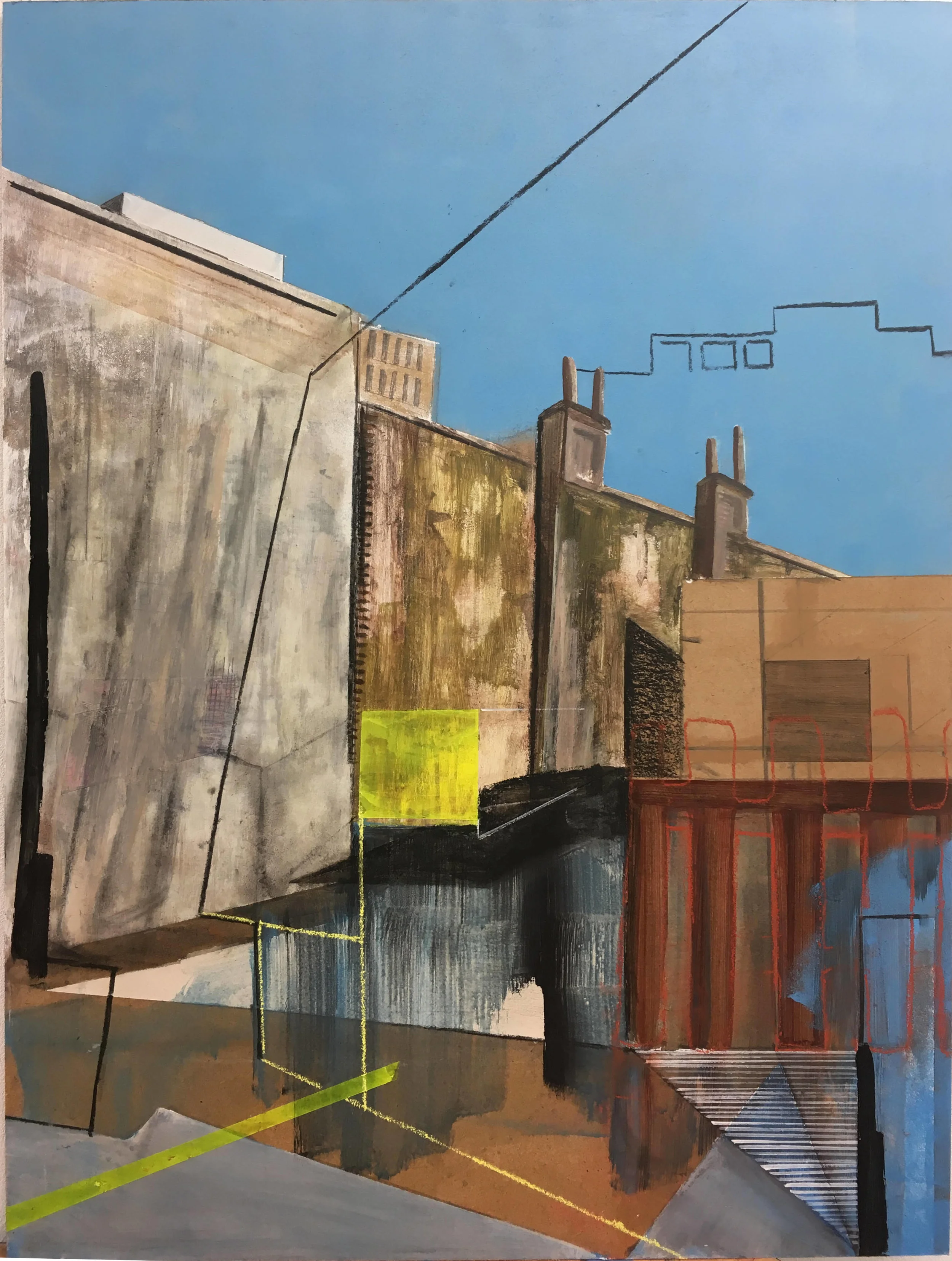
A home office does not need corporate-looking prints. Select art that gives the room energy without competing with your screen. Soft abstract shapes, restrained botanical studies, architectural photography and tonal landscapes work well with a pared-back palette. A single vivid colour can create a focal point while keeping the rest of the room quiet.
Consider how the art looks during different parts of the day. Bright Australian sun can be intense, particularly in north-facing rooms, so avoid placing delicate works or saturated prints in direct light. UV-filtering glazing, archival paper and a wall away from the strongest rays will help preserve colour.
A calm image can also act as a visual reset between tasks. Look through pairing contemporary art for ideas on combining modern pieces without making the arrangement feel busy. The aim is a personal atmosphere that supports long periods of reading, video calls and focused computer work.
Keep the frame language restrained
Frame choice has a powerful effect on minimalist decor. Pale timber adds warmth to white walls and suits Scandinavian-inspired furniture, while black or charcoal frames create sharper definition around graphic prints. For a softer Australian interior, consider oak, ash or a thin natural timber profile rather than a heavy ornate border.
If you are displaying several pieces, repeat one element across the arrangement. Matching frame colours create order, while varied artwork sizes provide interest. A white mount can make a small work feel more substantial and gives the eye a pause between the image and the surrounding wall.
Gallery labels can add a thoughtful, studio-like detail when used sparingly. A small title, artist name or date beside one important work may be enough. The practical guide to gallery labels offers a useful reference for creating that museum-inspired finish without making a compact office feel formal.
Arrange a gallery wall around the workspace
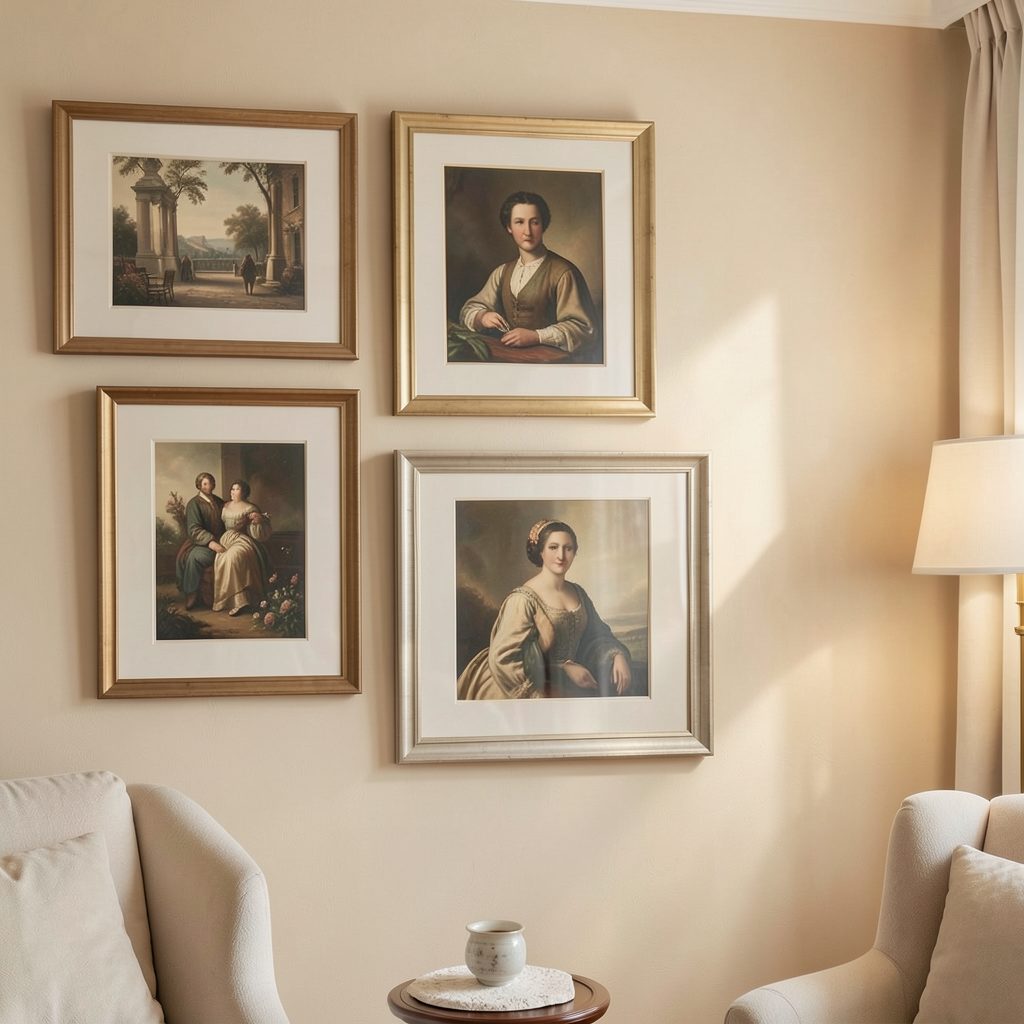
For a floating desk, a compact vertical arrangement often works better than a wide salon wall. Start with the largest piece at eye level, then place smaller works around it with consistent gaps of roughly five to eight centimetres. Lay everything on the floor first and photograph the arrangement before transferring it to the wall.
A two-by-two grid suits a modern office with strong horizontal lines. An organic cluster feels more relaxed and allows you to mix a photograph, line drawing and small painting. Keep the bottom edge of the composition aligned with the desk area, and avoid extending so low that the art competes with monitors, shelves or task lighting.
Australian renters should also consider reversibility. In New South Wales, Victoria and other states, tenants commonly need to follow rental-agreement conditions for significant wall alterations, while minor picture hooks may be treated differently depending on the property and local rules. Use suitable removable hanging systems where appropriate, but check their weight limits and the condition of the paint before relying on them.
Make the whole corner feel finished
Minimal decor works best when every visible object has a role. Pair the artwork with a compact desk lamp, one ceramic vessel, a small plant or a neatly arranged stack of notebooks. Hide cables in a wall channel or under-desk tray so the artwork remains the main decorative feature.
A monitor should not block the centre of the composition. If your screen must sit beneath the artwork, choose a taller piece and mount it slightly higher. For video calls, a side wall with art can create a more welcoming background than a crowded shelf, particularly in homes where the office shares space with a living room or bedroom.
Australian design markets and independent art shops offer plenty of accessible options, from local photographic prints to emerging artists’ works on paper. Buying an original or limited-edition piece can bring more character than selecting generic office decor, while supporting the creative communities of Brisbane, Perth, Adelaide and regional towns.
Practical choices for a polished office
- Use one dominant artwork and repeat its accent colour in a cushion, notebook or desk accessory.
- Select a frame with UV-protective glazing for rooms exposed to strong afternoon or northern sunlight.
- Leave clear space around the floating desk so the wall arrangement remains easy to read.
- Check artwork, desk and hanging-system weights before fixing anything to plasterboard.
- Browse Focus LDN for further gallery-wall and home styling ideas.
The best office artwork should make the room feel more like your home, not a temporary workstation. Measure carefully, edit the collection and give each piece enough space to be appreciated. With a restrained frame palette and a considered arrangement, a floating desk can become the foundation for a calm, characterful workspace. Subscribe to Focus LDN for more ideas on displaying art and creating stylish everyday interiors.