A Nursery Gallery Wall That Grows with Your Child
Art for a nursery gallery wall that can grow with your child should feel warm, flexible and easy to change. Rather than choosing a fixed nursery print set, build a visual system: a calm palette, a repeatable grid and a small group of pieces you can rearrange as your child’s interests and the room’s needs change.
Treat the wall as a display with breathing room, not a checklist to complete before the birth. Start with one larger anchor and two or three smaller works, then keep an equal number of empty positions for future additions. This approach works in Australian homes, from compact Sydney flats to character-filled terraces and suburban family houses.
Measure the space and protect the wall
Measure the available wall in centimetres and mark the intended outer edges lightly with pencil. Leave breathing room above furniture, but keep the lowest edge well away from a cot, changing table or accessible shelving. The arrangement should add to the room without creating a climbable route or taking attention from the practical furniture.
Check what sits behind the wall before choosing fixings. Brick in a Sydney terrace may need masonry anchors, while plasterboard, hollow-core or concrete panels in a Melbourne apartment require different products. Choose fixings labelled for the wall type from a local hardware supplier such as Bunnings. If you rent, get permission before drilling and record the fixings for patch repairs; rental decorating advice offers sensible ways to personalise a room without permanent damage.
Build a visual thread that can evolve
Begin with artwork linked by one idea: soft botanical forms, simple animals, quiet abstractions or a two-colour palette. A larger focal print can establish the mood, while smaller photographs and illustrations keep the arrangement personal. Repeat two or three colours across the pieces so additions look deliberate, even when their subjects and sizes differ.
Plan to replace some items rather than fill every gap. Reserve a frame for a birthday drawing, a family snapshot or an image chosen by an older child, and keep completed pieces in a labelled archive box. This creates room for genuine participation: the gallery records the child’s stage at the time, while the layout remains calm enough for a room that changes quickly.
Use a layout designed to expand
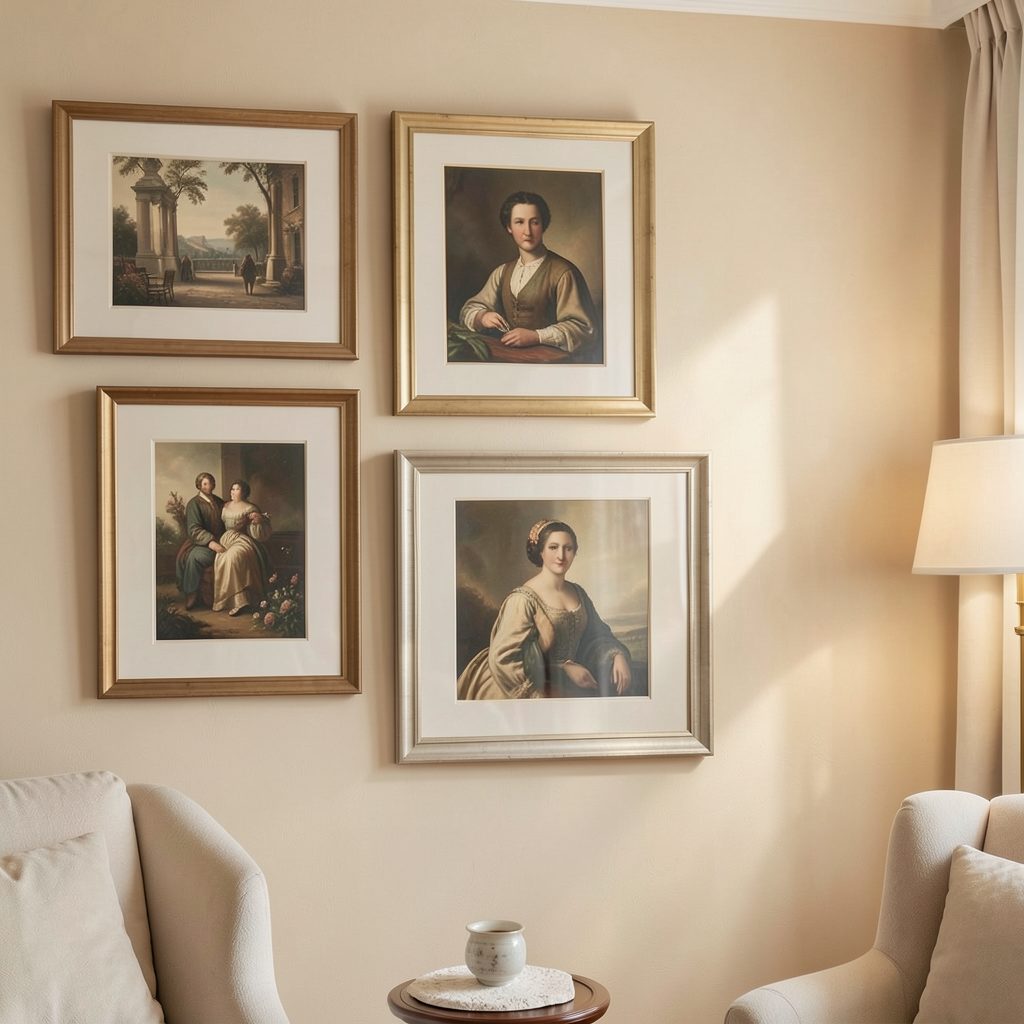
Sketch a modular grid on paper before touching the wall. A three-by-three arrangement with several blank cells is useful because new work can occupy the open positions without shifting the whole composition. Keep the heavier, larger frames toward the lower half for stability, and place small pieces at a height your child can comfortably view as they grow.
To judge the balance, place the frames on the floor, trace their outlines and move the paper templates until the spacing feels right. Tape the templates to the wall, then step back from the doorway to check the composition. For material contrast, mixing three frame styles can turn a simple grid into a layered display; use one timber frame, one painted frame and one light or dark profile rather than making every border identical.
Make nursery safety part of the design
Secure every frame and use fixings rated for its weight; adhesive hooks are not a dependable choice for a heavy gallery in an active child’s room. Fit acrylic glazing where breakage would be likely, soften sharp corners and keep cords, ribbons and hanging hardware out of reach. Nothing should hang directly above a cot, and lower displays should not invite pulling or climbing.
Account for Australian conditions as well as movement. Strong daylight in a Brisbane nursery can fade unprotected paper, so consider UV-filtering glazing and rotate prints occasionally. Keep art clear of heaters, ceiling vents and air-conditioning outlets, and check that humidity is not causing paper to cockle. A durable frame, cleanable glazing and secure fixings give the display a longer life.
Choose Australian art without locking in a theme
Look for pieces made by Australian artists and printmakers, whether through a Sydney independent gallery, a Melbourne makers’ market or an established online seller shipping within Australia. Australian print shops often offer A4 and A3 editions, making it easier to match standard frames while keeping the work affordable. Original pieces can sit beside nursery favourites when scale and colour are carefully controlled.
Browsing home decorating guides can help you connect artwork with textiles, lighting and furniture instead of treating the wall as an isolated feature. For locally relevant subjects, consider native plants, birds or coastal landscapes, and display the artist’s name where appropriate. When buying Aboriginal and Torres Strait Islander art, purchase through authorised sources and follow the artist or gallery’s guidance about cultural use, display and reproduction.
Make the first version of the wall intentionally unfinished. Photograph each stage so you can see what the room needs later, and keep spare hooks, spacers and matching frames nearby for quick changes. Preserve the best current drawings rather than swapping every item when your child enters a new phase.
Subscribe to Focus LDN’s email for practical ideas on gallery walls, framing and rooms that evolve with family life. Choose one palette, sketch one expandable grid and leave a few positions open, ready for the next stage.