Art Display Ideas for a Narrow Hallway with a Radiator
Narrow hallways often get overlooked, yet they hold real potential to set the tone for the rest of the home. In Australia, where many apartments and terrace houses in Sydney, Melbourne, and Adelaide have long corridors connecting bedrooms and living zones, the hallway is a daily thoroughfare rather than a forgotten passage. Adding art here is one of the easiest ways to make the space feel intentional.
A radiator tucked beneath the wall can complicate the usual approach to hanging pictures. Heat rises, the surface gets warm, and oversized frames can block circulation, which matters during the cooler months in Victoria, Tasmania, and parts of South Australia where central heating is still common in older weatherboard and brick homes. The good news is that several clever strategies work with the radiator, not against it.
The aim is to make the corridor feel like a small gallery. A thoughtful mix of frames, mirrors, and layered objects can pull the eye through the space, soften the radiator, and create depth that makes the hallway feel wider than it actually is.
Measuring and planning around the radiator
Before choosing art, take time to measure the wall area above and around the radiator. Note the height, width, and depth of the unit, plus the distance from the skirting board to its top. In a typical Federation-era terrace in Sydney's inner west, this is often a narrow strip of wall that seems impossible to dress, but it rarely is.
Sketch the wall to scale, marking the radiator outline, light switches, door frames, and any smoke alarms. Australian rental standards require that smoke alarms remain unobstructed, so positioning art beneath or beside an alarm is a no-go. Treat the radiator as a fixed feature and plan the layout around it.
A few essentials to note before hanging anything:
- Distance from the top of the radiator to the ceiling
- Width of the wall on either side of the unit
- Location of light switches, door handles, and any thermostat
- Whether the wall is brick, plaster, or rendered
If the ceiling is high, leave generous breathing room above the art so the eye travels upward. A common mistake is hanging frames too close to the top of the wall in low-ceilinged apartments, which makes the corridor feel cramped instead of curated.
Choosing artworks and frames that handle warmth
Heat and humidity from a working radiator can affect certain art materials. Paper prints, watercolours, and unglazed photographs are best hung away from the heat source. Acrylic paintings on canvas, framed photographs with glass or acrylic glazing, and aluminium or metal prints handle the warmth far better.
Opt for frames with sealed backs and moisture-resistant materials. Powder-coated aluminium, treated timber, and engineered composite frames are widely available from Australian retailers such as Temple & Webster, MCM House, and Bunnings' picture framing aisle. Avoid loose-weave cane or untreated MDF near the radiator, as these can warp over time.
A tight colour palette helps the small space feel cohesive. Soft neutrals, muted blues, dusty terracotta, or warm whites echo the tones of the surrounding rooms and tie the corridor into the rest of the home.
| Display method | Best for | Heat sensitivity | Easy to change |
|---|---|---|---|
| Single frame above radiator | Small artworks, focal points | Low with glazing | Moderate |
| Picture ledge above radiator | Rotating displays, renters | Low | Very easy |
| Salon-style wall grouping | Curated collections | Moderate | Less flexible |
| Opposite wall arrangement | All artworks, balanced look | None | Easy |
Smart hanging options above the radiator
The most reliable way to display art in a narrow hallway with a radiator is to use the wall above it. A single piece slightly narrower than the radiator works well as a focal point and leaves room for airflow. Centre the frame roughly 15 to 20 centimetres above the unit.
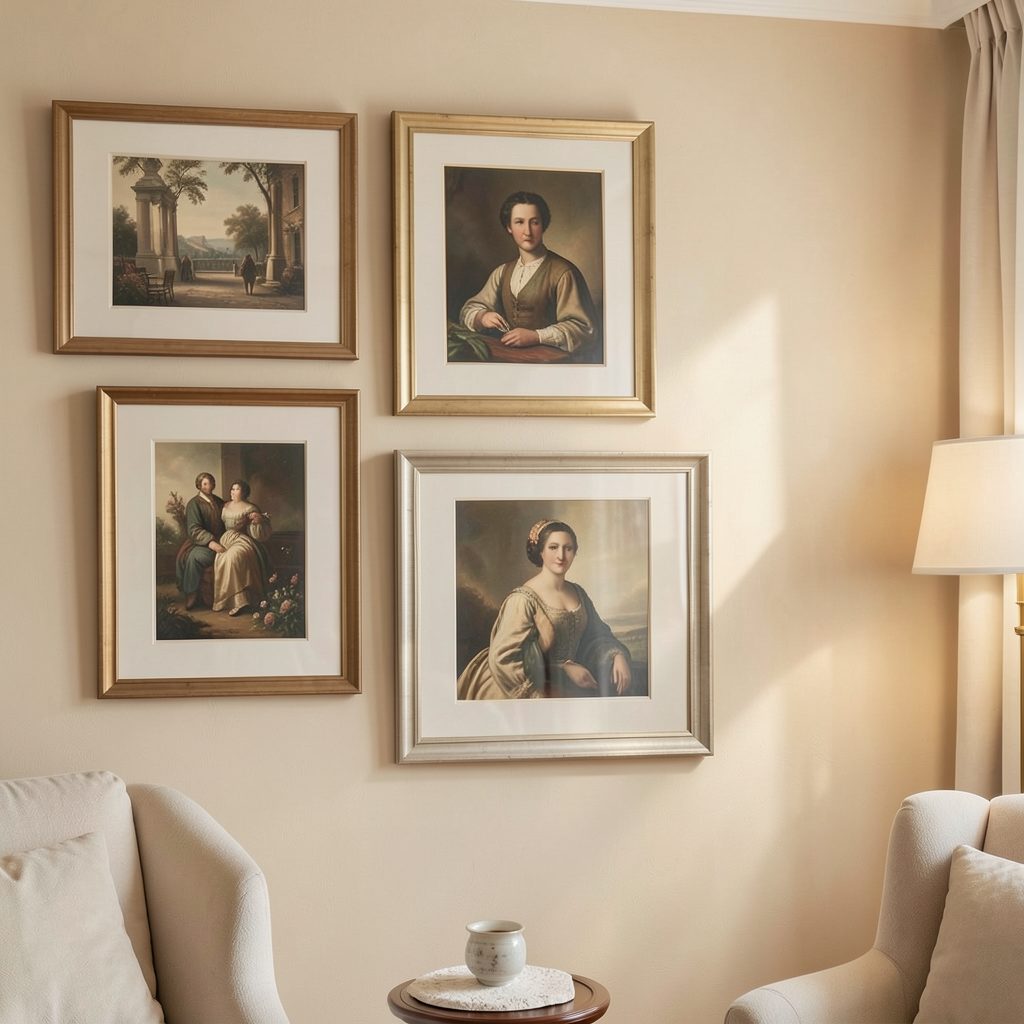
For a layered look, consider hanging two or three pieces in a small salon-style arrangement, keeping the bottom row clear of the radiator. A simple picture ledge mounted above the radiator is another practical choice, allowing seasonal swaps without new holes. Layering is a flexible way to build a gallery effect in a tight space, and you can read more about layering techniques for a hallway that needs visual depth.
Avoid draping anything over the radiator itself. The Australian Building Code and most state tenancy guidelines require heating units to remain clear of obstructions so they can function safely.
Using the opposite wall for balance
A narrow corridor with a radiator on one side usually has a blank wall on the other. Treat that opposite wall as the main display surface and use it to balance the visual weight of the radiator. A vertical stack of three small frames, a tall mirror, or a slim floor vase can anchor the wall without crowding the pathway.
If the corridor is wide enough, consider a slim console or floating shelf. This gives you a place to drop keys, rest a small ceramic piece, or display a framed photograph. Hallways in Brisbane and Perth apartments tend to be wider than those in older Melbourne terraces, so a small bench is often a practical addition.
For a longer wall, try a low gallery rail. These are popular in renovated Queenslanders and inner-Sydney terraces because they allow art to be moved around without leaving nail holes, and frames can be adjusted as the collection grows.
Mirrors and lighting to open up the corridor
Mirrors are particularly useful on the opposite wall because they bounce natural light from nearby windows or doorways and create the illusion of extra depth. A tall, frameless mirror suits modern interiors, while an arched timber-framed mirror suits a heritage-style home with classic proportions.
Lighting plays a big role in a tight space. A small picture light above a single artwork, a discreet LED strip behind a picture ledge, or a well-placed wall sconce can make the corridor feel considered after dark. In Australian homes that rely on cool LED downlights, a warm 2700K bulb near the art softens the corridor and adds a gallery atmosphere.
For very narrow spaces, choose one statement mirror or one large artwork rather than several small pieces. Less is more when the pathway is tight, and a single well-lit object reads as intentional rather than cluttered.
Renter-friendly tips for Australian homes
Hallways in rental apartments and share houses are subject to bond inspections, so any display method needs to be reversible. Several low-impact options work beautifully in a narrow corridor without putting the bond at risk.
- Use adhesive picture strips on painted plasterboard, removing them with a hairdryer at the end of the lease
- Hang a single mirror on a Command hook rated for the frame weight
- Choose a freestanding picture ledge that leans against the wall
- Lean a tall framed print against the wall opposite the radiator for a relaxed look
Always check the condition report and the relevant state residential tenancy guidelines before drilling into brick or plaster. In NSW, Queensland, and Victoria, small nail holes are generally accepted as fair wear and tear, but it is worth confirming with the agent first.
Browse the Focus LDN journal for more inspiration on arranging artwork in small Australian homes, from bedroom feature walls to bathroom-friendly frames and minimalist gallery styling.