Using Washi Tape For Temporary Art Displays
A temporary art display can change the character of a room without committing you to nails, heavy hooks, or a permanent arrangement. Washi tape offers a lightweight way to mount postcards, small prints, children’s drawings, photographs, and paper ephemera while keeping the display relaxed and easy to revise.
Made from thin decorative paper, washi tape is available in muted solids, translucent finishes, grids, stripes, and expressive patterns. Its visual flexibility makes it useful for minimalist interiors as well as more layered gallery walls. The key is to treat it as part of the composition rather than as an invisible fixing material.
Tape is best suited to lightweight, unframed work on smooth, clean surfaces. Test it first, especially on freshly painted walls, wallpaper, limewash, or delicate finishes. A stylish display should be temporary for the artwork, not permanently damaging for the room.
Why Washi Tape Works
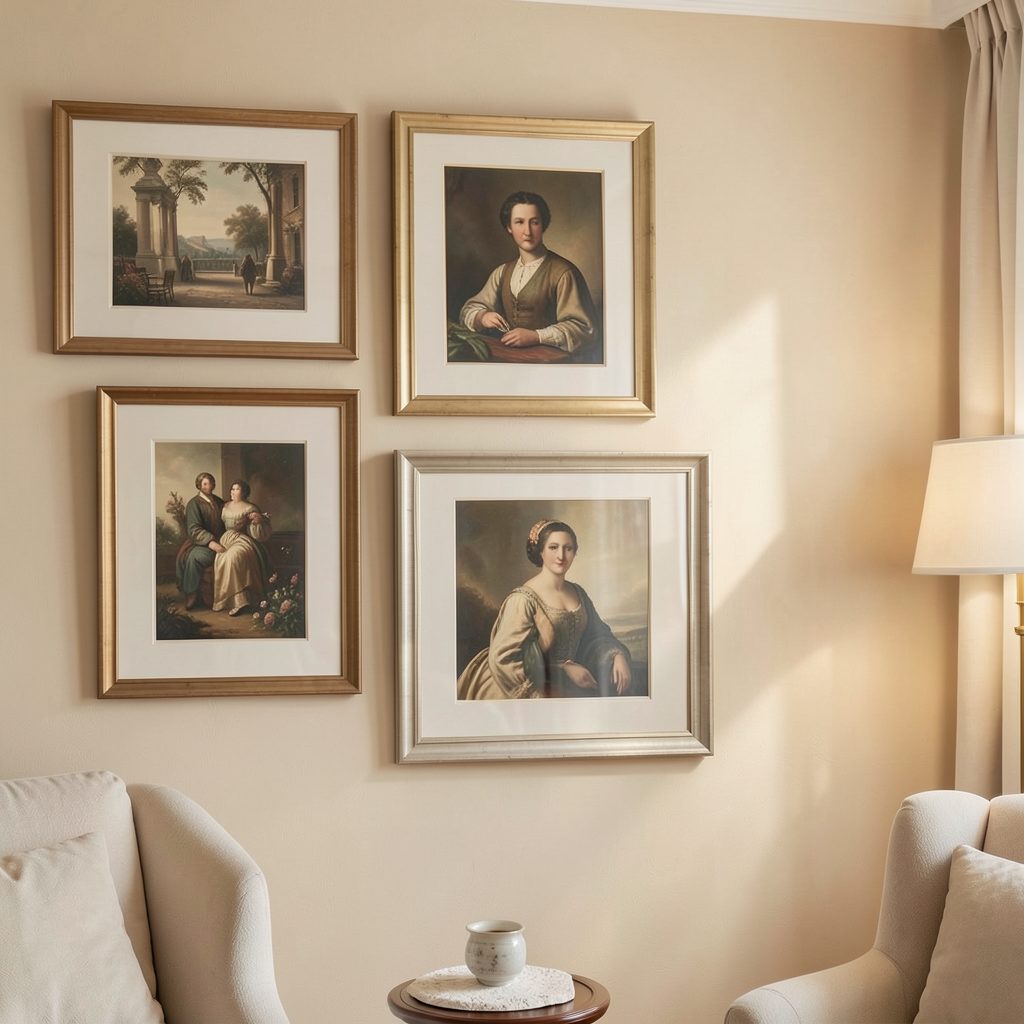
Traditional gallery walls rely on frames to create order, but a taped arrangement can feel more informal and contemporary. It is especially effective in bedrooms, rental homes, home offices, and narrow hallways where drilling into the wall may be impractical. A row of small prints can create a visual rhythm above a desk, while a single oversized postcard can act as a quiet focal point beside a bedside table.
The tape also brings scale and color into the arrangement. Black or charcoal strips can echo furniture details, cream tape can blend into a neutral wall, and a graphic pattern can add energy to an otherwise restrained space. For ideas on balancing artwork with soft interiors, explore art and neutral tones before choosing the tape palette.
Choose Tape And Artwork Carefully
Look for washi tape with a gentle adhesive and a paper surface that can be removed without excessive pulling. Very thin or low-quality tape may lift at the corners, while highly adhesive decorative tape can leave residue or disturb paint. Keep the artwork light, flat, and free from bulky embellishments.
A useful approach is to make the art do most of the visual work. Monochrome photographs, small abstract prints, botanical studies, and typographic cards all suit a taped display. If the artwork is colorful, choose a quiet tape. If the prints are minimal, a checked, striped, or metallic tape can provide a deliberate finishing detail.
Avoid taping valuable originals, heavily textured paper, damp surfaces, or artwork with loose pigment. In bathrooms, humidity can weaken the adhesive and curl paper, so use this method only in a well-ventilated room with artwork that can be replaced easily.
Plan The Arrangement Before Mounting
Start by placing the artwork on the floor, a table, or a large sheet of kraft paper. Try a strict grid, an asymmetric cluster, or a vertical column. Leave consistent gaps between pieces when you want a clean gallery effect; vary the spacing when the display is intended to feel collected and spontaneous.
Measure the wall area and mark the approximate outer edges with removable pencil marks or low-tack painter’s tape. For a balanced composition, align one edge across several prints or give the whole group an invisible center line. Tape should be folded over the top corners, placed in short horizontal strips, or crossed at the corners depending on the weight of the paper.
A display can also be built around a functional feature. Arrange small works around a mirror, pin a monthly selection near a calendar, or create a rotating art rail effect above a console without installing a rail. Keep the lowest pieces high enough to avoid being brushed by furniture or clothing.
Compare Temporary Display Methods
The best method depends on the artwork, wall finish, and how often the arrangement will change. Washi tape is visually distinctive, while clear strips and removable hooks are designed to recede into the background.
| Display method | Best for | Visual effect | Main consideration |
|---|---|---|---|
| Washi tape | Lightweight prints and postcards | Decorative and informal | Adhesion varies by brand |
| Removable poster strips | Flat paper and small boards | Mostly invisible | Can pull at weak paper |
| Mini clips and cord | Rotating collections | Relaxed, editorial | Requires a secure anchor |
| Magnetic poster hanger | Larger unframed prints | Clean and structured | Adds weight and cost |
| Pinboard or cork panel | Frequent changes | Casual and layered | Becomes a permanent wall feature |
Use washi tape when the fixing itself contributes to the design. Choose removable strips when you want the artwork to appear suspended without visible borders. A magnetic hanger can provide a more finished result for a single statement print, while clips work well for an evolving moodboard.
Make The Tape Part Of The Design
A neat display depends on repetition. Use the same tape width throughout, or limit yourself to two complementary styles. A narrow strip at each top corner creates a subtle tab effect, while a longer strip across the upper edge gives the print a poster-like presence. Diagonal corner pieces feel playful but work best when repeated consistently.
Color can connect the display to the rest of the room. Terracotta tape may echo a ceramic vase, pale blue can pick up bedding, and soft gray can support a Scandinavian-inspired scheme. In a maximalist room, mix several patterns but keep one visual rule, such as matching tape widths or repeating the same accent color.
For a gallery-style finish, add small captions or notes beneath selected pieces. Simple labels can identify the artist, location, or date without turning the arrangement into a formal exhibition. A small set of gallery labels can make an informal wall feel considered and personal.
Protect Walls And Refresh The Display
Before applying tape, dust the wall with a dry, soft cloth and allow painted surfaces to cure fully. Press the tape down gently rather than rubbing it aggressively. When removing it, peel slowly from one corner at a low angle, supporting the artwork with your other hand.
Refresh the arrangement whenever the room begins to feel visually crowded or predictable. Keep a small folder of unused prints and postcards so the display can change with the season, a new color scheme, or a developing collection. These simple habits help a temporary installation remain intentional.
- Test one strip in an inconspicuous area for 24 hours.
- Use short pieces on lightweight paper instead of covering large areas.
- Keep tape away from artwork with fragile or powdery surfaces.
- Photograph the arrangement before changing it so successful layouts can be recreated.
- Remove the display slowly and store reusable prints flat.
A taped art wall works best when it reflects the way a home is actually lived in. Start with three or four pieces, adjust the spacing in daylight, and let the arrangement develop over time. Gather a few prints and a carefully chosen roll of washi tape, then create a display that can change as easily as your room does.