Using mirrors to make a small room feel larger
A small room can feel brighter, calmer and more spacious with the right mirror placement. The goal is not to fill every wall with reflective surfaces, but to guide light, extend sightlines and create a stronger sense of depth.
Mirrors work best when they respond to the room’s existing architecture. A window, doorway, artwork arrangement or attractive light fitting can become part of the reflection, making the space feel considered rather than visually crowded. Size, shape, frame and position all affect the result.
Before choosing a mirror, observe where natural light falls during the day and identify the room’s main viewing angle. A well-placed mirror should reflect something worth seeing while leaving enough wall space for the room to breathe.
Choose the right wall
The most effective position is often opposite or adjacent to a window, where the glass can bounce daylight across the room. A mirror placed directly opposite a window may increase brightness dramatically, while a perpendicular position creates a softer reflection and lengthens the visual line of the room.
Avoid placing a mirror where it reflects clutter, an unattractive corner or a blank wall with no texture. In a bedroom, it may be more comfortable to position a full-length mirror beside a wardrobe rather than directly opposite the bed. In a living room, a mirror above a console can establish a focal point without taking up floor space.
Use scale to create depth
A large mirror can make a compact room feel significantly wider because it adds another apparent plane to the wall. Leaning a tall mirror against the wall gives a relaxed, layered look, while mounting it securely creates a cleaner minimalist effect. Leave a small gap around the edges if you want the wall to remain visible.
Several smaller mirrors can work well when they are arranged with intention. A vertical trio can emphasize ceiling height, while a horizontal arrangement can visually stretch a narrow wall. Keep the spacing consistent and choose frames with a shared finish so the display feels like a unified composition.
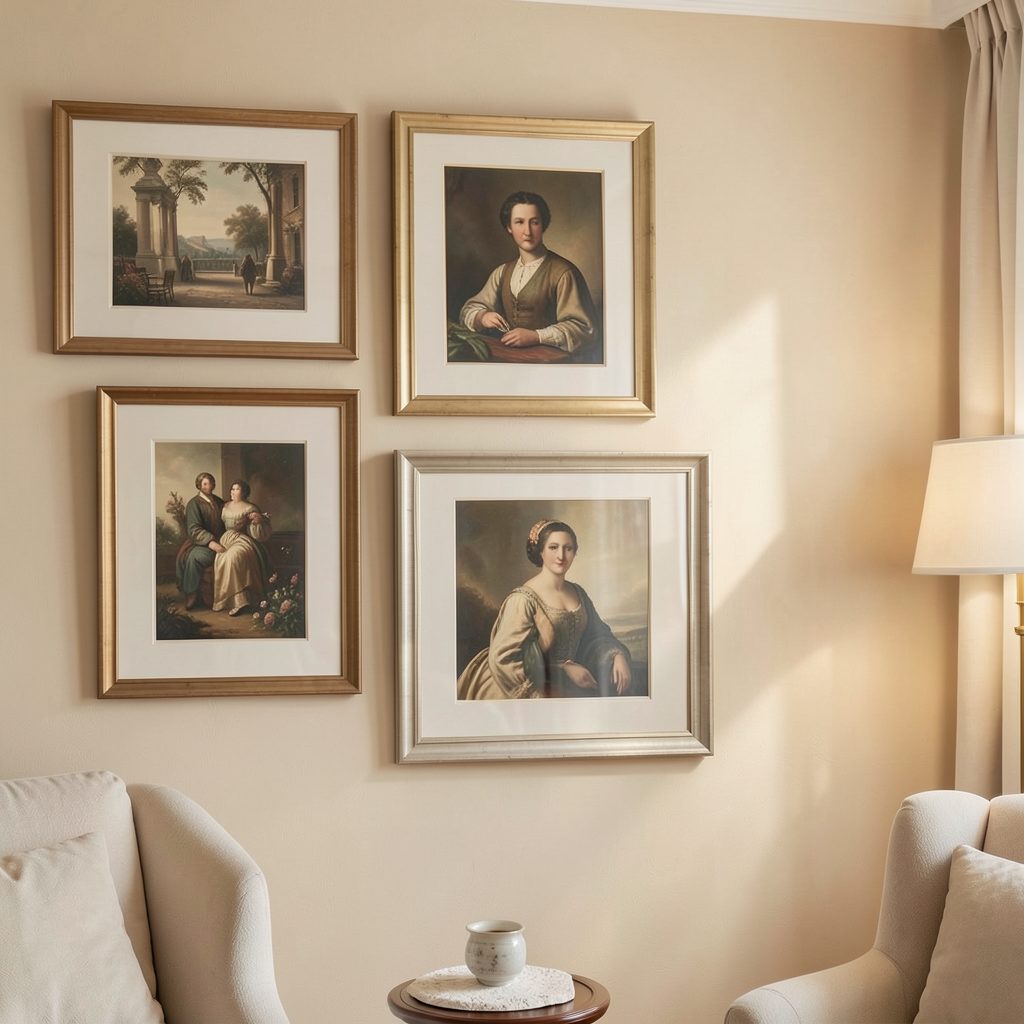
For a gallery-style interior, treat a mirror as one element within the artwork rather than an isolated accessory. The principles in this guide to a curated gallery wall are useful for balancing negative space, scale and visual rhythm around reflective pieces.
Match the shape to the room
The outline of a mirror changes the character of a small space. Round and oval mirrors soften rooms dominated by straight lines, making them especially effective above angular furniture or a rectangular basin. Arched designs draw the eye upward and can make a low-ceilinged room appear taller.
Square and rectangular mirrors provide structure and tend to suit minimalist schemes. A wide horizontal mirror can make a compact dining area or hallway seem broader, while a tall narrow design emphasizes height. Organic, irregular shapes add personality, but they should be paired with relatively quiet surroundings to avoid visual tension.
| Mirror style | Best placement | Spatial effect | Decorating note |
|---|---|---|---|
| Large rectangular | Opposite or beside a window | Extends width and light | Use a slim frame for a lighter appearance |
| Tall arched | Narrow wall or beside a wardrobe | Draws the eye upward | Works well in bedrooms and entryways |
| Round or oval | Above a console, basin or bedside table | Softens hard lines | Repeat the curve in lamps or accessories |
| Group of small mirrors | Blank wall with balanced spacing | Adds rhythm and layered depth | Keep frames related in colour or material |
| Leaning full-length | Bedroom corner or dressing area | Increases height and openness | Anchor it safely, especially in busy rooms |
Control the frame and finish
The frame determines whether a mirror feels airy, decorative or substantial. Thin metal frames in brass, black or chrome suit contemporary interiors and allow more reflected light to dominate. Wooden frames bring warmth and can connect the mirror to flooring, shelving or other natural materials.
Frameless mirrors are useful in bathrooms and very small rooms because they disappear into the wall. A bevelled edge adds detail without requiring a heavy border. If the room already contains framed artwork, choose a mirror frame that complements the existing palette rather than matching every piece exactly.
Reflective furniture and accessories can support the effect, but restraint is essential. One generous mirror often has greater impact than several shiny objects competing for attention. For inspiration on combining collected pieces with a home setting, explore examples of art at home that show how display and daily living can coexist.
Make a small bathroom feel open
Bathrooms benefit from mirrors because they can spread both daylight and artificial illumination across hard surfaces. A wide mirror above the basin makes the vanity area appear broader, while a mirrored cabinet adds concealed storage and keeps toiletries away from view.
Run the mirror close to the edges of the vanity, or consider a wall-to-wall design when the layout allows it. This creates a continuous visual plane and reduces the interruptions caused by small tiles or narrow gaps. Choose moisture-resistant materials and ensure the installation is suitable for a humid environment.
A mirrored bathroom does not need to feel stark. Add texture through towels, timber accents, stone, woven storage or a small plant suited to low light. These small bathroom ideas can help coordinate reflective surfaces with practical storage and a calm decorative scheme.
Avoid common placement mistakes
A mirror should enhance the room’s proportions rather than expose every visual distraction. Check the reflection from the doorway, seating position and any main circulation route before fixing it in place. This quick test often reveals whether the mirror catches a pleasant view or an untidy storage area.
Use these practical checks when planning your arrangement:
- Reflect a window, artwork, greenery or an attractive architectural feature.
- Keep the centre of a wall-mounted mirror close to eye level unless it is designed to emphasize height.
- Leave breathing room around the frame so the wall does not feel overloaded.
- Secure leaning mirrors with appropriate hardware, especially in homes with children or pets.
- Repeat one material or colour from the room to make the mirror feel integrated.
Bring more light into the room
Mirror placement is most successful when it supports the room’s daily use. A reflective surface can make a narrow hallway feel less enclosed, give a bedroom a useful dressing point and add depth behind a dining table or sofa. The best choice is the one that improves both atmosphere and function.
Try moving a mirror temporarily before committing to hooks or adhesive. Watch how the reflection changes from morning to evening, then refine the angle, height and surrounding objects. Choose one thoughtful piece, style the view it captures and let the extra light do the work. Subscribe to Focus LDN for more practical ideas on artwork, gallery walls and stylish small-space living.