Using mirrors and art together to brighten a dark hallway
Dark hallways are a familiar gripe in Aussie apartments and terraces, particularly across Sydney and Melbourne where narrow floor plans and north-facing orientations leave corridors starved of natural light. A fresh coat of paint is the usual remedy, yet seasoned stylists know there is a smarter approach.
Mirrors are the obvious weapon in this fight, bouncing available light from a window or pendant back across the space. However, a bare reflective surface can feel clinical, particularly in a Federation semi where period detail begs for personality. Pairing the mirror with carefully chosen artwork lets you amplify the light while introducing warmth, scale, and rhythm.
The trick lies in coordinating scale, frame finish, and positioning so the eye travels naturally from reflection to canvas without either element competing. Australian interiors often feature strong overhead downlights and limited wall width, so the choices you make on proportion carry more weight than in a sun-soaked bungalow.
This guide walks through the practical steps refined after years of styling compact city apartments, from picking the right mirror shape to choosing artworks that hold their own against the glow.
Understanding light and reflection in narrow spaces
Light behaves differently in a corridor than in a room with multiple windows. It enters once, usually from one end, then bounces off every surface it touches before fading. A well-positioned mirror can double the perceived depth, but only if it sits perpendicular to the light source rather than facing it head-on.
Australian hallways often feature timber floors from the original build, whether Baltic Pine in a Brisbane Queenslander or jarrah boards in a Perth cottage. These surfaces absorb a surprising amount of light, so introducing a mirror with a slightly bevelled edge helps throw illumination across the grain.
The colour temperature of your lighting also influences how reflective surfaces perform. Cool white globes from the standard Bunnings downlight range tend to flatten warm timber features, while a 3000K warm white globe keeps the wood glowing and makes the mirror's reflection feel inviting rather than sterile.
Choosing the right mirror shape and frame
Round mirrors soften the hard lines of a narrow hallway and draw the eye upward, which helps when ceiling proportions feel compressed. Square or rectangular options echo the geometry of adjoining rooms and create a sense of order that suits more traditional Australian homes, from Edwardian terraces in Paddington to brick veneer units across the inner west.
Frame choice carries as much weight as the mirror itself. Slim black profiles feel crisp against white VJ panels, while warm brass or aged gold frames pick up the tones of original hardwood skirtings. The frame often does more decorative work than the reflective surface, particularly when the mirror is hung at eye height.
If you are working with a tight budget, unframed options at IKEA Marsden Park or the mirror aisle at your local Bunnings can be customised with a coat of specialty finish paint for under fifty dollars.
Pairing artwork with reflective surfaces
The art you hang alongside a mirror needs to hold its own without competing for attention. Pieces with soft, tonal palettes — watery blues, dusty pinks, muted ochres — sit comfortably next to a reflective surface, whereas a bold saturated canvas can feel overwhelmed by the light bouncing across it.
Australian artists such as Sally Anderson or Kate Bergin often work in palettes that complement timber-heavy interiors, making their limited-edition prints a practical choice for hallway walls. Local institutions like the National Gallery of Victoria or the Art Gallery of NSW release high-quality reproduction prints at accessible prices through their retail portals.
| Art style | Mirror pairing | Visual effect | Best hallway setting |
|---|---|---|---|
| Tonal landscape | Slim round matte black | Calm, balanced glow | Long narrow corridor |
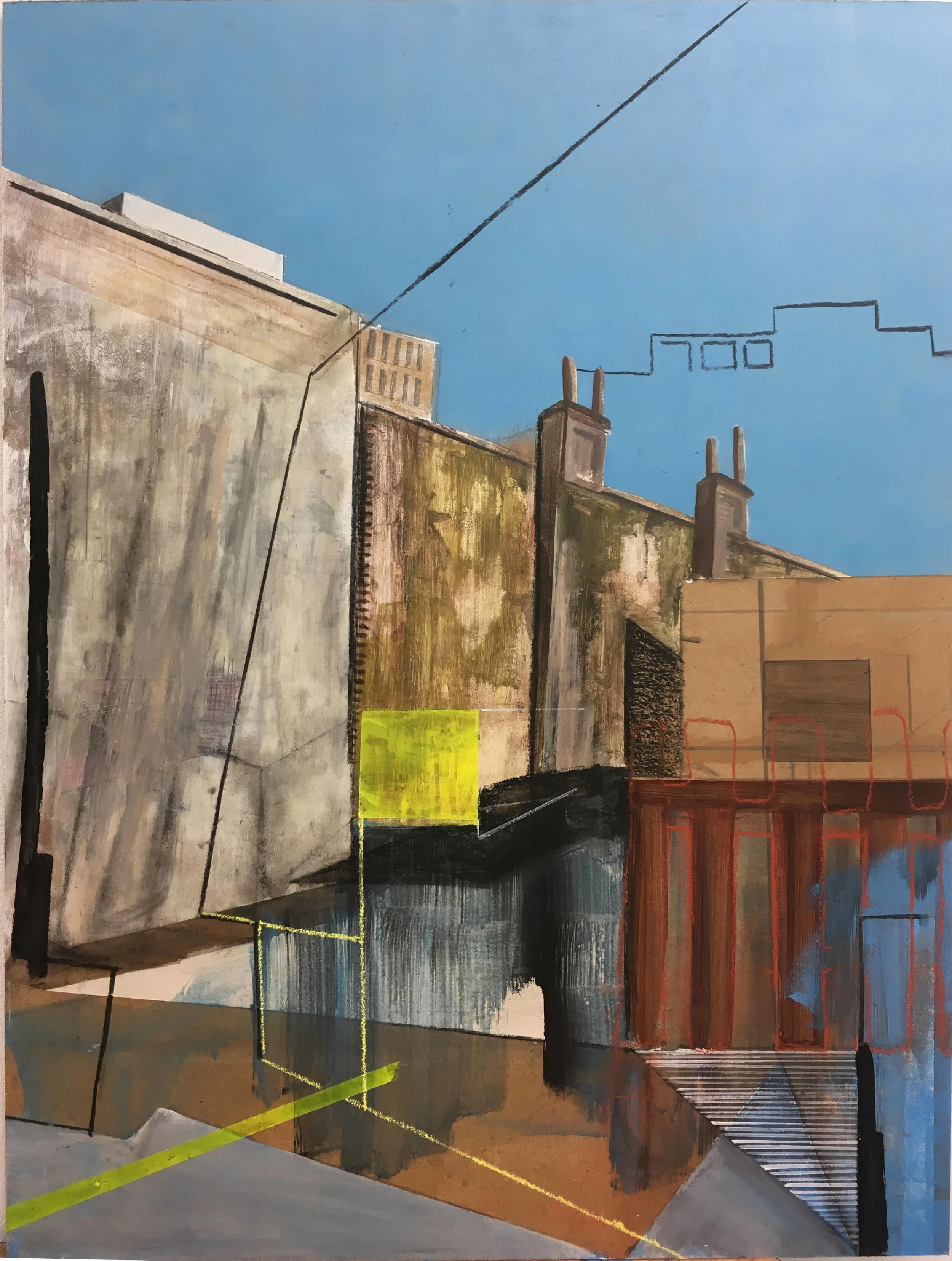
| Bold abstract | Tall arched brass frame | Contrast and drama | Federation hallway |
| Botanical print | Square unframed | Fresh, contemporary feel | Apartment entry |
| Monochrome photography | Slim black frame | Cohesive, modern look | Minimalist terrace |
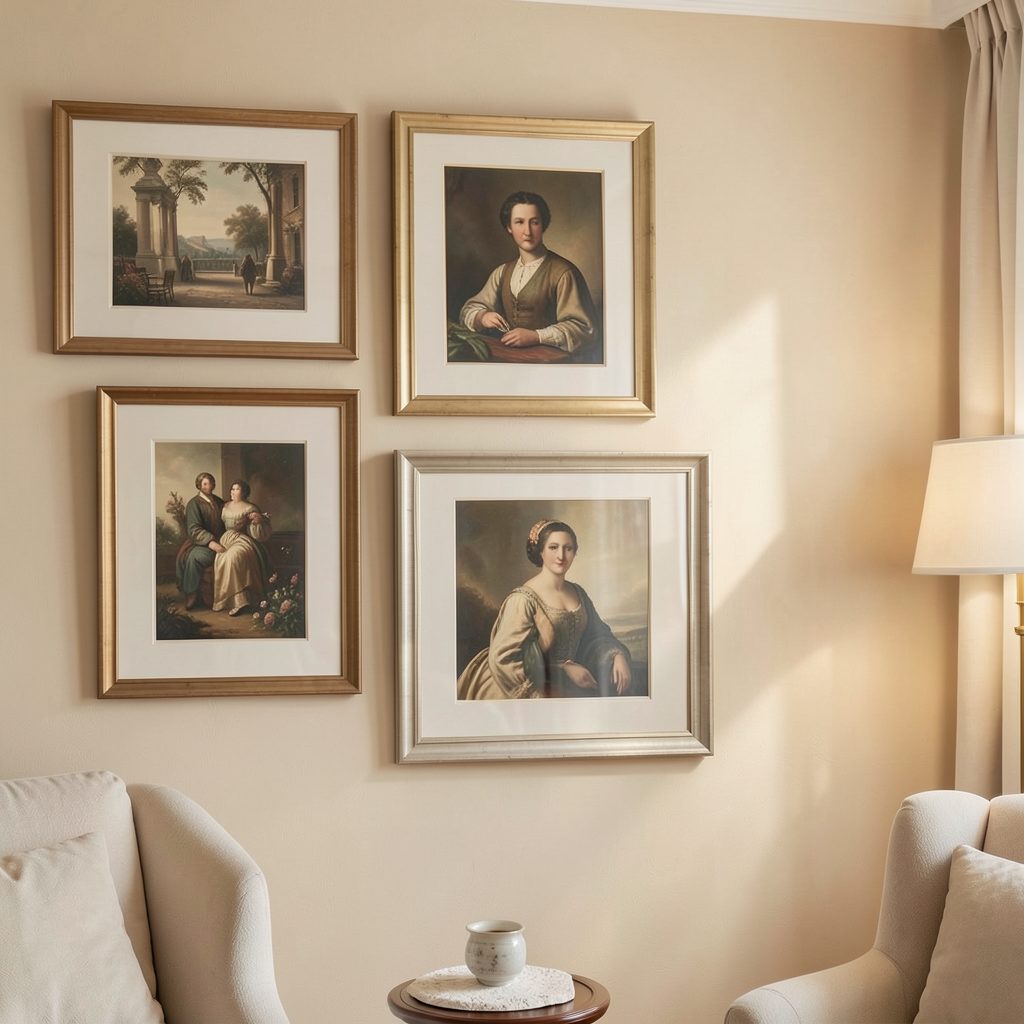
For a cohesive look, consider hanging a small salon wall opposite the mirror. The visual rhythm of frames at varying heights gives the corridor a curated feel and prevents the mirror from feeling like an afterthought. Browse the range of gallery labels designed for corridor-scale pieces to add a considered finishing touch.
Placement strategies that maximise glow
Position matters more than mirror size in most Australian hallways. Hanging the mirror opposite a window or pendant allows light to travel twice the distance of the corridor, instantly doubling the sense of depth. If there is no opposing light source, hang the mirror on the wall adjacent to the entry point of natural light, which throws illumination along the passage rather than across it.
Eye height is roughly 150 centimetres from the floor to the centre of the mirror, but in hallways with high ceilings, raising it slightly creates a more dramatic, gallery-style statement. In Federation homes with decorative ceiling roses, hanging the mirror just below the rose lets both features coexist without crowding the vertical space.
Spacing between the mirror and the neighbouring artwork is another subtle decision. A gap of fifteen to twenty centimetres feels intentional, while anything wider risks looking like two unrelated choices. Many renovators featured on shows like The Block have adopted this tight spacing, recognising that hallways function as a sequence rather than separate walls.
Practical recommendations for a brighter hallway
The most frequent error is hanging a mirror too high, treating it like a window rather than a feature. When the centre sits above eye level, the reflection captures ceiling beams and light fittings instead of the viewer's gaze, reducing both the light benefit and the decorative impact.
Another pitfall is choosing artwork in thick, ornate frames that fight the mirror's profile. Mixing a heavy gilt frame next to a slim black-bordered mirror creates visual tension that distracts from the light play. Consistency in frame weight, even when finishes differ, produces a calmer, more considered corridor.
Finally, resist the urge to crowd the wall. A single mirror and one to three artworks, depending on wall length, will outperform a packed arrangement every time. For guidance on how specific frame finishes hold up against reflective surfaces, see how black frames anchor a hallway wall and ground surrounding pieces.
Pulling these principles into a single checklist helps lock in the look before drilling.
- Hang your mirror perpendicular to the main light source, never directly facing a window.
- Choose a frame finish that echoes existing hardware elsewhere in the home.
- Stick to tonal or low-contrast artworks beside reflective surfaces to avoid competition.
- Keep fifteen to twenty centimetres between the mirror and companion artwork.
- Opt for warm white globes around 3000K to keep timber features glowing.
- Limit the total number of pieces to four or five per three-metre wall.
- Test mirror placement at different times of day before drilling, since arvo light behaves differently from morning light.
Visit own to see how the team balances mirror, art, and light across dozens of Australian homes and to find inspiration for your own corridor transformation.